

Weight Loss Drug Impact Shifts Greggs Menu
When a pharmacy prescription changes a bakery menu, you know the market has radically shifted. Greggs is currently rewriting its business model to battle biology itself. According to Reuters reporting, about 5% of the UK adult population is reportedly using GLP-1 drugs, forcing food giants to adapt to a world where hunger is optional. This shift goes beyond simple dieting trends or willpower. Chemicals are now dictating consumer choices, and retailers are scrambling to keep up.
The Greggs weight loss drug impact is reshaping how major UK brands view their future. Executives at Tesco and Greggs are analyzing data that shows people are simply buying less food. The industry relied for decades on customers impulsively grabbing a second pastry. Now, that impulse is being chemically blocked. Companies must find new ways to extract profit from smaller appetites. This creates a strange tension between selling less volume while trying to maintain revenue. The battle for the customer's stomach has moved from taste to nutritional density.
The War on Appetite
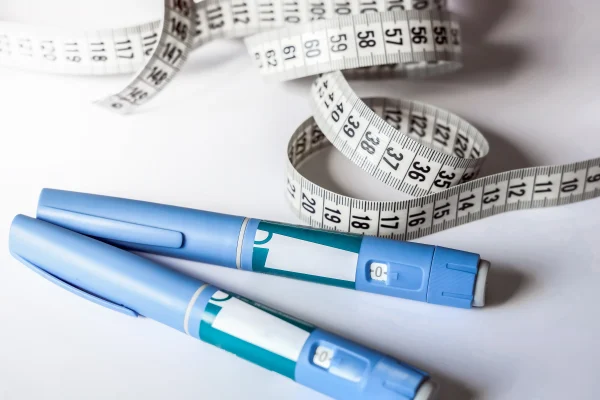
Profit margins rely heavily on customers ignoring their calorie limits, but modern chemistry now blocks that impulse. Greggs CEO Roisin Currie openly admits that the rise of GLP-1 medications is reducing consumer appetite. This change directly hits revenue streams that depend on volume. A report in The Guardian explains that these drugs prompt the body to produce insulin and slow digestion; consequently, people feel full faster and physically cannot eat that second sausage roll. This reality forces a massive strategic pivot for high-street favorites.
According to Reuters, Tesco CEO Ken Murphy identified a parallel trend during a financial update, noting that fresh food performance was a standout with like-for-like sales up 6.6%. He identifies a clear expansion in fresh produce sales. Shoppers are bypassing processed options for unprocessed, whole foods. The Greggs weight loss drug impact is just one part of a wider awakening. Retailers are rushing to develop "GLP-1 friendly" ranges. They need products that appeal to someone who feels full after three bites. The strategy now prioritizes maximizing the value of every single calorie a customer consumes over simply maximizing quantity.
Shrinking Portions as a Survival Tactic
A smaller pastry mimics health consciousness while strictly protecting profit margins from shrinking appetites. As reported by The Independent, Ms. Currie stated that the bakery chain is targeting customers on weight loss drugs by rolling out smaller portions to align with this new biological reality. They are cutting sizes to save money while simultaneously matching the reduced capacity of their customers' stomachs. If a customer can only eat half a sandwich, selling them a whole one guarantees waste and dissatisfaction.
The company is also pushing protein-rich products to fill the void. As reported by ITV News quoting CEO Roisin Currie, the chain has sold half a million egg pots since adding them to the range in the autumn. This number signals a massive demand for high-protein, lower-calorie options. How are bakeries changing their menus? Bakeries are introducing protein-rich items and reducing portion sizes to appeal to customers with lower appetites. The focus is shifting toward "fuel" instead of comfort food. The Greggs weight loss drug impact drives this move toward functional eating. Customers now seek high-fiber and high-protein profiles to maintain health while eating less.
Financial Panic in a Growing Market
Record revenue can still spark panic when investors spot a crack in long-term consumption habits. Greggs reported a massive £2 billion in revenue, yet their share price dropped 11% during the January slowdown. The market sees a contradiction. Sales are up by 7.4% in the fourth quarter, but the future forecast looks muted. Investors worry that the widespread use of weight loss drugs will permanently cap growth.
Analysts like Clive Black suggest that volume dips during the Christmas period link directly to widespread glucagon-peptide usage. McDonald’s also felt this pressure, seeing $38 billion in value wiped out temporarily between June and October. The fear is tangible. If the Greggs weight loss drug impact continues to grow, the total volume of food sold globally could shrink. Research from Morgan Stanley indicates that as obesity drug usage rises, the overall consumption of carbonated soft drinks, baked goods, and salty snacks may fall by up to 3% by 2035. Companies are making money today, but they are terrified about tomorrow.
The Inflationary Disguise
Companies sometimes blame health trends to hide the fact that they are charging the same price for less product. While executives talk about health, "shrinkflation" plays a major role in these changes. Firms reduce product sizes to manage skyrocketing ingredient costs. The price of a sausage roll recently jumped to £1.30 due to minimum wage hikes and national insurance costs. Smaller portions serve two masters: the dieter and the accountant.
This creates a dual driver for the market shifts. It is difficult to separate the Greggs weight loss drug impact from the economic reality of inflation. Customers naturally buy less when they have less money. However, the move toward smaller options allows Greggs to keep price points accessible while acknowledging that people are eating less. It provides a convenient cover. They can claim they are supporting wellness while simultaneously protecting their profit margins against rising input costs.
The Rise of Companion Products
Survival in this new era requires selling food to people who physically cannot finish a standard meal. A new category of food is emerging, known as "companion products." Jennifer Creevy, a trends director, points out that nutrition must now be designed for satiety post-medication. If a person eats very little, that food must be nutrient-dense.
Nestlé and other giants are developing products specifically for this demographic. These items focus on preserving lean muscle mass, which often degrades during rapid weight loss. What are companion products for weight loss? These are nutrient-dense foods designed to provide essential proteins and vitamins for people eating very small meals. The Greggs weight loss drug impact accelerates this trend. A simple pastry is empty calories; a protein pot is a nutritional necessity for a drug user. The industry is moving from selling "treats" to selling "maintenance" for the human body.
Skepticism on Wall Street
Wall Street panic often ignores the reality that human habits rarely change permanently. Not everyone is convinced that the Greggs weight loss drug impact spells doom for fast food. Mondelez, the owner of Cadbury, projects a volume hit of less than 1% over the next ten years. They believe the fears are overblown. Paul Major, an investment director, argues that mass permanent adoption is unlikely.
The drugs are expensive and have side effects. Many users eventually stop the treatment. When they do, "cold turkey" cessation leads to a rapid return of hunger. The investment thesis for fast food remains intact because biology fights back. People might use these drugs as a temporary lifestyle fix—perhaps to slim down for a wedding—rather than a permanent solution. Once the drugs stop, the customers return to the bakery.
The Demographic Reality Check
A medical revolution in wealthy postal codes looks very different to families managing a weekly budget. The narrative around weight loss drugs often focuses on celebrities and the wealthy. In places like Luton, the reality is different. Residents there are often priced out of expensive prescription treatments. Bev Lewis, a local resident, expresses skepticism regarding pharmaceutical ingredients. She prefers home-cooked natural remedies like lemon and herbs.
Goldman Sachs data reveals another layer to this divide. Women in their 40s and 50s who use these drugs cut food intake but often do not cut chocolate or alcohol. Their spending shifts toward beauty products rather than vanishing entirely. Will weight loss drugs hurt fast food sales? Fast food sales may dip slightly, but analysts believe the long-term impact will be minimal as expensive treatments limit mass adoption. The Greggs weight loss drug impact might be significant in specific demographics, but it is not yet a universal phenomenon.
Global Obesity and Market Scale
The sheer scale of the global obesity crisis suggests that even a powerful drug will not eliminate the demand for comfort food. Over one billion people worldwide are obese. Projections suggest four billion will be overweight or obese by 2035. In the UK alone, 25% of the population is obese. The market for food remains colossal.
Even if millions take the drug, billions will not. Moritz Dullinger, a manager at Pictet Asset Management, notes that patent expirations in a decade will lead to generic production. Lower costs could eventually make these drugs a societal norm. Until then, Greggs continues to expand. They opened 226 new shops recently, aiming for a total estate of over 3,000. They are betting that the Greggs weight loss drug impact is an obstacle to navigate, not a wall that stops them.
Adapting to the New Appetite
The food industry is currently balancing between a legacy of excess and a future of restraint. The Greggs weight loss drug impact serves as a wake-up call for every major food retailer. It forces them to acknowledge that consumer biology is changing. Strategies are shifting from volume to value. The winning brands will be those that can sell satisfaction in a smaller package.
Greggs and Tesco are rewriting their playbooks to accommodate a customer base that simply wants less. Whether this trend is permanent or a temporary pharmaceutical fad remains to be seen. However, the menu has already changed. The future of food involves fewer calories, more protein, and a relentless focus on nutritional density.
Recently Added
Categories
- Arts And Humanities
- Blog
- Business And Management
- Criminology
- Education
- Environment And Conservation
- Farming And Animal Care
- Geopolitics
- Lifestyle And Beauty
- Medicine And Science
- Mental Health
- Nutrition And Diet
- Religion And Spirituality
- Social Care And Health
- Sport And Fitness
- Technology
- Uncategorized
- Videos

