

Bioplastics Strategy: Avoid Greenwashing
Most shoppers believe a green leaf on a package means the product helps the earth. They pay a premium for the "eco-friendly" label and toss the empty container into a bin with a sense of pride. This simple act actually initiates a chain of events that often ends in a landfill or a clogged sorting facility. Companies buy into the hype without checking the science, which creates a massive pile of waste that looks green but acts like traditional trash. People want to do the right thing, yet they often support the very pollution they try to avoid. Success with bioplastics requires looking past the marketing and into the chemistry of how things actually break down.
This post teaches you how to spot real sustainability. You will learn to identify high-quality materials and verify them against strict rules. We aim to give you the tools to separate marketing noise from actual environmental progress. Eventually, you will know exactly how to use these materials to build a brand that people trust.
The Technical Spectrum of Modern Bioplastics
The word bioplastic describes many different things. People often use it as a catch-all term, but this leads to confusion. You must understand what the material is made of and where it goes after use. Some versions come from plants but stay in the environment for centuries. Others disappear in weeks but come from oil. You need to know the difference to make a smart choice for your packaging.
Bio-based vs. Biodegradable
Bio-based materials come from renewable resources like corn, sugarcane, or cellulose. These differ from biodegradable materials, which focus on the end-of-life process. You can create a bio-based plastic that lasts forever. For example, a company might make a soda bottle from sugarcane that has the exact same chemical structure as a petroleum bottle. This helps reduce oil use but does nothing to solve the litter problem. Conversely, some biodegradable plastics come from fossil fuels but break down completely in specific environments.
The Drop-in Solution vs. Novel Polymers
Research published by the National Center for Biotechnology Information explains that "new economy" bioplastics include "drop-in" materials, which are classic plastics created from renewable resources. Coca-Cola used this with their PlantBottle, which consisted of 30% bio-based Monoethylene Glycol. The study also suggests these materials do not change the recycling stream. Novel polymers like Polylactic Acid (PLA) or Polyhydroxyalkanoates (PHA) offer different benefits. PHA comes from bacteria that consume waste oil and turn it into energy storage. These materials require new ways of disposal but offer a path away from traditional plastic entirely.
Why Marketing Hype Misleads Bioplastics Consumers
Vague words like "earth-friendly" or "natural" mean very little in a laboratory. Brands often use these terms to hide the fact that their products lack testing. When a package says "degradable," it might just mean the plastic breaks into tiny pieces that cannot be seen. These microplastics stay in the soil and water forever. Consumers feel good about the purchase, but the planet still suffers. True sustainability requires proof that the material actually returns to the earth as nutrients.
European Bioplastics clarifies that not all bioplastics are biodegradable, as the term refers to materials that are either bio-based, biodegradable, or both. This indicates that some plant-based plastics are designed to be chemically identical to conventional plastic and will not break down in the environment. This distinction matters because a "green" product might still sit in a landfill for 400 years. According to the FTC Green Guides, if a company claims their product is eco-friendly without citing specific tests, they are likely greenwashing; marketers must be able to prove that the entire package will completely break down to avoid making unqualified claims. Always look for third-party verification to ensure the material performs as promised.
Navigating the Essentials of Compostable Plastics Standards
Scientific tests prove whether a material is truly helpful or just clever marketing. These compostable plastics standards act as the rulebook for the industry. They define exactly how much of a material must disappear and in what timeframe. Without these rules, companies could make up their own definitions of "green." These standards ensure that when a package reaches a compost pile, it turns into healthy soil rather than toxic sludge.
The Chemistry of Disintegration
To meet these rules, a material must undergo a molecular change. It cannot just shatter into smaller fragments. Microbes must eat the material and turn it into carbon dioxide, water, and biomass. If the material leaves behind heavy metals or plastic bits, it fails the test. Standard testing procedures from World Centric involve screening the material through a 2mm mesh after a set number of days to measure disintegration. This ensures the final compost remains safe for growing food and supporting local wildlife.
Global Benchmarks for Certified Bioplastics
Different parts of the world use different names for their rules, but they all share the same goal. These certifications provide a universal language for buyers and sellers. They remove the guesswork from procurement. Seeing a certification stamp confirms that a lab tested that specific batch of material. This protects your brand from lawsuits and builds a basis of honesty with your customers.
ASTM D6400 (The North American Standard)
The ASTM D6400 is the gold standard in the United States. It focuses on how materials behave in industrial composting settings. To pass, no more than 10% of the original weight can remain after 12 weeks of composting, according to guidelines established by World Centric. This test ensures that the material fits the fast-paced cycle of professional waste facilities. It also checks for heavy metals to make sure the end product doesn't poison the ground.
EN 13432 (The European Standard)
Europe uses the EN 13432 standard, which is even more rigorous. This rule requires that 90% of the organic material turns into CO2 within 180 days. What is the difference between home and industrial compostable? Industrial composting requires high, sustained temperatures and specific microbial activity to break down elaborate bioplastics, whereas home-compostable materials are designed to decompose at the much lower, inconsistent temperatures found in a backyard bin. European Bioplastics notes that products meeting this standard frequently display the "Seedling" logo, which serves as proof of industrial compostability throughout the European Union.
The Business Case for Choosing Certified Bioplastics
Switching to verified materials provides a clear conscience and offers a significant return on investment while lowering legal risks. Governments are passing new laws every year to stop false advertising. As noted in an FTC administrative complaint, the agency took action in 2013 against ECM Biofilms for claiming their additives made any plastic biodegradable without proof. Adhering to materials that meet compostable plastics standards keeps you safe from these costly legal battles. According to CalRecycle, compostable products must meet the requirements of ASTM D6400-19. The agency notes that this compliance ensures you can sell your products in states like California, and the Washington Department of Ecology confirms similar strict laws require materials to meet scientific standards like ASTM D6400 or D6868 for industrial composting.
Supply Chain Transparency
The creation of a clean brand requires knowing your suppliers. You must ask for physical copies of their certifications. A reputable resin supplier will gladly provide their ASTM or EN test results. Documentation from TÜV Austria suggests checking the dates on these certificates, as most stay valid for a maximum of five years. When you verify these documents, you ensure your entire supply chain remains honest. This transparency becomes a selling point for your customers, who increasingly demand to know where their packaging comes from.
Common Pitfalls in Bioplastics Procurement
Many buyers fall for "Oxo-degradable" plastics because they seem cheaper. These materials contain metal salts that cause the plastic to fragment quickly. Ironically, this creates a microplastic nightmare rather than a solution. The European Union's Single-Use Plastics Directive banned these materials because they do not actually biodegrade. They only become harder to see. The FTC Green Guides advise that buyers should avoid any product that claims to be "degradable" without a specific compostable certification, as items destined for landfills or recycling will not degrade within a year.
Is PLA a bioplastic? Yes, Polylactic Acid (PLA) is one of the most common bioplastics and is typically derived from the fermented starch of plants like corn or sugarcane. However, you must handle PLA correctly. It requires industrial heat between 55°C and 60°C to break down. If you put a PLA cup in a regular trash can, it will last as long as a standard plastic cup. Education is just as important as the material itself.
Applying Certification Logos Correctly
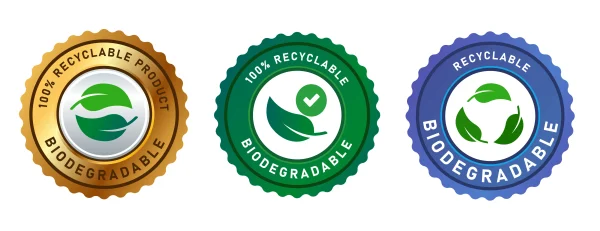
Correct labeling turns your compliance into a powerful marketing tool. Applying the official logos from organizations like the Biodegradable Products Institute (BPI) or TÜV Austria tells the consumer exactly where to put the package when they finish. A clear logo removes the "choice fatigue" that many shoppers feel. It also signals to waste managers that your material belongs in the compost bin rather than the recycling stream. Do not just slap a logo on your box. Each organization has rules about how you display its mark. You usually need a specific license number printed next to the logo. This allows anyone to look up your product in a public database and verify your claims. This level of openness builds incredible trust with modern consumers. It shows you have nothing to hide and that you stand behind your environmental promises.
Educating the End-User
Your job doesn't end when the customer buys the product. You must tell them how to dispose of it. If a package requires an industrial facility, say so clearly. Use simple icons or QR codes that lead to a map of local composting centers. When you help your customers succeed, you ensure the bioplastics actually complete their cycle. This active guidance prevents your high-tech materials from ending up in the wrong place.
Leading the Shift to Authentic Bioplastics
Real change requires more than good intentions. It requires a commitment to scientific truth and rigorous testing. While bioplastics offer a massive opportunity to move away from fossil fuels, they only work if we follow the rules. Choosing materials that meet the highest compostable plastics standards ensures that our shift to a circular economy is honest and effective. Brands that lead with transparency will win the long-term trust of the market. Prioritize certified materials over vague marketing claims to ensure your business leaves a positive mark on the world.
Recently Added
Categories
- Arts And Humanities
- Blog
- Business And Management
- Criminology
- Education
- Environment And Conservation
- Farming And Animal Care
- Geopolitics
- Lifestyle And Beauty
- Medicine And Science
- Mental Health
- Nutrition And Diet
- Religion And Spirituality
- Social Care And Health
- Sport And Fitness
- Technology
- Uncategorized
- Videos

