

Breathwork Practice: Stop Panic Attacks Now
Your brain lies to you when your chest tightens during a panic attack. Your lungs are actually full of air, but the brain screams that you are suffocating. This terrifying sensation happens because your internal sensors interpret a simple rise in carbon dioxide as a life-threatening lack of oxygen.
You can fix this biological error immediately by starting a targeted Breathwork Practice. Most people treat breathing as an automatic background process. In reality, you hold the remote control to your own nervous system. Change the rhythm of your breath to send a physical signal to your brain that the danger has passed.
A consistent Breathwork Practice stops a single attack and retrains your body to handle pressure without flipping the panic switch. You are about to learn how to override your biology and regain total control over your physical state.
The Anatomy of the Panic Response
According to research published by Dr. Donald Klein in 1993, a panic attack starts with a theory called the Suffocation False Alarm, which suggests that the brain misinterprets physiological signals as a lack of air. A study found in PubMed indicates that the brainstem contains central chemoreceptors that act as a monitor to track carbon dioxide levels. The study further notes that even small increases in CO2 can cause large increases in breathing, which the monitor uses to initiate a massive alarm.
Ironically, trying to "catch your breath" makes the problem worse. When you hyperventilate, your arterial CO2 levels fall below 30 mmHg. As noted in a medical report from NCBI, this shift causes respiratory alkalosis and cerebral vasoconstriction. Research published in PMC adds that this process reduces the flow of blood to the brain by approximately 34% when carbon dioxide levels drop from 40 to 30 mmHg.
The Bohr Effect explains the final piece of the puzzle. Documentation from NCBI explains that when you breathe too fast, a shift in the oxygen-dissociation curve indicates that hemoglobin has a higher affinity for oxygen, making it hold on more tightly. Because of this, the blood cannot release that oxygen into your tissues. You feel like you are gasping for air because your cells are actually starving for it, despite your lungs being full.
The Role of the Amygdala and Adrenaline
The amygdala serves as your brain's emotional siren. During a panic attack, this small structure bypasses your rational thinking and sends an immediate distress signal to the hypothalamus. This is known as an "Amygdala Hijack," a term coined by Daniel Goleman.
Once the signal reaches the hypothalamus, your adrenal glands flood your system with epinephrine and cortisol. Your heart rate can spike by 50 beats per minute in an instant. This creates a feedback loop where your physical symptoms convince your brain that a real threat exists, which then produces more adrenaline.
Implementing a Breathwork Practice for Acute Anxiety
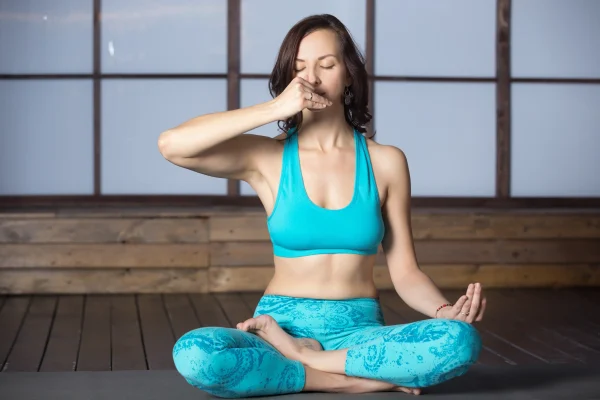
When a panic attack begins, you need an emergency brake. You can use a specific Breathwork Practice to interrupt the adrenaline surge. Force yourself to take a long, slow exhale to tell your brain that you are safe. No one in true physical danger stops to breathe slowly.
How long does it take for breathing exercises to work? Most people feel a significant drop in heart rate and physical tension within 60 to 90 seconds of intentional, rhythmic breathing. This rapid shift happens because you are physically moving the body out of a state of alarm.
Focusing on the breath also provides interoceptive exposure. This means you are teaching your brain to stay calm even when you feel physical sensations like a racing heart. Over time, these sensations lose their power to start a full-scale panic response.
The Science of Parasympathetic Activation
Your body has two main settings: "fight or flight" and "rest and digest." Parasympathetic activation refers to the process of switching into that second, calmer mode. The Vagus nerve acts as the superhighway for these signals. It is the longest cranial nerve in your body and connects your brain to your heart, lungs, and gut.
Is it possible to force your body to calm down? Data from the National Center for Biotechnology Information reveal that sensory afferents constitute over 80% of the vagus nerve. Stimulate the vagus nerve through deep diaphragmatic breathing to physically compel the parasympathetic nervous system to lower your blood pressure and heart rate. You are essentially "hacking" a nerve that carries the vast majority of its messages from the body up to the brain.
You also benefit from Respiratory Sinus Arrhythmia. This is the natural way your heart rate slows down every time you exhale. Lengthening your exhale maximizes this effect. This simple physical act forces your heart to beat more slowly, regardless of how anxious you feel.
Long-Term Stress Response Modulation
If you practice breathing only during a crisis, you miss the biggest benefit. Stress response modulation is the art of raising your baseline of calm. Regular practice increases your baroreceptor sensitivity. These are sensors in your blood vessels that help your body regulate pressure and heart rate automatically.
Can breathing exercises prevent future panic attacks? Consistent practice strengthens the neural pathways associated with emotional regulation, making your brain less likely to start a full-scale panic response over time. You are effectively building a buffer against stress.
A 2023 systematic review found in PMC indicates that eight weeks of consistent practice is effective for improving stress and anxiety outcomes. The review suggests that such interventions significantly lower salivary cortisol levels. This means your body produces fewer stress hormones even when you aren't actively practicing. You change the physical chemistry of your body, making you more resilient to daily frustrations.
Daily Breathwork Practice for Preventive Care
Building a daily Breathwork Practice requires less time than most people think. You only need a few minutes to see biological results. Start by choosing a specific time each day, like right after you wake up or before you go to sleep. This consistency creates a habit that your nervous system recognizes.
The Box Breathing Method for Stability
Navy SEALs use Box Breathing to stay calm during combat operations. The method follows a 4-4-4-4 second rhythm. You inhale for four seconds, hold for four, exhale for four, and hold the empty breath for four.
The hold phases are the most important part. They help stabilize your CO2 levels, which prevents the "suffocation alarm" from activation. This rhythm helps you maintain cognitive clarity and a "soft gaze" focus, allowing you to process information without feeling overwhelmed.
The 4-7-8 Technique for Deep Relaxation
Dr. Andrew Weil calls the 4-7-8 technique a "natural tranquilizer." You inhale for four seconds, hold for seven, and exhale for eight. The seven-second hold allows oxygen to fully enter the bloodstream while stabilizing CO2.
The eight-second exhale is the key to parasympathetic activation. Because the exhale is twice as long as the inhale, it sends a massive signal of safety to the Vagus nerve. Many people use this technique to fall asleep or to de-escalate after a stressful meeting.
Rewiring the Brain’s Fear Center
Your brain can physically change based on how you use it. This is called neuroplasticity. Long-term practitioners of a Breathwork Practice show increased gray matter density in the prefrontal cortex. This is the part of the brain responsible for rational thinking and impulse control.
At the same time, fMRI studies show that the amygdala actually shrinks in frequent practitioners. Modulating your breath strengthens the connection between your rational brain and your fear center. This allows your prefrontal cortex to "veto" the panic signals sent by the amygdala.
You also improve your CO2 tolerance. You can measure this using the "Control Pause" test developed by Dr. Konstantin Buteyko. Learning to be comfortable with higher levels of CO2 prevents your brain from overreacting to minor changes in your breathing.
Overcoming Barriers to Consistency
Many people struggle because they breathe through their mouths. As reported in a peer-reviewed study in PMC, mouth breathing can cause blood pressure to rise and increase physiological stress. Nasal breathing is essential because research on PubMed indicates it produces significantly more nitric oxide than mouth breathing, with levels measured at more than double those of oral breathing. This molecule helps your blood vessels relax and improves oxygen delivery to your brain.
If you feel too busy, use "habit stacking." Attach your breathing sessions to something you already do, like driving to work or waiting for the coffee to brew. A publication from Harvard Medical School notes that the "Relaxation Response," a technique developed by Dr. Herbert Benson, can be activated in as little as three minutes. A "3-minute minimum" rule ensures that you never skip a day.
Use a heart rate variability (HRV) monitor to help as well. Seeing your heart rate drop on a screen provides immediate proof that your stress response modulation is working. This data makes the practice feel less like a chore and more like a measurable skill you are developing.
Reclaiming Your Life with Breathwork Practice
Panic attacks feel like an ambush, but you now have the tools to fight back. You understand that the gasping and dizziness are just biological errors that you can correct. Engage in a dedicated Breathwork Practice to take the steering wheel of your nervous system and drive yourself back to safety.
True self-regulation comes from the realization that you can change your internal state in under two minutes. You no longer have to fear the next surge of adrenaline because you know how to stimulate parasympathetic activation on demand. This represents a way to reclaim your freedom rather than functioning as a mere coping skill.
Start your first three-minute session today. Every slow, intentional exhale builds a stronger version of you. As you refine these techniques, you will find that the world feels smaller and your ability to handle it feels much, much larger.
Recently Added
Categories
- Arts And Humanities
- Blog
- Business And Management
- Criminology
- Education
- Environment And Conservation
- Farming And Animal Care
- Geopolitics
- Lifestyle And Beauty
- Medicine And Science
- Mental Health
- Nutrition And Diet
- Religion And Spirituality
- Social Care And Health
- Sport And Fitness
- Technology
- Uncategorized
- Videos

