
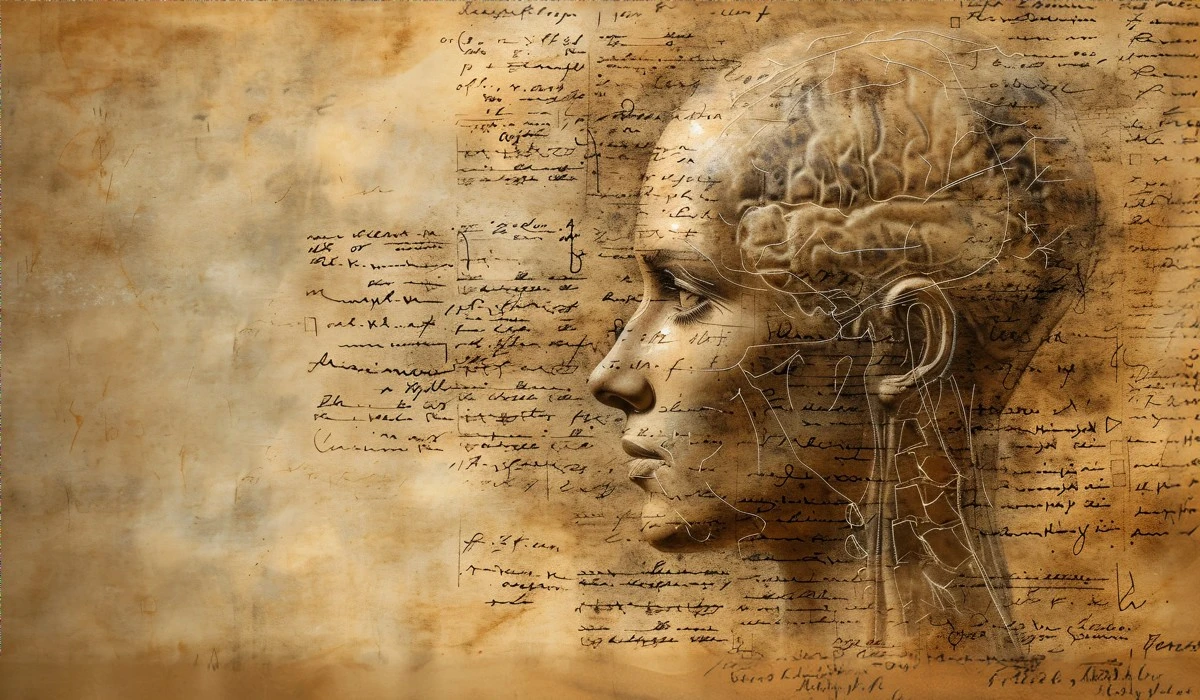
History of Psychology: Hack Human Nature
You think you’re in control, but your actions are often just echoes of patterns set long before you were born. We live by a hidden script we never learned to read. Studying the History of Psychology is how you find the manual. It turns the "mystery" of human behavior into a predictable map. When you understand the science behind why a red notification causes anxiety, you stop being a puppet to your impulses and start becoming the observer. It’s the ultimate "cheat code" for the present: learn how the mind was measured, and you’ll learn how to master it.
The Foundations of Human Action
Psychology began as a branch of philosophy. Early thinkers argued about the soul and the mind without using data. They sat in rooms and thought about thinking. This changed when researchers decided to treat human thought like a physical force.
From Philosophical Roots to Scientific Rigor
The shift to science happened when people stopped asking "why" and started asking "how much." Researchers began to time reactions and map senses. They wanted to find the laws that govern the human spirit.
You can see this shift by looking at the major periods of the field. What are the 4 stages of the history of psychology? The field progressed through philosophy, then natural science, then the study of the mind, and finally the study of observable behavior. Each stage brought us closer to a reliable way to predict what a person will do next.
The Birth of the Laboratory Mindset

In 1879, Wilhelm Wundt changed everything. He opened the first formal psychology lab at the University of Leipzig. He used a method called "introspection" to break down thoughts into small pieces.
His student, Edward Titchener, tried to catalog every single sensation a human could feel. He identified over 44,000 distinct sensory qualities. While this seems extreme, it proved that we can study the mind with the same precision as chemistry. This period of the History of Psychology turned the human experience into a map of data points.
Why the History of Psychology Matters Today
Understanding the past helps you spot the tricks used by modern tech and marketing. Human nature does not change as fast as our tools. A person in 2024 reacts to fear the same way a person did in 1924.
Recognizing Recurrent Patterns in Human Decision Making
Technology changes, but our impulses stay the same. According to research published in the PMC, Hermann Ebbinghaus demonstrated this in 1885 by introducing the "savings measure" to quantify how we learn and retain information.
He discovered that we lose 50% of new information within one hour. This "forgetting curve" still dictates how students study and how advertisers repeat their messages. Knowledge of how fast people forget tells you exactly when to remind them of your presence. This remains a basic lesson in the History of Psychology.
Identifying the Logical Fallacies of the Past
When you know the mistakes of early scientists, you avoid the traps of modern influencers. Early functionalists like William James focused on how habits help us survive. He argued that habits act as a massive flywheel for society.
People repeat 90% of their previous day, even though they often think they make new choices every day. Learning this allows you to stop fighting your nature. You start building better "fly-wheels" instead.
Governing the Stimulus: Behaviorism, Psychology, History
The most powerful "hacks" come from the period that ignored the mind entirely. As defined by the American Psychological Association, behaviorists focused exclusively on objective and observable facts instead of internal, subjective feelings. This period of behaviorist psychology gave us the tools to change behavior through simple prompts.
Pavlov and the Power of Subconscious Association
An entry in Britannica details how Ivan Pavlov found he could trigger salivation in hungry dogs by using a metronome or buzzer that the animals had come to associate with food. This is "classical conditioning."
Today, every app on your phone uses this. The specific "ping" of a message makes your brain release chemicals before you even read the text. Who is the father of behaviorism? John B. Watson earned this title when he shifted the History of Psychology toward these observable actions and away from internal feelings.
The Shift from Internal Mind to External Action
As documented in a 1920 study on conditioned emotional reactions, John B. Watson and Rosalie Rayner suggested that the environment could shape any child's future—whether they became a doctor or a thief—a theory they tested through the "Little Albert" experiment. They made a baby fear a white rat by banging a hammer every time the rat appeared.
Our histories of bad associations define us more than the idea of a "fearful personality." Understanding the history helps you unpair these prompts and regain control.
Strategic Reinforcement in the Digital Age
B.F. Skinner took these ideas further. He looked at what happens after an action in addition to what happens before. This led to the discovery of reinforcement.
Skinner’s Box and the Mechanics of the "Scroll"
Skinner used a box to reward rats for pressing a lever. Research shared by Lumen Learning notes that "variable ratio" schedules, where rewards appear at random intervals, are the most productive and hardest to stop.
Social media feeds work exactly like a Skinner Box. You scroll because you might see something good, but you don't know when. What is the primary focus of behaviorism? This field focuses on how rewards and punishments in your environment shape and control your daily actions. This knowledge helps you realize that your phone is a box designed to keep you pressing the lever.
Using Negative Reinforcement to Drive Productivity
OpenStax explains that negative reinforcement involves removing an unpleasant stimulus to encourage a specific behavior, which differs from punishment. The text points to car seatbelt systems as an example, where the annoying "beep" only stops once the passenger buckles up.
You can hack your own life with this. Tell yourself you can only turn off an annoying alarm once you have finished a difficult task. This uses the laws of behaviorist psychology history to force your brain into high gear.
Breaking Cognitive Barriers via the History of Psychology
In the 1950s, the focus shifted back to the brain. As noted in a paper from Princeton University, the 1950s saw a shift toward cognitive science as fields like psychology and linguistics redefined themselves. The Association for Psychological Science further describes how this movement viewed the human mind as a system that collects, saves, and retrieves data much like a computer.
The Brain as a Processor
George Miller discovered "The Magical Number Seven." He proved that the human brain can only hold about seven pieces of information at once. This is why phone numbers have seven digits.
Grouping information through "chunking" allows you to bypass this limit. If you want someone to remember an involved idea, break it into three groups of three. This uses the History of Psychology to make your communication more effective.
Heuristics and Biases: Shortcuts of the Human Brain
Amos Tversky and Daniel Kahneman showed that the brain takes shortcuts called heuristics. One famous shortcut is "loss aversion." We feel the pain of losing ten dollars twice as much as the joy of gaining ten dollars.
Marketers use this to "hack" your wallet. They tell you what you will lose if you don't buy, rather than what you will gain. Recognizing these shortcuts allows you to make logical decisions instead of emotional ones.
Social Dynamics and the Power of Proximity
Your environment dictates your behavior more than your personality. Historical experiments show that even "good" people act poorly in the wrong situation.
The Authority Hack: Lessons from Milgram and Zimbardo
Britannica reports on the Milgram experiment, which showed that 65% of participants—specifically 26 out of 40 men—were willing to administer a 450-volt shock to a stranger when instructed by an authority figure. They did not want to do it, but the pressure of authority was too strong.
As recorded in Britannica’s account of the Stanford Prison Experiment, healthy students assigned as guards became tyrannical and cruel. The same source notes that the behavior became so extreme that researchers had to end the study after only six days. This teaches you that to change your behavior, you must change your role and your surroundings.
Social Proof and the Psychology of the Crowd
According to OpenStax, Solomon Asch's research found that 76% of people would give an obviously incorrect answer at least once just to conform to group pressure. If five people say a short line is longer than a long line, the sixth person often agrees just to fit in.
You can use this for leadership. If you get three people to adopt a new habit, the rest of the group will likely follow. This "social proof" is a basic concept in the History of Psychology.
Practical Applications for Modern Persuasion
You can combine these historical lessons to command your daily life. Use behaviorism to build habits and cognitive science to improve your thinking.
Ethical Hacking of Your Own Habit Loops
Cognitive Behavioral Therapy (CBT) started in the 1960s with Aaron Beck. It combines the study of thoughts with the study of actions. It helps people identify "automatic thoughts" that lead to bad moods.
Tracking your prompts allows you to use the history to overwrite them. If you feel sad when you sit on the couch, change the room's layout. This breaks the association and forces your brain to build a new path.
Predicting Responses in High-Stakes Negotiations
In a negotiation, people often rely on the "Availability Heuristic." They judge the value of a deal based on the last piece of news they heard.
If you provide a strong positive fact right before a decision, that fact carries more weight. This is a classic "hack" from the History of Psychology. You change how their brain processes the deal instead of changing the deal itself.
Gaining Control of the Human Code
The world around you consists of a series of prompts designed for specific results, rather than a collection of random events. When you study the History of Psychology, you stop being a passenger in your own mind. You start to see the levers and buttons that move everyone from your boss to your children.
Learning the lessons of behaviorism, psychology history, and cognitive science gives you an unfair advantage. You can predict how people will react to stress, rewards, and authority. Use this power to build better habits, lead more effectively, and understand the deep roots of your own nature. The past is not behind us; it is the operating system we use every day.
Recently Added
Categories
- Arts And Humanities
- Blog
- Business And Management
- Criminology
- Education
- Environment And Conservation
- Farming And Animal Care
- Geopolitics
- Lifestyle And Beauty
- Medicine And Science
- Mental Health
- Nutrition And Diet
- Religion And Spirituality
- Social Care And Health
- Sport And Fitness
- Technology
- Uncategorized
- Videos

