
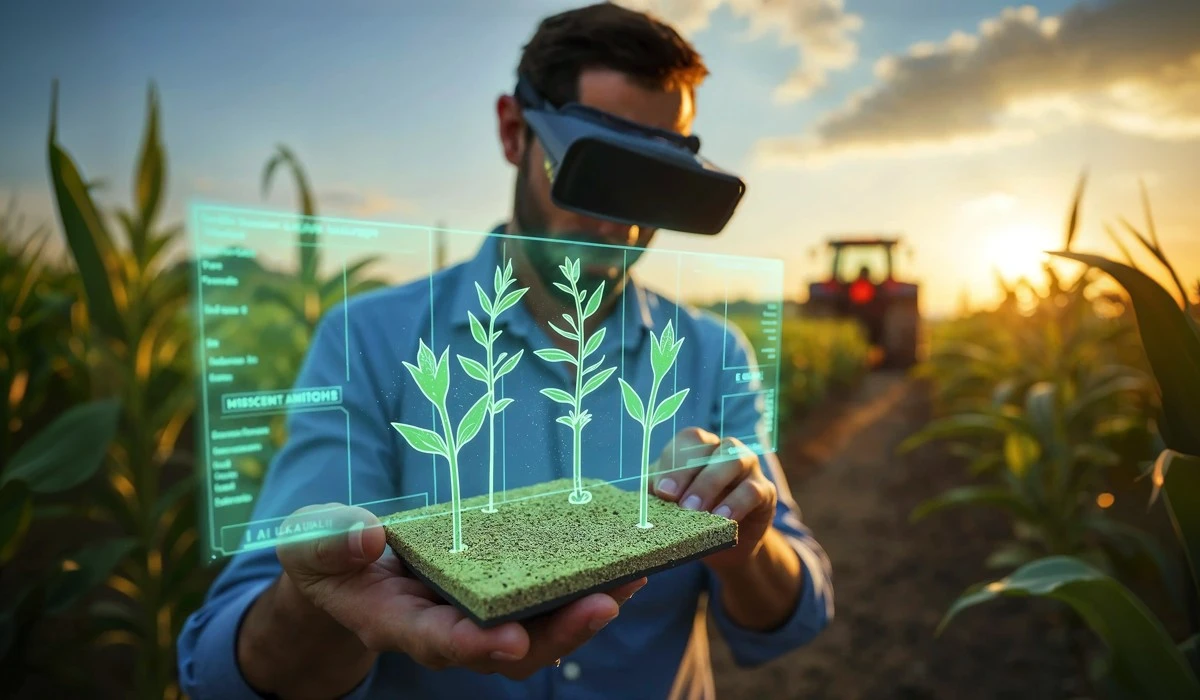
AI In Agriculture Helps Solve Labor Gaps
Most shoppers see a mountain of cheap oranges and think the world produces food with ease. They do not see the thousands of acres where fruit falls and rots because nobody arrives to pick it. For decades, the global food supply relied on a steady stream of people willing to do back-breaking work for low pay. That stream finally dried up.
Younger generations move to cities for office jobs, leaving a graying workforce behind. Farmers now face a math problem they cannot solve with longer hours or higher bonuses. A massive gap exists between the food the world requires and the hands available to grow it. This pressure forces a total shift in how we manage the land.
The industry now turns to high-tech solutions to keep the shelves full. Computers and sensors step into the roles once held by seasonal crews. The use of AI In Agriculture allows growers to produce more food with fewer people. This changes the farm from a place of manual toil into a center of digital precision.
The Modern Agrarian Challenge: Understanding the Growing Labor Gap
The agricultural industry currently faces a workforce deficit of approximately 2.4 million people. This situation represents a full-scale crisis for food security. Farmers pay more for help than ever before. Total labor costs will likely hit $53 billion this year. In many cases, labor takes up half of the entire farm budget.
Meanwhile, the people actually doing the work are aging out. The average U.S. producer is now over 58 years old. Young people do not want these physically punishing jobs. Ironically, even as technology connects the world, the physical connection to the land is breaking. The pool of skilled machinery operators and even basic fruit pickers is smaller than at any point in modern history.
Farmers tried to fill the gap with temporary visas. Requests for these visas climbed from 48,000 to 385,000 in just two decades. This creates a dangerous dependency on outside help that might not always be available. International markets feel this same pain. Canada expects 40% of its farm operators to retire within the next decade. These veterans take decades of knowledge with them when they leave.
Traditional reliance on migrant workers is no longer a sustainable business model. Borders close, policies change, and wages rise. Large-scale operations now realize they cannot gamble their harvest on the hope that enough people will show up at the right time. They need a permanent, reliable workforce that does not retire or move to the city.
How AI In Agriculture Transforms the Workforce Setup
Modern software changes how a farm functions at its core. The market for these tools will grow to over $7 billion by 2030. This happens because software provides a way to manage massive areas with tiny teams. How does AI help with farm labor shortages? AI solves labor shortages through the automation of repetitive, physically demanding tasks and the optimization of resource management, allowing farmers to manage larger areas with fewer human workers.
This technology replaces manual labor while providing observation capabilities that exceed human limits. In the past, a farmer had to walk every row to check for bugs or thirsty plants. This took days and required a large scouting crew. Now, drones and ground robots scan fields with incredible speed. They see things a human eye might miss.
Computer Vision and Crop Monitoring

Computers now use cameras to see what humans miss. They scout fields 24/7. The identification of a single sick plant among millions prevents diseases from spreading. Computer vision identifies ripeness with perfect accuracy. This ensures that every piece of fruit picked is at its peak.
This method removes the need for a huge scouting crew. One operator can monitor thousands of acres from a screen. The software flags the exact spots that need attention. This makes the limited staff much more productive.
Specialized Generative AI for Knowledge
According to a report by NARO, the organization launched a generative AI specialized in agricultural knowledge in late 2024 and began experimental studies in Mie Prefecture on October 21. Research published in Biz Chosun indicates that this specific system is 40% more accurate than standard general-purpose generative AI tools. It helps new workers make expert decisions about soil health on their first day. The tool acts like a digital coach that stores decades of farming wisdom, which helps bridge the skills gap when experienced workers retire.
The Rise of Agricultural Automation: From Field to Shed
We usually think of robots in car factories, but they now live in the mud. Agricultural automation handles the heavy lifting that human backs can no longer endure. These machines work through the night and do not care about the heat or the rain. They represent a new workforce that is always on call.
Robotic Harvesting Systems
Picking fruit requires a soft touch. For years, people thought a machine would always bruise a strawberry or a peach. New robotic grippers use soft-touch technology to feel the pressure they apply. They pick fruit without bruising it. They use sensors to judge the color and size of each piece of fruit.
They only pick what is ripe, leaving the rest for the next pass. This consistency ensures higher-quality produce. It also eliminates the need for massive seasonal picking crews. These robots provide a steady harvest pace that human crews often struggle to maintain over a long season.
Autonomous Tractors and Weeding Robots
A report from Clean Fleet Report notes that John Deere’s autonomous 8R tractor is capable of preparing more than 325 acres of land within a 24-hour period without anyone in the cab. Technical specifications from John Deere explain that the vehicle uses six pairs of cameras and a deep neural network to evaluate obstacles in approximately 100 milliseconds. The study by the manufacturer confirms that the tractor stops instantly if an obstacle, such as a dog, is detected in its path. This allows a farmer to focus on other tasks while the tractor works on its own.
Meanwhile, machines like the LaserWeeder kill 5,000 weeds a minute using light. It uses 240-watt lasers to zap unwanted plants with sub-millimeter accuracy. This one machine does the work of 75 people with hoes. It pays for itself in just a few seasons by removing the need for manual weeding crews.
Maximizing Performance with Precision Farming Technology
Data acts as the new fuel for the modern farm. Precision farming technology ensures that every drop of water and every seed counts. This eliminates the "guesswork" that used to take up thousands of man-hours. Can AI reduce the cost of farming? Yes, by optimizing inputs like water and fertilizer and reducing the need for manual labor, AI significantly lowers the overall operational costs for modern farms.
According to the USDA Economic Research Service, approximately 73% of the largest corn-producing farms in the U.S. had adopted guidance technology by 2016. These tools help them stay profitable even when prices are low. Resources used more wisely also help protect the environment. This is a win for the farmer and the planet.
Variable Rate Application (VRA)
As reported by the USDA Economic Research Service, Variable Rate Technology (VRT) allows sprayers to use digital maps to apply chemicals only where weeds exist by automatically controlling input flow rates. Technical documentation from CNH Industrial adds that platforms like FieldXplorer use AI to transform drone images into maps that distinguish weeds from crops, creating a prescription spraying map for the machine. This technology has reached nearly 70% of major grain farms and saves up to 90% on herbicide costs.
This practice keeps the soil healthy by avoiding over-spraying. It also reduces the number of times a farmer needs to refill the tank. Fewer refills mean less time spent driving back and forth to the barn. Every minute saved is a minute that a small staff can use elsewhere.
Smart Irrigation Management
Systems like Farmblox monitor soil moisture levels using sensors in the ground. They turn on pumps only when the plants actually need water. This saves 10,000 labor hours a year on large farms. It also cuts water use by 20%.
Manual irrigation requires a team to move pipes and check valves all day. Smart systems do this automatically. They send an alert to the farmer’s phone if a pipe leaks. This allows a tiny team to manage water for thousands of acres without breaking a sweat.
Cognitive Farming: Using AI In Agriculture for Predictive Planning
The labor gap does not just affect the fields; it affects the office. Expert farm managers and agronomists are hard to find. AI in Agriculture acts as a 24/7 consultant. It looks at decades of weather data and market trends to give advice.
Yield Forecasting and Supply Chain Integration
Software looks at weather and satellite images to predict the harvest. This allows farmers to schedule trucks and storage at the exact right moment. No one sits around waiting for a crop that isn't ready. This makes the entire supply chain more productive.
Predictive planning also helps with labor scheduling. If the AI predicts a late harvest, the farmer can delay hiring. This prevents a situation where workers sit around with nothing to do. It ensures that every dollar spent on labor actually produces a result.
Managing the Succession Gap
When senior farmers retire, they take their "gut feelings" with them. Software now digitizes that intuition. The documentation of every action taken on a farm over the years allows the AI to learn the best practices for that land. It ensures that the next generation has a playbook to follow.
This is vital for keeping family farms alive. It takes the pressure off the new owner to know everything on day one. The software provides a safety net that helps them avoid costly mistakes. It preserves the legacy of the farm while moving it into the future.
Overcoming the Barriers to AI Integration
Buying a high-tech tractor is a huge financial move. A single autonomous setup can cost $500,000. This is a barrier for smaller operations. Is AI in farming difficult to learn? While the backend is complicated, most modern agricultural AI interfaces are designed to be user-friendly, requiring minimal technical training for traditional farm staff to operate effectively.
Companies now focus on making their software look like simple smartphone apps. This helps workers who might not have a tech background. The goal is to make the technology helpful, not intimidating. Most people can learn the basics in just a few hours.
Solving the Connectivity Issue
Many fields have no cell service. Robots need the internet to send data and receive updates. A statement from John Deere reveals that the company is collaborating with SpaceX to install ruggedized Starlink terminals and 4G LTE JDLink modems on compatible machinery. This allows them to download new maps in the middle of a remote field.
Good connectivity allows the machine to talk to the manufacturer. If something breaks, the technician can often fix the software remotely. This saves the farmer from waiting days for a mechanic to drive out to the farm. It keeps the machines running during the busiest times of the year.
The Training Shift
The farm worker of the future might carry a laptop instead of a shovel. This requires a shift in education. Technical colleges now offer courses in "Ag-Tech" to prepare students. While the farm needs fewer people overall, it needs the remaining workers to have higher skill levels. This creates better-paying jobs in rural areas.
The Economic Reality of Scaling AI In Agriculture
Human labor prices change every season. Agricultural automation offers a fixed cost that farmers can plan around. It removes the stress of wondering if workers will show up. Growers see a return on their investment in just one to three years.
In vineyards, this technology adds over $400 in value per acre annually. This comes from higher yields and lower payroll. Hardware currently leads the market, but smart cloud services are growing even faster. Farmers prefer to pay for software that keeps getting better.
This economic shift makes farming a more attractive business for investors. When the risks of labor are lower, more people are willing to put money into the land. This leads to more innovation and even better tools. It creates a cycle of growth that benefits the entire food industry.
Ultimately, the goal is a more resilient food system. When a farm relies on software and robotics, it becomes less vulnerable to labor shortages. This stability helps keep food prices lower for everyone at the grocery store. It ensures that we can always count on a full harvest.
The Resilient Future of Farming
The push for high-tech farming started as a way to save money. Today, it is the only way to save the industry. We cannot force people back into the fields, but we can give the remaining farmers better tools. Integrating AI In Agriculture ensures that the next generation has a viable business to inherit.
These machines perform tasks beyond labor replacement, allowing us to treat every plant with individual care. We no longer need to choose between producing enough food and treating the land with respect. Technology bridges that gap. It gives the remaining farmers the power to manage vast territories with precision and ease.
The shift is a big step, but the result is a food system that is stronger than ever. As these tools become cheaper and smarter, they will spread to every corner of the globe. This ensures that even as the world’s population grows, we will have the means to feed everyone. The future of the farm is digital, autonomous, and incredibly productive.
Recently Added
Categories
- Arts And Humanities
- Blog
- Business And Management
- Criminology
- Education
- Environment And Conservation
- Farming And Animal Care
- Geopolitics
- Lifestyle And Beauty
- Medicine And Science
- Mental Health
- Nutrition And Diet
- Religion And Spirituality
- Social Care And Health
- Sport And Fitness
- Technology
- Uncategorized
- Videos

