
Image Credits- Wikimedia Commons
Bette Nesmith Graham and the $47 Million Error
Successful inventors often monetize their weaknesses, while most people simply try to fix them. Bette Nesmith Graham did not build her empire because she was a perfect employee; she built it because she was a flawed typist who refused to accept that an error had to be permanent. She looked at a problem that everyone else accepted as a necessary evil—typing mistakes—and realized the solution required better paper rather than better typing.
According to the USPTO, the 1950s saw offices shifting toward speed and automation, leaving workers behind. Lemelson-MIT notes that while new electric typewriters increased productivity, their sensitive keys and disordered carbon-film ribbons made errors frequent and difficult to remove without ruining the document. A single slip of a finger meant a permanent smear on the page.
Graham, a high school dropout and single mother working as an executive secretary, felt this tension daily. Her fingers felt heavy on the keys. Every mistake cost time and threatened her job security. She didn't have a business degree or a chemical engineering background. She had a kitchen blender, a background in art, and a desperate need to keep her $300-a-month paycheck. By realizing that mistakes needed covering rather than erasing, she started a business that would one day sell for millions.
The Electric Typewriter Trap
Technological advancements frequently create new problems for the humans forced to use them. The introduction of the electric typewriter in the 1950s promised speed, yet it penalized accuracy. The carbon ribbons used in these machines made standard erasers obsolete. If you tried to rub out a letter, the carbon smeared across the page, leaving a messy gray smudge that screamed incompetence.
Bette Nesmith Graham faced this reality at Texas Bank and Trust. She typed documents all day, and the pressure was immense. The equipment allowed for zero error, but human hands are naturally imperfect. She noted that her fingers felt "heavy" on the delicate electric keys. A slight graze of a wrong letter meant retyping the entire page.
The office culture of the time demanded perfection. Graham knew that without a solution, her job was at risk. The gap between the machine’s demands and human capability created a market need that no one else saw. While other secretaries stressed over their typing speed, Graham started analyzing the physical nature of the ink and paper. She understood that fighting the machine was useless. She had to modify the surface the machine wrote on.
The Kitchen Laboratory Solution
Sometimes the best office solutions come from looking out a window rather than staring at a spreadsheet. During the holidays, Graham watched painters decorating the bank windows. When they made a error with a letter or a line, they didn't scrape the glass or wash the whole window. They simply painted over the error with another layer of color.
This observation triggered a shift in her thinking. She remembered her background as an artist. Painters layer paint rather than erase it. She decided to apply this logic to her typing duties. Since removing the carbon ink proved impossible, she decided to hide it.
She turned her kitchen into a makeshift laboratory. Graham took white water-based tempera paint and began mixing it with various chemicals in her standard kitchen blender. She needed a formula that would dry quickly and match the white stationer's bond used at the bank. She poured the mixture into empty nail polish bottles and brought her "laboratory" results to work. She used a watercolor brush to apply the white fluid over her typographical error. It worked. The error vanished under a fresh white coat, ready to be typed over again.
Hiding the Hustle in Plain Sight
A product rarely stays a secret when it solves a universal pain point. As detailed by Invention & Technology, Graham initially called her invention "Mistake Out" in 1956. She used it covertly at her desk, hiding the bottle to avoid scrutiny from her bosses. However, other secretaries noticed that her work looked pristine even when they knew she made errors. They wanted the same protection.
Demand grew organically within the bank. Graham couldn't keep up with the requests using just her kitchen setup. She recruited a small, affordable workforce: her son, Michael Nesmith, and his friends. Before Michael found fame as a member of The Monkees, he spent his time in a garage bottling white paint.
Graham paid them $1 an hour to fill ketchup and mustard squeeze bottles with the mixture. They also used empty nail polish containers, which came with convenient brushes built into the caps. This operation served as a survival strategy rather than a sophisticated manufacturing plant. Is Bette Nesmith Graham the inventor of Liquid Paper? Yes, Invention & Technology notes that she renamed the product "Liquid Paper" in 1958 after a trade magazine featured it.
The business operated in the margins of her life. She worked her full-time job during the day and managed production at night. She relied on help from a high school chemistry teacher and a paint company employee to refine the formula. She even spent hours in the library researching chemical compounds to ensure the paint wouldn't crack or discolor.
The Mistake That Launched a Company
Losing your safety net is often the only way to force a hobby into a business. For years, Graham treated her invention as a side project. She earned a salary from the bank and sold bottles to colleagues and local businesses. But the duality of her life eventually collided.
In a moment of irony, she made a typing error that she couldn't paint over. While typing a letter for her boss at Texas Bank and Trust, she unintentionally signed it with "The Mistake Out Company" instead of the bank's name. The error revealed her side business to her employers.
Why was Bette Nesmith Graham fired from her job? The Texas State Historical Association (TSHA) records that she was fired for signing a bank letter with her own company's name, an event that forced her to devote all her time to her invention. The bank fired her immediately. This dismissal removed her safety net. She no longer had the $300 monthly salary to fall back on. The firing pushed her to take "Mistake Out" seriously. She had to make the business work because she had no other option.
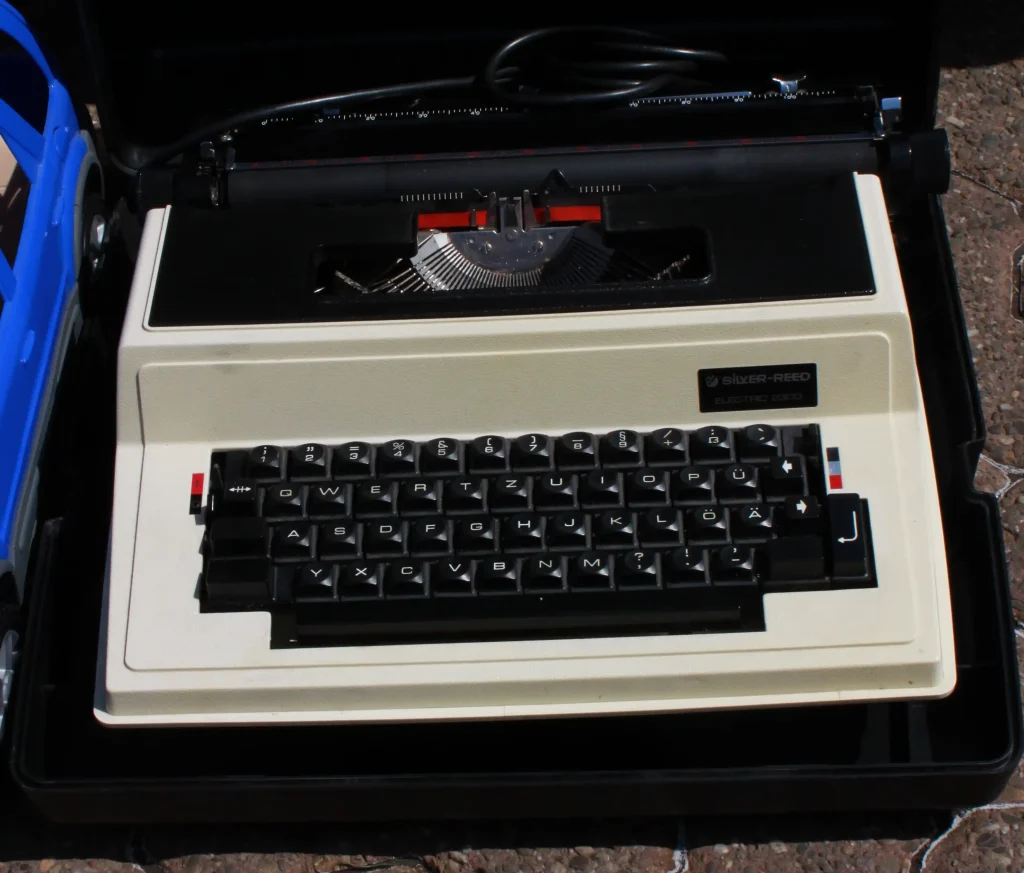
Image by- Neozoon, CC BY-SA 3.0
Scaling With Spirit
Building a corporation usually requires ruthlessness, but sometimes empathy creates a stronger foundation. Graham did not follow the standard cutthroat corporate playbook. Her business model relied heavily on her faith in Christian Science and her trust in the spiritual value of individuals.
By 1967, the company produced 1 million units each year. WRAL reports that by 1968, she opened an automatic plant to handle the volume. According to Lemelson-MIT, by 1975 the company operated out of a 35,000-square-foot headquarters and churned out twenty-five million bottles annually. Yet, Graham focused on more than just output.
She stated that her business plan prioritized people above buildings and dollars. She designed the headquarters to be an environment that valued employees. Her son, Michael, later noted that her success came from her study of Christian Science rather than purely business acumen. Graham believed that success was available to everyone and that her achievements were the outcome of recognizing "Spirit as substance." This philosophy attracted talent. People wanted to work for a leader who offered unique treatment and respect, creating a loyal workforce that drove the company's massive growth.
The Battle for Control
Partners often turn into competitors when millions of dollars are on the table. While Graham projected a story of a successful single mother, her personal life held significant complications. She married Robert Graham in 1962, and he became involved in the business.
This partnership did not remain equal. As the company's valuation soared into the multi-millions by 1973, tensions rose. Robert Graham attempted to seize control of the procedure. He even tried to bar Bette from the premises of the company she founded.
The narrative of the struggling single mom clashing with corporate interests became a reality in her own home. She had to fight to maintain authority over her invention. The marriage ended in divorce in 1975, the same year production hit its peak. Graham maintained that women needed to remain relentless. She observed that her male counterparts often lacked understanding of her perspective, reinforcing her belief that persistence was required to survive in a male-dominated industry.
The Multi-Million Dollar Exit
The ultimate validation of an idea is a check that secures generational wealth. After decades of mixing paint in blenders, facing financial losses in 1960, and struggling to pay a $400 patent fee, Bette Nesmith Graham reached the finish line.
In 1979, she sold the Liquid Paper corporation to Gillette. The sale price was $47.5 million. On top of this massive sum, she negotiated a royalty deal on every bottle sold for the upcoming 20 years. This ensured that her estate would continue to grow long after her direct involvement ended.
How much was Bette Nesmith Graham worth when she died? Her estate was valued at over $50 million in 1980; thanks to the sale of her company and the royalty agreements she secured. She didn't hoard this wealth. Through the establishment of the Gihon and Bette Clair McMurray Foundations, she systematically supported women’s professional and personal development. Her charitable giving was a direct reflection of her own history, aimed at dismantling the barriers she had personally overcome.
The Value of Imperfection
Bette Nesmith Graham died in 1980, just 6 months after selling her company, but her legacy remained cemented in office supply history. She proved that the path to a $47 million fortune does not always require technical perfection; it demands the ability to see a flaw in the system and offer a practical fix.
She turned a typing error from a source of shame into an asset. By refusing to let the electric typewriter dictate her worth, she made a tool that saved millions of workers from frustration. Her rise from a kitchen laboratory to the boardroom of a global corporation highlights a simple reality: sometimes, the biggest opportunity lies right underneath the mistake you are trying to hide.
Recently Added
Categories
- Arts And Humanities
- Blog
- Business And Management
- Criminology
- Education
- Environment And Conservation
- Farming And Animal Care
- Geopolitics
- Lifestyle And Beauty
- Medicine And Science
- Mental Health
- Nutrition And Diet
- Religion And Spirituality
- Social Care And Health
- Sport And Fitness
- Technology
- Uncategorized
- Videos

