

Raymond Koh Abduction: State Verdict Explained
Complete silence following a crime usually proves the presence of control rather than the lack of clues. When a kidnapping happens on a busy street in broad daylight, the lack of immediate chaos suggests professional training, not amateur desperation. Most criminals panic and leave a mess. A clean extraction points to a payroll, not a passion.
This reality sits at the center of the Raymond Koh abduction case. On a humid morning in February 2017, the pastor vanished from a Malaysian suburb in less than a minute. The operation resembled a tactical maneuver rather than a random gang attack. For many years, the official narrative drifted between denial and deflection. Authorities blamed smugglers. They blamed personal feuds. They blamed the victim.
But the courts have finally pierced that veil. A landmark verdict has shifted the blame from unknown criminals to the state itself. The High Court found that the government was accountable for the disappearance. This ruling validates nearly a decade of suspicion held by Koh’s family. It turns a missing person case into a confirmed instance of state-sponsored oppression. The judgment exposes a system that used public resources to silence a private citizen.
The Anatomy of the Takeover
Order amidst violence forces you to look at who holds the remote control. Random street crime relies on opportunity, but a coordinated strike relies on a schedule. The kidnapping of Pastor Raymond Koh unfolded with military precision. It happened on 13th February, 2017, in a silent suburb of Kuala Lumpur. The clock showed 10:00 AM.
Koh drove his car down the road, likely heading to a mundane appointment. Suddenly, 3 black SUVs swarmed his vehicle. The vehicles boxed him in tight immediately. Two motorcycles flanked the action to manage traffic and bystanders. Fifteen men exited the vehicles. They moved with a synchronized efficiency that shocked witnesses. As Malaysiakini reported based on leaked CCTV footage, the kidnapping happened within mere seconds; the men extracted Koh, secured his vehicle, and vanished.
Professional Execution
Cameras caught the entire event. The footage shows a level of choreography rarely seen outside of special forces drills. The perpetrators stopped traffic, neutralized the target, and cleared the scene before local police could even receive a call. This resembled a tactical extraction rather than a snatch-and-grab. The speed of the event suggests weeks of surveillance. The team knew his route. They knew his schedule. They knew exactly how much time they had before the public reacted.
What happened to the investigation?
A civil court ruled that Malaysia's Special Branch intelligence agency bears responsibility for the kidnapping.
The terrifying efficiency of the abduction frightened the public. It suggested that safety barriers did not apply to specific targets. The sheer number of personnel involved—fifteen men—indicates a significant budget and command structure. Street gangs do not employ that much manpower for a single target without a guarantee of high returns. In this case, the return was silence.
Why the Target Mattered
When charity looks like a menace to authority, helping the vulnerable becomes a dangerous political act. Feeding the poor often appears to those in the shadows as building an army. Raymond Koh ran an NGO called Harapan Komuniti. He spent his days helping people that society often ignored.
CNA highlights that Raymond Koh was known for community work, specifically helping single mothers, providing tuition for children, and supporting HIV patients. However, his profile carried a heavier weight in a religiously sensitive environment. Accusations followed him. AP News reported that the family said Koh received death threats and was under investigation for supposedly proselytizing to Muslims before he disappeared. In Malaysia, attempting to convert Muslims is a severe legal and social offense. Authorities often view it as a risk to national stability.
Warnings Before the Silence
The danger did not appear out of nowhere. Koh received threats prior to his disappearance. Someone mailed him bullets. This specific type of intimidation sends a clear message: stop what you are doing, or the next bullet arrives faster. The pastor ignored the warnings and continued his work. He believed his mission to help the poor superseded the political risks.
Why was Raymond Koh taken?
Authorities suspected him of proselytizing to Muslims, which some officials viewed as a threat to religious stability.
The state’s motive appears rooted in this perceived threat to Islam. The High Court’s findings suggest that powerful figures believed Koh’s actions required a permanent stop. They did not arrest him and charge him in open court. A public trial allows for a defense. A public trial creates a record. Instead, they chose an option that offered no chance for rebuttal. They removed him from the board entirely.
Examining the Official Deflection
A sudden surplus of alternative theories often serves to dilute the one truth everyone suspects. When the truth is dangerous, those in power manufacture noise. Following the Raymond Koh kidnapping, the police did not chase the most logical leads. They created a maze of confusion.
Investigators floated various narratives to the public. They suggested Koh might have links to drug trafficking. They proposed theories about human smugglers. At one point, they even dismissed the complexity of the operation, linking it to localized crime. These theories shifted the blame away from the state and onto the victim. Painting Koh as a criminal served to reduce public sympathy.
The "Rogue Cop" Narrative
Pressure mounted. The family demanded answers. The police strategy shifted from total denial to partial admission. They introduced the idea of "rogue cops." This narrative admits police involvement while protecting the institution. It suggests that a few bad apples acted alone, without orders from the top.
The family and their legal team rejected this story. The coordination of three SUVs and fifteen men requires logistics, approvals, and resources. A rogue operation usually lacks that level of infrastructure. The Civil Court agreed. Judge Su Tiang Joo noted that public power was exercised in bad faith. The deflection attempts proved that the investigators wanted silence, not solutions.
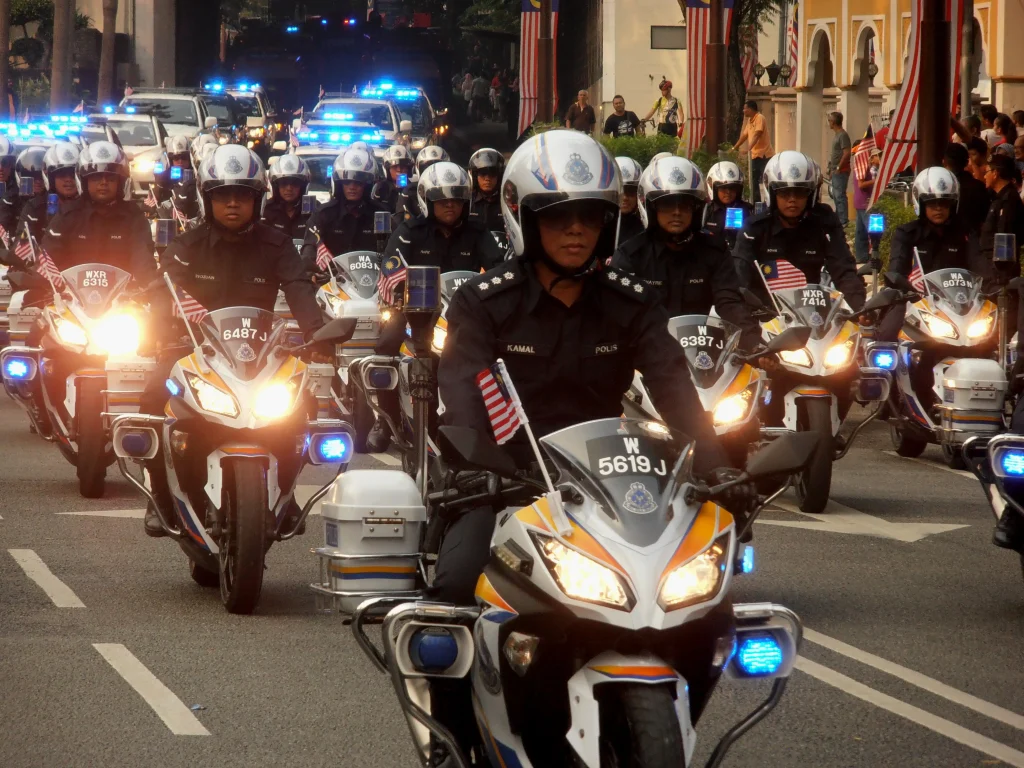
Image credits- By Rizuan - Own work, CC BY-SA 4.0, https://commons.wikimedia.org/w/index.php?curid=42827126
The Evidence Left Behind
Even the most careful cleanup crew misses a spot when they believe they are above the law. Arrogance leads to sloppy mistakes. The culprits of the Raymond Koh abduction likely assumed no one would dare investigate them thoroughly. They left breadcrumbs that led straight back to headquarters.
The most damning piece of evidence was a Gold Toyota Vios spotted at the scene. Investigators traced this vehicle. It belonged to Saiful Bahari Abdul Aziz. This man worked as a contract employee for the Special Branch. The discovery of his car at the crime scene shattered the "random crime" theory. It placed a state asset at the center of the kidnapping.
Tampering and Omission
The cover-up required active effort. An Open Doors UK & Ireland summary notes that the report initially given to Susanna appeared tampered with, containing unreadable blurred text and images. Furthermore, a key CCTV exhibit went missing. Evidence leaves a police locker only when someone removes it.
Inspector Ahmad Marzuki, the investigating officer, admitted to inaction. He testified that he took zero action on the case file between 2019 and 2022. He also failed to recall the contents of the file during testimony. This feigned ignorance protected his superiors but exposed the department’s complicity. The court saw through the act. The missing evidence spoke louder than the evidence presented.
Inside the Legal Struggle
Dragging a shadow agency into the light requires treating a courtroom like an excavation site. You have to dig through layers of bureaucracy to find the rot. Susanna Liew, Koh’s wife, led this charge. She did not accept the silence. The Star notes that on February 11, 2020, Liew filed this civil suit against 13 defendants, including the government.
The legal battle pit a single family against the entire government machinery. The Human Rights Commission (SUHAKAM) provided the first major breakthrough in 2019. They concluded that the police intelligence agency executed the abduction. This inquiry gave the family the ammunition they needed for the civil suit.
A Verdict for History
The High Court trial settled with a historic decision. The judge ruled that the state held vicarious liability. According to The Star, Justice Su Tiang Joo stated in his decision that one or more defendants, currently or formerly of the police force, were carrying out an 'order' involving Koh. The judge stated that the kidnapping constituted supreme oppression.
Is Pastor Raymond Koh still alive?
His whereabouts remain indefinite, and while the court awarded damages, it did not officially declare him dead.
The ruling destroyed the government’s defense. The judge criticized the police for suppressing evidence. He noted the sophistication of the operation implied institutional backing. This was the first time a Malaysian civil court heard an enforced disappearance case and ruled against the state. The verdict validated the family’s long struggle. It proved that the conspiracy was real.
The Price of Silence
Assigning a dollar value to a missing person forces a government to quantify its own negligence. Money cannot replace a husband, but it creates a penalty for the state. The court awarded damages that reflect the severity of the crime.
The Straits Times reported that the Kuala Lumpur High Court ordered the government to pay RM31 million to the family, while CNA noted the total damages including interest exceed RM37 million. This sum includes compensation for the distress caused to the family. The court ordered a daily payment of 10,000 ringgit for every day Koh has been missing. This meter has been running for nearly 9 years.
The Government’s Response
As reported by CNA, the Attorney-General’s Chamber (AGC) announced that after reviewing the decision, the department will file an plea against the entire ruling. They argue against the liability. This move prolongs the pain for the family. It shows that the government still refuses to accept full accountability.
However, the damages sit in a Trust Fund. The legal status of Koh remains complicated. The judge didn’t declare him dead. This leaves a door open for truth, even if that door is barely a crack. The financial penalty forces the issue to remain in the community eye. Every dollar awarded reminds the public of the state’s failure to uphold justice.
Tracing the Key Suspects
Hierarchy protects the powerful until the floor collapses beneath them. The investigation highlighted specific names that the police tried to hide. One name stood out: Awaludin bin Jadid. He served as a senior Special Branch official.
Awaludin led the social extremism unit. Witnesses and evidence linked him to the operation. He held known views against Christians and Shiites. His department monitored religious activities that they deemed a threat. The alignment of his professional duties with the motive for the Raymond Koh abduction creates a direct line of causation.
Conflicting Narratives
The police tried to protect Awaludin. They dismissed his involvement. Yet, the circumstantial evidence mounted. The Gold Toyota Vios belonged to a person working within the Special Branch orbit. The coordination required a commander. Awaludin fit the profile.
The court findings suggest that this was not just a job; it was ideological. The perpetrators believed they were protecting the state from apostasy. This belief system justified the crime in their eyes. Identifying the specific individuals involved removes the anonymity of the state. It puts a face on the oppression.
Faith Against The Machine
Forgiveness creates a strange power dynamic that disarms an oppressor who expects only rage. Susanna Liew stood before the court not just as a victim, but as a force of moral clarity. Her demand for answers never wavered. Yet, her actions confused her enemies.
She gifted a fruit basket to Awaludin bin Jadid, the main suspect, when he was hospitalized with cancer. This act of kindness disrupted the narrative. It showed that her fight was for truth, not vengeance. She sought their testimony rather than their destruction.
Vindication Without Closure
The verdict brought vindication. Susanna Liew called it an answer to a divine petition. She felt that the court judgment validated her long-held suspicion. The judge confirmed that her spouse was a target of severe systemic injustice.
However, the Raymond Koh abduction case remains unresolved in one critical aspect: location. The verdict confirmed who took him, but it did not reveal where he is. Liew continues to pursue a disciplinary body for the police. She wishes to ensure no other family endures this silence. Her dedication extends to all victims of state-sponsored disappearance. The damages validate the crime, but only the truth can close the wound.
The Echo of the Gavel
A court ruling changes the record, but it does not always change the reality on the ground. The Raymond Koh abduction stands as a permanent stain on the country’s law enforcement history. The High Court proved that the very people paid to protect citizens were the ones who took a man from his family.
The verdict forces the public to confront a difficult truth. Systems designed for security can turn predatory. The 31 million ringgit award acknowledges the pain, but the empty chair at the Liew family table remains. The state is liable, yet the state appeals. The struggle continues. Kidnapping a man takes 60 seconds, yet the truth inevitably speaks.
Recently Added
Categories
- Arts And Humanities
- Blog
- Business And Management
- Criminology
- Education
- Environment And Conservation
- Farming And Animal Care
- Geopolitics
- Lifestyle And Beauty
- Medicine And Science
- Mental Health
- Nutrition And Diet
- Religion And Spirituality
- Social Care And Health
- Sport And Fitness
- Technology
- Uncategorized
- Videos

