
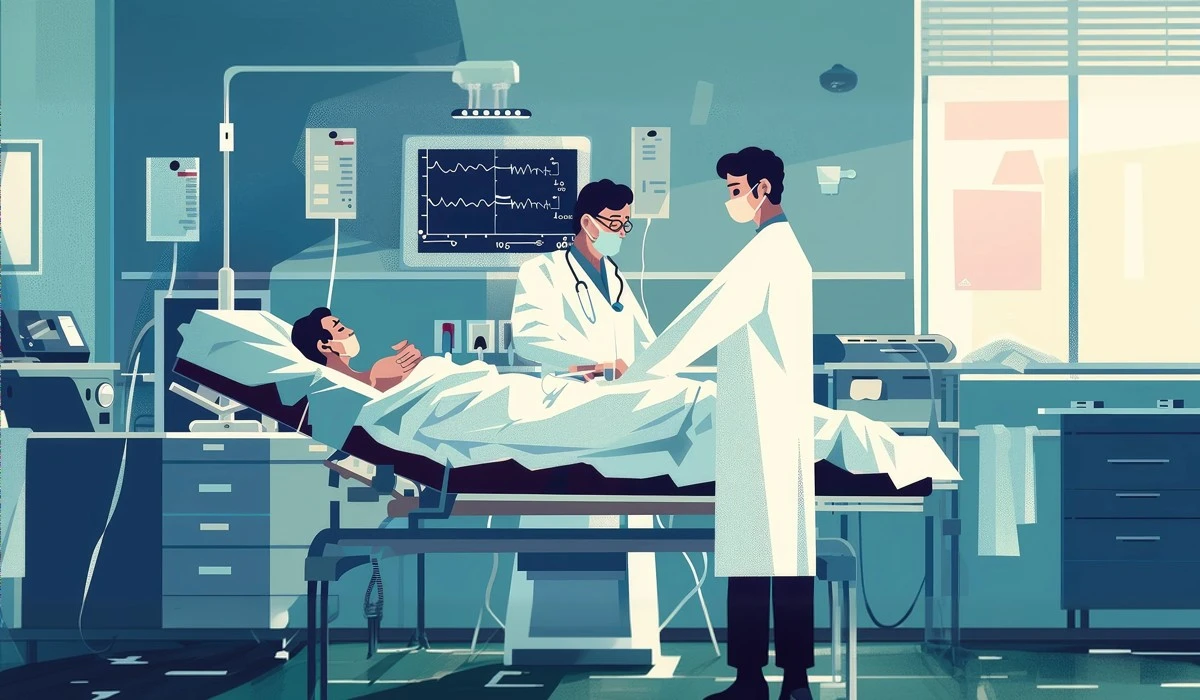
NHS AI Integration: Fixing Hospital Bed Crisis
Most hospitals operate by watching the front door and reacting when the crowd grows too large. AI Integration changes this by forcing managers to look at weather patterns and school schedules weeks before the first patient even feels sick. This shift moves the focus from reacting to emergencies to predicting them before they happen.
The government recently launched the AI Exemplars program to bring this technology to every corner of the health service. Prime Minister Keir Starmer announced this plan in early 2024 to modernize how the country handles medical care. The goal involves a 10-year transition from old, paper-based systems to a digital-first state. By using data to guide every decision, the NHS aims to remove the friction that slows down doctors and frustrates patients.
Current systems often struggle with the weight of winter pressures and flu seasons. However, the new tools allow staff to see what is coming. This allows hospitals to arrange their staff and beds based on facts rather than guesses. As the technology rolls out, it creates a more responsive environment where resources move to the areas of highest need. This approach ensures that the health service stays ahead of the curve, even during the busiest months of the year.
Predicting Demand: How NHS AI Integration Works
When local weather patterns change, hospital staffing levels must shift three weeks in advance to handle the coming surge in patients. This forecasting tool analyzes Met Office temperature records and historical admission trends to spot patterns that humans might miss. It looks at school holiday schedules and the prevalence of diseases like flu and Covid to build a picture of the future. The tool currently provides a 21-day forecasting range for advance admission predictions. This allows hospital leaders to see a Saturday night surge coming long before the weekend arrives. How does the NHS predict hospital admissions? The software looks ahead 21 days to estimate how many people will walk through the door by analyzing weather and historical data. Managers use this information to schedule more nurses and doctors for those specific peak periods.
Fifty NHS organizations already use these forecasting tools as part of a national rollout across England. Digital Government Minister Ian Murray notes that the emergency department serves as the gateway to the NHS. By using analytical proof to identify high-need zones, the service can deploy resources more effectively. This ensures that the right number of staff members stand ready when the patient volume increases. The system also tracks weekly cycles to understand which days typically bring the most pressure. For example, Monday mornings often see a spike in admissions following the weekend. By recognizing these cycles, hospitals can prepare their diagnostic teams and surgical suites in advance. This proactive organization remains vital for managing the intense pressure that arrives every winter.
Ending the Paperwork Nightmare with Clinical Scribes
Doctors spend a significant portion of their shift looking at screens instead of eyes, which slows down the speed of care. AI Integration introduces clinical scribes like Tortus AI to handle the heavy lifting of note-taking. These tools listen to the conversation between a doctor and a patient and then automatically generate a summary. This technology allows doctors to focus entirely on the person sitting in front of them. Data shows a 23.5% growth in patient interaction when doctors use these digital scribes. The time spent on each appointment also drops, with an 8.2% reduction in appointment length. Does AI replace doctors in the NHS? Clinicians maintain final approval over all decisions while the technology handles the administrative data processing.
The impact on clinical productivity is significant. Hospitals see a 13.4% increase in the number of patients seen per shift when they remove manual note-taking. Dr. Ahmed Mahdi, a consultant at St George’s, reports a 50% reduction in the time spent on initial paperwork. This allows him and his colleagues to dedicate more hours to actual medical treatment rather than data entry. In Chelsea and Westminster NHS Trust, these scribes are already changing the daily workflow. By eradicating administrative lag, the hospital functions more like a modern tech company and less like a filing office. Technology Secretary Peter Kyle argues that these productivity gains are essential for building a smarter state. Every minute saved on a form is a minute earned for a patient.

Managing Bed Capacity Through Smarter Discharges
A hospital stays full because the paperwork required for a patient to go home takes longer than the physical recovery itself. NHS AI Integration targets this specific bottleneck by automating the creation of discharge summaries. When a patient is ready to leave, the system pulls together their medical data into a final report instantly. This speed allows for faster hospital-to-home transitions and reunions with families. Health Secretary Wes Streeting emphasizes that reducing bureaucracy leads to more direct patient engagement. If the hospital can process a discharge an hour faster, it opens up a bed for someone waiting in the emergency room. This exit-flow efficiency creates vacancies without needing to build new wards.
The Federated Data Platform (FDP) hosts these discharge tools, acting as a shared health data network. This platform allows different departments to see exactly who is ready to leave and what care they need at home. Often, the hardest part of medicine involves the logistics of leaving the building. By solving this, the NHS can handle more patients with the same number of beds. NHS England Director Prof Julian Redhead believes tech-driven care management leads to substantial gains in patient experience. When the system works correctly, patients do not sit in hallways waiting for a paper form to be signed. They move through the system smoothly, which improves the morale of both the staff and the people receiving care.
Cutting Waiting Lists with Specialized AI Tools
Finding a health issue earlier depends more on software processing speeds than on the number of available doctors. New lung cancer diagnostic tools now assist radiologists in spotting tiny abnormalities in chest scans. These tools act as a second pair of eyes that never gets tired and never misses a detail. In Cambridgeshire, an AI physiotherapy tool helped reduce musculoskeletal waiting lists by 50%. The tool processed 2,500 patients in just 12 weeks, providing them with immediate guidance. How does AI reduce hospital waiting lists? Faster diagnostic tools and automated administrative tasks allow doctors to see more patients in less time. By filtering out simple cases, the AI ensures that specialists spend their time on the most complex problems.
The use of these tools is not limited to one specific area. They are appearing in dermatology, cardiology, and orthopedics. Each tool follows the same logic: automate the routine so humans can handle the exceptional. This strategy is essential for clearing the backlogs that built up over previous years. Minister Liz Kendall points out that innovation at the seasonal peak is exactly what the NHS needs to stay at the technological forefront. Using AI to predict which patients need urgent treatment and which can be managed at home keeps the system from clogging up. This prioritization ensures that the sickest people get the fastest help.
The Shift from Analogue to Digital Infrastructure
Outdated filing systems create a drag on medical speed that no amount of extra funding can fix. The 10-year health plan focuses on moving the NHS from an analogue state to a digital-first organization. This transition involves replacing physical folders and manual logs with real-time digital dashboards. Every English NHS Trust is now eligible for these modern tools. This 100% eligibility ensures that a patient in a rural area receives the same high-tech care as someone in a major city. Health Innovation Minister Dr. Zubir Ahmed argues that this transition is necessary to fight winter surges and flu waves. Moving away from outdated systems allows for strategic resource prioritization during the most difficult times of the year.
The infrastructure also includes the delivery of 18 million flu vaccination doses. Data-driven systems help track where these doses are most needed and who has yet to receive them. By integrating vaccination data with hospital admission forecasts, the NHS can target high-risk areas before an outbreak starts. This digital shift also changes how the government views public service. Peter Kyle describes this as building a smarter state where data informs every policy. Instead of throwing money at a problem, the government uses technology to find the root cause of the delay and fix it. This approach creates a more sustainable health service for the future.
Home Care and Remote Monitoring Systems
The safest hospital bed is often the one located in the patient's own living room. AI extends beyond the hospital walls into home care and remote monitoring. Cera, a home-care provider, uses AI to predict the risk of a patient needing a hospital visit before an emergency happens. By monitoring patients at home, the system can spot early warning signs of dehydration, infection, or falling. Local authorities and medical teams receive alerts if a patient's data shows a downward trend. This allows for early intervention, which avoids preventable hospital admissions. Dr. Ben Maruthappu, CEO of Cera, notes that continuous remote monitoring keeps people safer in their own environment.
This system also helps patients who have just been discharged. By staying connected to the hospital through digital tools, they feel more confident leaving the ward. The AI monitors their recovery and alerts a nurse if something looks wrong. This "virtual ward" concept expands the capacity of the NHS without the cost of new buildings. These tools represent a shift in the philosophy of care. Rather than waiting for a person to become a "patient" in a hospital bed, the system supports them as a person at home. This keeps hospital beds open for those who truly need intensive medical intervention. It also reduces the risk of hospital-acquired infections for the elderly and vulnerable.

The Human Side: Keeping Doctors in Control
A computer can process millions of data points, but it cannot understand the nuance of a patient's personal life. The AI Integration in NHS functions strictly as an assistant to human clinicians rather than an autonomous decision-maker. Doctors and nurses retain final approval over every piece of advice the software provides. The primary goal of the AI Exemplars program is to support medical personnel, not replace them. By handling the data-driven parts of the job, the technology gives doctors more time to use their clinical judgment. Wes Streeting highlights that this reduction in bureaucracy leads to more direct interaction between staff and patients.
Staff members who use these tools report feeling less overwhelmed. Instead of drowning in paperwork, they have a clear view of their department's needs. Dr. Ahmed Mahdi’s experience at St George’s shows that when doctors have better tools, they can see more patients without increasing their stress levels. The AI takes care of the mundane, leaving the complex medical thinking to the experts. This balance between human empathy and machine efficiency defines the modern NHS. The government continues to emphasize that the clinician is the final gatekeeper. This ensures that the health service remains a human-centered institution, even as it becomes the most technologically advanced medical system in the world.
Evolution of the 10-Year Health Plan
The transition to a digital-first state requires more than just new software; it requires a change in how every member of the NHS works. The 10-year plan provides the roadmap for this total modernization of the service. It moves the focus from short-term fixes to long-term stability. The initiation of the AI Exemplars program in January 2024 marked the start of this journey. Since then, the rollout has reached 50 organizations with the potential to cover all 100% of English trusts. This scale is necessary to make a real impact on the national waiting lists. The government views this as a strategic investment in the country's productivity.
By the end of the decade, the NHS intends to have a fully integrated data network. This will allow a doctor in London to see the diagnostic results of a patient from Manchester instantly. It will also allow for even more accurate forecasting of national health trends. The analogue-to-digital shift creates a health service that can learn and adapt in real-time. As the program continues, more tools will move from the trial phase into standard use. The scribe and discharge tools, while currently showing great results, will eventually become as common as the stethoscope. This evolution ensures that the NHS remains fit for purpose in the 21st century and beyond.
Transforming the Future of Healthcare
NHS AI Integration represents a fundamental change in how the United Kingdom manages its public health. By moving away from reactive management and toward predictive logic, the service can finally get ahead of the constant demand for beds. The system uses data to find patterns in patient flow, weather, and disease, allowing staff to prepare for challenges before they arrive.
The integration of these tools across 50 organizations is only the beginning of a broader digital shift. From reducing paperwork by 50% to cutting waiting lists in half for certain services, the results prove that technology can solve long-standing problems. The 10-year plan ensures that these gains are not temporary but part of a permanent modernization of the state.
Ultimately, the goal of AI Integration in NHS is to give time back to the people who need it most. Doctors get more time with their patients, and patients get more time at home with their families. By removing the administrative friction that has slowed down the service for decades, the government is building a smarter, faster, and more effective NHS for everyone.
Recently Added
Categories
- Arts And Humanities
- Blog
- Business And Management
- Criminology
- Education
- Environment And Conservation
- Farming And Animal Care
- Geopolitics
- Lifestyle And Beauty
- Medicine And Science
- Mental Health
- Nutrition And Diet
- Religion And Spirituality
- Social Care And Health
- Sport And Fitness
- Technology
- Uncategorized
- Videos

