

Herpetology Secrets to ID All Snake Types
You step into the tall summer grass, and a sudden rustle freezes your movement. A ribbon of scales vanishes before you can blink. Your heart races because you lack the information to handle what you just saw. Most people live with a standard fear of the outdoors because they don't know the rules of the wild. They see a generic threat where a specific animal exists.
Studying herpetology changes your relationship with the outdoors. It replaces blind panic with focused observation. You begin to notice the angle of a scale or the shape of a shadow. These physical markers provide a way to communicate with the wild. This guide teaches you to identify various types of snakes when you read these physical cues. You will learn how morphology, behavior, and habitat show the identity of any specimen you encounter.
Using Herpetology to Decode Snake Morphology
Snake skin provides the first major clue for identification. The way a snake's skin interacts with light tells you about its biology. Experts look for the presence of a "keel" on each scale. A keeled scale features a raised ridge down the center. This ridge scatters light and creates a dull, matte appearance. As noted by VCA Hospitals, garter snakes possess these rough scales and are known to be diurnal, or active during the day. Rattlesnakes also share this keeled texture.
Meanwhile, smooth scales reflect light like a polished mirror. Species like the King snake or the Racer have these flat scales. This lack of a ridge produces a shiny, iridescent glow. Identifying these textures helps narrow down the list of potential species in seconds.
Head Shape and Scale Texture
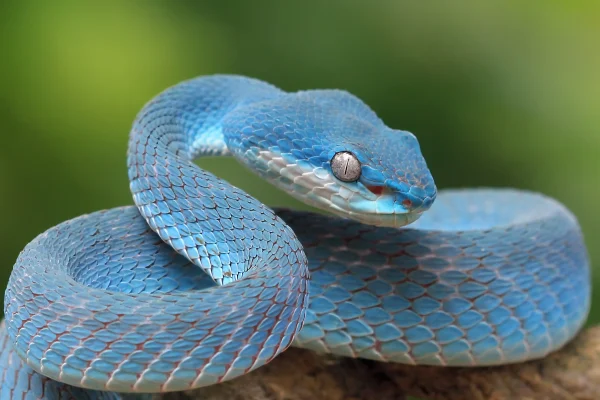
Head shape offers a hint, but you must use it carefully. While people often assume a wide head indicates venom, harmless snakes frequently flatten their neck muscles to look bigger. A guide from kysnakes.mgcafe.uky.edu explains that non-venomous snakes, such as watersnakes, flatten their heads when threatened and may be confused with venomous species; this behavior allows them to appear more dangerous to predators. You must look at the scales on the head instead.
Herpetology focuses on the specific scales surrounding the eyes and nostrils. According to a report by Critter Control, venomous snakes’ scales tend to appear in a single row on the undersides of their bodies, whereas harmless species have two rows of scales. Data from kysnakes.mgcafe.uky.edu further clarifies that the underside scales of a venomous snake’s tail are a single row from the anal plate to the end, while non-venomous snakes have two rows in that same area. This biological detail provides a much more accurate ID than head shape alone.
Pupil Shape and Heat-Sensing Pits

Eyes reveal a snake’s daily schedule. Research published in Frontiers suggests that snakes active during the day versus those active at night tend to have different eye sizes correlated with their behavior. However, certain exceptions exist; observations found on ResearchGate note that some nocturnal snakes in India classified as diurnal have been observed active at night. Regarding shape, The Times of India reports that venomous snakes generally have slit-like, elliptical pupils while non-venomous snakes usually have round pupils. Critter Control adds that pit vipers specifically have vertically elliptical pupils, whereas non-dangerous species have perfectly round ones. A study in Wiley Online Library indicates that most snake species with vertical pupils are nocturnal and act as ambush foragers.
Some types of snakes use heat to find their prey. Pit vipers possess loreal pits located between the eye and the nostril. According to Study.com, these organs contain thousands of heat-sensitive receptors that can detect temperature differences as small as 0.003°C. This system allows the snake to strike a warm mouse in total darkness.
Categorizing Common Types of Snakes by Family
Scientists organize over 4,170 snake species into specific families. Knowing these families helps you predict a snake's behavior and potential danger.
Colubrids: The Most Common Non-Venomous Species
The Colubridae family makes up over 50% of all snakes. This group contains roughly 249 genera. Most common backyard snakes belong to this family. While most colubrids lack dangerous venom, some possess "rear fangs." The Boomslang uses these rear fangs to deliver lethal venom. However, most species like the Rat snake or Garter snake remain harmless to humans.
Elapids: The Fixed-Fang Powerhouses
The Elapidae family includes Cobras, Mambas, and Coral snakes. These snakes have short, fixed fangs at the front of their mouth. Scientists call this "proteroglyphous" dentition. These fangs do not fold back. Elapids often produce neurotoxic venom. This venom attacks the nervous system and can cause paralysis.
Viperids: The Folding-Fang Specialists
Viperids utilize the most advanced venom delivery system. They have long, hollow fangs that fold against the roof of the mouth. When the snake strikes, these fangs rotate forward like a switchblade. Some species, like the Gaboon Viper, have fangs exceeding 20mm in length. This family includes Rattlesnakes, Copperheads, and Cottonmouths.
Identification by Habitat and Regional Ecology
A snake's body often reflects the environment where it lives. You can identify types of snakes through an analysis of their physical adaptations to the land.
Terrestrial vs. Arboreal Adaptations
Ground-dwelling snakes typically have heavy, thick bodies. This weight gives them stability on the forest floor. Tree-dwelling snakes look much different. Research found on ResearchGate and in PMC states that arboreal snakes show adaptations such as slender, laterally compressed bodies and long tails. This shape allows them to stretch across gaps between branches without falling.
Identifying Aquatic and Semi-Aquatic Species
Water snakes have nostrils on the top of their snouts. This allows them to breathe while submerged. Are most water snakes venomous? Most common water snakes in North America are non-venomous, though they are frequently confused with the venomous Cottonmouth. To distinguish them, the Florida Museum points out that Cottonmouths have vertically elliptical pupils while watersnakes have round pupils. You can also identify them through their swimming posture; Cottonmouths swim with their heads high out of the water, whereas harmless water snakes usually keep their bodies lower.
Learning the Art of Herpetology in the Field
Professional identification requires more than just a quick glance. Experts use a specific set of rules and tools to stay safe while gathering data.
Essential Field Tools and Digital Resources
Field guides provide the best starting point for beginners. These books show range maps that tell you which types of snakes live in your area. Many researchers now use mobile apps to log sightings. These apps allow the community to verify species photos. However, you should never rely on an app for a safety-critical identification.
Safe Observation and Ethics
Safe herpetology follows the "two-step rule." Always stay at least two long steps away from any snake. This distance keeps you outside the snake's strike range. Never handle an unidentified snake. Most bites happen when people try to kill or capture a snake. Observation from a distance protects both you and the animal.
Decoding Coloration and Pattern Mimicry
Snakes use colors to communicate with the world. Some use bright colors to warn predators, while others use those same colors to lie.
Aposematism: Warning Colors vs. Bluffing
Aposematism refers to the use of bright colors to warn of danger. The Coral snake uses red, yellow, and black bands to signal its venom. Predators see these colors and avoid the snake. This saves the snake from a fight and saves the predator from a lethal bite.
The Batesian Mimicry Strategy
Some harmless types of snakes copy the look of dangerous ones. This trick is called Batesian mimicry. For example, King snakes often have the same colors as Coral snakes. To tell a king snake from a coral snake, people often use the "red on yellow" rhyme. Experts warn that this rhyme only works reliably in North America. In other parts of the world, venomous snakes follow different color patterns.
Correcting Common Snake Identification Myths
Misunderstandings lead to unnecessary fear. Correcting these myths helps you stay calm and protects harmless species.
The Triangle Head Fallacy
Many people believe a triangle-shaped head always means a snake is venomous, but this is a myth. As noted by kysnakes.mgcafe.uky.edu, many non-venomous species flatten their heads to appear more dangerous to threats. The Eastern Hognose snake even hisses and spreads its neck like a cobra. Meanwhile, the highly venomous Coral snake has a very round, slender head. You must look for other signs like heat pits and scale patterns.
Rattling Tails Beyond the Rattlesnake
A rattling sound in the brush does not always mean a Rattlesnake is present. Information from kysnakes.mgcafe.uky.edu highlights that many non-venomous snakes often vibrate their tails when threatened, which produces a sound that imitates a rattle. When a Black Racer shakes its tail in dry leaves, it sounds exactly like a rattle. This behavior scares away predators who want to avoid a venomous bite.
Global Diversity of Unique Snake Types
The world of snakes contains extreme specialists. These animals have evolved to survive in places where most life fails.
Desert Specialists and Side-Winding Mechanics
Desert snakes face shifting sand and high temperatures. The Sidewinder moves through, throwing its body in loops. This ensures that only two points of its body touch the hot sand at any time. This prevents overheating and gives the snake traction on loose dunes.
Island Endemics and Evolution
Islands often produce unique species. On Round Island, the Round Island Boa developed a split maxillary bone. This joint in the jaw is found nowhere else in the world. Herpetology also tracks species like the sea snakes. According to National Geographic, there are about 70 species of sea snakes living mostly among coral reefs in the Indian and Pacific Oceans. These snakes have paddle-like tails and special glands to remove salt from their bodies.
Patrick Russell, a pioneer in the field, began documenting these differences in 1796. He used dental patterns to distinguish the "Big Four" venomous snakes of India. His work provided the basis for how we categorize types of snakes today.
A New Perspective on Herpetology
Learning to identify snakes replaces fear with understanding. You now know that scale texture, pupil shape, and habitat tell the true story of a species. These physical markers show the unseen logic of the wild. Learning herpetology allows you to appreciate the role these predators play in our world. You can now walk through the grass with confidence. Grab a field guide and start observing the snakes in your local area safely.
Recently Added
Categories
- Arts And Humanities
- Blog
- Business And Management
- Criminology
- Education
- Environment And Conservation
- Farming And Animal Care
- Geopolitics
- Lifestyle And Beauty
- Medicine And Science
- Mental Health
- Nutrition And Diet
- Religion And Spirituality
- Social Care And Health
- Sport And Fitness
- Technology
- Uncategorized
- Videos

