
Anti-Drone Tech Broken by Cheap Threat
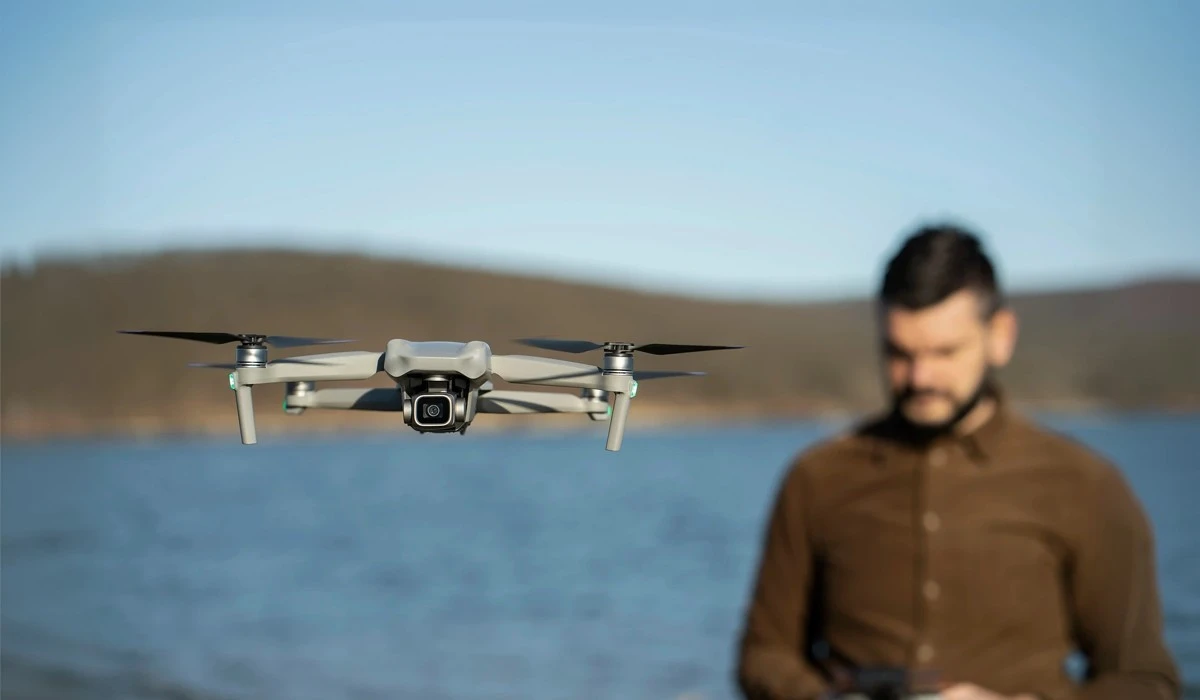
When a thousand-dollar toy can bankrupt a million-dollar defense system, the math of warfare stops working. Defenders usually worry about superior firepower, but today they face a different problem: financial exhaustion. According to a report by Defense News, the price tag for weapons and munitions used to destroy drones must come down, as the current economic disparity necessitates an immediate demand for affordable counter-measures. A simple, plastic quadcopter creates a trap where shooting it down costs more than letting it fly. This economic glitch drives the urgent rush for new anti-drone technology.
Nations and corporations are rushing to fix this imbalance. Data from Mordor Intelligence indicates that the anti-drone market is forecasted to climb significantly by 2030, driven by the need to protect against these threats. The old strategy of firing advanced missiles at every blip on the radar is now a recipe for bankruptcy. As airspace breaches increase across Europe, the focus shifts from protecting soldiers to shielding power plants and cities. We are watching a live experiment in asymmetric conflict, where the cheapest competitor dictates the rules of engagement.
The Financial Trap of Modern Defense
Winning a battle resembles a loss when the price tag of defense outpaces the value of the target. This is the core issue with traditional air defense. As noted by Business Standard, drone costs can range from a few hundred dollars to several thousand, representing a fraction of the outlays for traditional air defense missiles. It is a disposable asset, easily replaced and deployed in swarms. On the other side, a standard defense missile costs between $500,000 and $1,000,000. NATO Secretary-General Mark Rutte points out the absurdity of this exchange. Using million-dollar interceptors against cheap electronics is an unsustainable strategy. Defenders effectively spend a fortune to destroy pennies.
Why is shooting down drones so expensive? Traditional defense systems use sophisticated guidance technology designed to hit fast jets, making them overkill for slow, cheap drones. This financial gap forces military leaders to rethink their approach. They need solutions that do not drain the national budget with every trigger pull.
Critical Infrastructure Under Siege
Wars usually stay on battlefields, but accessible tech brings the frontline to your local power plant. The threat has migrated from military zones to civilian sectors. Dan Hermansen, CEO of MyDefence, reports a massive spike in attention from non-military clients. Defense firms now receive frantic calls from critical infrastructure operators. As reported by Reuters, incidents of airspace breaches have surfaced in Poland, Romania, Norway, Sweden, Lithuania, and Germany. While some are attacks, others function as reconnaissance missions. Drones hover over sensitive sites, gathering data or testing response times. The shift is undeniable. Protecting corporate assets and civilian grids is now as important as guarding a military base.
The Radar Blind Spot in Anti-Drone Technology
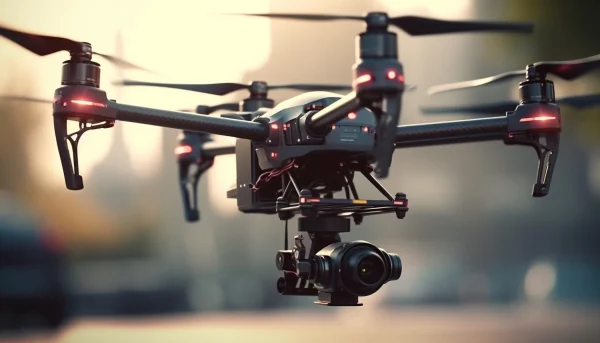
We trust radar to see everything, but it often ignores the exact threats we need to find. An Encyclopedia entry explains that even sensitive radar systems struggle to differentiate between multi-copters and birds because they are tuned to spot large, fast, metallic objects. Small drones present a completely different profile.
Many drones are made of plastic, carbon fiber, or fabric. These materials have a very low radar signature. Andreas Graae of the Danish Defence Academy, speaking to Euronews, stated that distinguishing a drone from a bird is surprisingly difficult as Europe struggles to find the right detection solutions.
How do radars miss drones? Research published in MDPI suggests that the primary weakness of radar is the low radar cross-section of these targets, which hinders visibility. Additionally, the study notes that distinguishing them is hard due to similar RCS values between birds and drones. However, a study in Nature indicates that micro-Doppler features produced by propeller rotation can help identification. Without accurate detection, no anti-drone technology can function well.
The Safety Risks of Kinetic Interception
Stopping a threat in the air often turns it into a dangerous projectile on the ground. Shooting a drone out of the sky solves the immediate problem but creates gravity-based hazards. Kasper Hallenborg from the University of Southern Denmark, whose research focuses on drone safety, highlights the risk to humans and animals from falling debris.
When a drone explodes or breaks apart, heavy battery packs, sharp plastic, and burning fuel rain down. Reuters has reported on incidents where debris from destroyed drones sparked fires in apartments in Kyiv and Rostov-on-Don. In a civilian area, this debris poses a risk to people and property. A "hard kill" might stop an attack, but it could start a fire or injure bystanders. Maritime guidance also warns about these risks on ships. Neutralizing a munition-carrying drone directly over a vessel can cause a fire on the deck. Defenders must weigh the benefit of the kill against the potential damage of the crash.
Jamming and the Soft-Kill Advantage
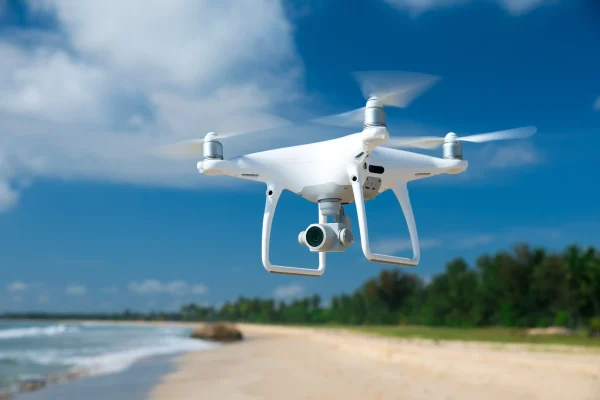
Sometimes the best way to destroy a machine is to simply confuse its brain. As described by D-Fend Solutions, this "soft kill" approach neutralizes threats while preserving evidence and avoiding the mess of physical destruction. MyDefence product data indicates a jamming success rate of up to 80% against flown drones, depending on the environment.
According to a Reuters analysis, jamming functions through the transmission of radio frequencies that sever the connection between the drone and its pilot, causing them to lose control or video feeds. The drone loses its instructions. Depending on its programming, it might hover until its battery dies, return to its launch point, or land immediately.
Is jamming safer than shooting? Yes, jamming usually forces a controlled landing or retreat, preventing the dangerous debris that comes from blowing up a drone mid-air. This method is cleaner and cheaper. A study on ResearchGate suggests that utilizing Software Defined Radio technology allows for low-cost, adaptable jamming devices that target these communication links. However, it requires precise signal detection to match the radio frequency of the intruder.
The High-Tech Guns Fighting Back
Old-school ballistics are returning as they become smarter rather than simply larger. While missiles are too expensive, new cannon systems offer a middle ground. The EOS Slinger is a clear example of this kinetic development.
This system uses a gun-based "hard kill" method but keeps costs down. It fires 30mm proximity-fused rounds. These shells do not need to hit the drone directly. They explode when they get close, shredding the target with shrapnel. The cost is roughly $1,000 per engagement. This price point finally allows defenders to trade blows with cheap drones without going broke. The Slinger boasts an accuracy of over 95% and a range of 1,500 meters. It represents a practical, kinetic form of anti-drone technology.
Regulatory and Legal Bottlenecks
Technology often moves faster than the laws written to control it. While jamming sounds like the perfect solution, it is illegal for most civilians to use it. Interfering with radio frequencies is a federal crime in many nations.
Jamming equipment can accidentally disrupt friendly communications, medical devices, or port navigation systems. Because of this, active jamming is usually restricted to military and police forces. A corporation protecting a factory cannot simply turn on a jammer without risking a lawsuit or a fine.
Can private companies use drone jammers? Generally, no, because jamming signals can block emergency calls and legitimate air traffic communications nearby. This creates a gap where private entities see the threat but cannot legally use the best tools to stop it. They must rely on passive detection or wait for law enforcement intervention.
Future Tech and Asymmetric Solutions
New ideas appear when the current tools fail to solve the problem. The industry is moving toward even cheaper and smarter interceptors. Jens Holzapfel of Nordic Air Defence describes the development of missile-shaped interceptors made from 3D-printed parts.
These new tools target the law enforcement, shipping, and oil sectors. They offer high speed and low cost. Meanwhile, on the frontlines of Ukraine, the game changes daily. Jamming is so saturated that operators switch to fiber-optic cables or autonomous navigation to bypass radio interference. Sweden alone has invested roughly $370 million in anti-drone systems, according to Reuters. The competition is on. The Financial Times reports that the UK Ministry of Defence has successfully tested high-power microwave weapons to neutralize swarms, while researchers in MDPI describe novel anti-UAV systems using tether-net capture devices. Each solution attempts to close the gap between the cost of the attack and the cost of the defense.
The End of Expensive Warfare
The time of addressing security problems with blank checks is over. The rise of cheap, lethal drones forces a complete redesign of global defense strategies. We are moving away from heavy, singular weapons toward agile, cost-effective counter-measures.
Defenders now prioritize economic sustainability alongside physical security. Whether through radio jamming, smart cannons, or 3D-printed interceptors, the goal remains the same: spend less to stop more. As threats change, anti-drone technology must become as cheap and adaptable as the drones it aims to defeat.
Recently Added
Categories
- Arts And Humanities
- Blog
- Business And Management
- Criminology
- Education
- Environment And Conservation
- Farming And Animal Care
- Geopolitics
- Lifestyle And Beauty
- Medicine And Science
- Mental Health
- Nutrition And Diet
- Religion And Spirituality
- Social Care And Health
- Sport And Fitness
- Technology
- Uncategorized
- Videos

