
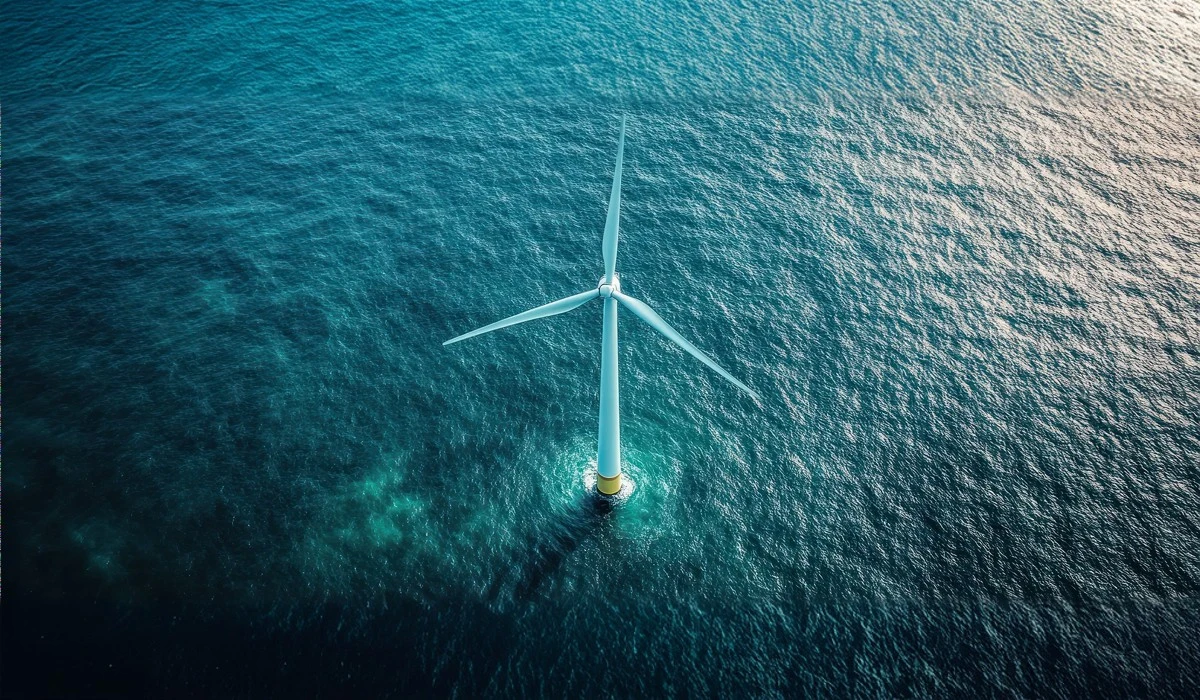
Offshore Wind Leases Halted by Radar Threat
Governments rarely ban industries they dislike; they simply find a technical reason to make operations impossible. According to AP News, on Monday,22ND December, 2025, the Interior Department effectively shut down the US renewable sector without passing a single new law. The agency announced an immediate pause on offshore wind leases for 5 major projects currently under construction. This decision did not come from a congressional vote or a public referendum. It came from a sudden, urgent warning about national defense.
The official statement from the U.S. Department of the Interior cites "national security" as the primary driver for the halt, noting that the pause is intended to give federal agencies time to explore solutions with developers and states. Defense officials claim that giant turbines jeopardize the safety of the East Coast. This creates a fascinating tension. The same ocean territory previously cleared for development is now a "danger zone." Investors and state leaders are scrambling to understand how a cleared project becomes a threat overnight. This move halts billions of dollars in infrastructure and challenges the future of the American power grid. The battle over offshore wind leases has shifted from economic arguments to a debate over military survival.
The Radar Threat Stopping Offshore Wind Leases
A sudden concern for safety can instantly override years of planning and contracts. The Interior Department justified the pause by pointing to specific vulnerabilities in America's radar defense network. According to the announcement, the physical structure of wind farms confuses the sensors used to monitor the coastline. The concern is not just about the towers standing in the way; it involves the movement of the blades themselves.
Defense experts, as reported by the Los Angeles Times, state that the rotating blades create "clutter" on radar screens. This visual noise "obscures legitimate moving targets" and creates real threats. Even more concerning to officials is the generation of "false targets" in the vicinity of the wind projects. The Interior Secretary emphasized that these vulnerabilities are unacceptable given the rapid evolution of adversary technology. Foreign threats are becoming faster and harder to detect. The administration argues that adding static and moving obstacles near major East Coast cities creates a blind spot that enemies could exploit.
The timing of this discovery raises questions for industry leaders. Offshore wind leases were issued years ago under the assumption that these radar issues were manageable. Now, the government claims mitigation is impossible without missing genuine targets. This technical hurdle has become the most effective tool for stopping development.
Market Chaos Following the News
Money always moves faster than policy, and the reaction to the pause was instant. Financial markets treated the announcement as a death sentence for the US wind industry. Investors saw the writing on the wall immediately after the Interior Department released the memo. They pulled capital out of the sector to avoid further losses.
Orsted, the Danish energy giant heavily invested in American waters, saw its share price plummet by 11 to 12 percent. This drop represents a massive loss of confidence in the stability of US energy contracts. Vestas, a leading turbine manufacturer, took a 2.6 percent hit. Dominion Energy, a Virginia-based utility company with significant stakes in the game, saw shares fall by over 3 percent.
The sell-off reflects a deeper fear than just a temporary delay. Business leaders crave predictability. The Governor of Connecticut warned that this constant administrative reversal undermines economic stability. When a government issue permits and then revokes them based on new criteria, companies cannot plan for the future. The crash in stock prices signals that the market no longer trusts the validity of offshore wind leases or the government's word.
Legal Battles Over Offshore Wind Leases
Courts often act as a brake on executive power, but agencies have ways to steer around rulings. This December 22 announcement came just weeks after a major legal defeat for the administration. Earlier in December, a Federal Court struck down a previous ban on wind projects. The judge ruled that the prior attempt to stop these developments was "arbitrary" and "capricious."
The administration’s response was swift and tactical. Instead of accepting the ruling, they pivoted to a new justification. The January 20, 2025, Presidential Memo had originally halted permits pending review. Seventeen states sued the administration over that initial freeze, arguing it violated the law. The courts agreed. However, the administration’s new strategy relies on the specific "national security" clause.
By invoking defense threats, the Interior Department bypasses the previous legal arguments about economic fairness or environmental preference. Many people are confused about how the government can ignore a court order. Can the president block wind farms after a court approval? The executive branch has broad authority to pause projects if national security is at risk, which often supersedes standard regulatory court rulings. This legal maneuver resets the clock. The opposition must now build an entirely new case against the security claims, delaying construction for months or years.
Conflicting Security Narratives
Two different administrations looked at the same ocean and saw two completely different realities. The Biden Administration and its Pentagon officials reviewed these specific offshore wind leases years ago. Their assessment found "no adverse impacts" on military readiness. They concluded that any radar interference could be mitigated through software adjustments or threshold changes. The developments were greenlit based on that safety guarantee.
The current Interior Department presents a starkly contradictory view. They argue that the previous assessments were flawed or outdated. The new narrative insists that "clutter" from turbines masks military assets and complicates friend-or-foe identification. The Pentagon, communicating through the Interior Department, now says reflective towers produce signals that confuse the entire system.
A strange detail in the press release caught the attention of analysts. One specific source referred to the "Department of War" rather than the standard "Department of Defense." This archaic phrasing stands out as an anomaly in modern government communication. It adds to the confusion surrounding the sudden shift in policy. Industry reports still suggest that mitigation is possible, but the administration has drawn a hard line. They claim the risk to the East Coast is too high to ignore.
The Five Projects in the Crosshairs
Geography determines destiny in the energy sector, and five specific locations are now frozen in time. The pause targets large-scale offshore farms that were already well into the construction or planning phases. These are not theoretical proposals; they are real sites with steel in the water or contracts signed.
As outlined by The Guardian, the list includes Vineyard Wind 1 and Revolution Wind, both critical for the New England grid. CVOW-Commercial off the coast of Virginia is another major target. Sunrise Wind and Empire Wind 1, intended to power New York, also face immediate stoppage. These projects utilize specific lease blocks like OCS-A 0501, 0486, 0483, 0487, and 0512.
Halting these specific sites disrupts the power plans for Massachusetts, Rhode Island, Connecticut, Virginia, and New York. These states counted on this power coming online soon. The Dominion Energy spokesperson noted that pilot turbines have been operational for 5 years with zero recorded national security incidents. Despite this operational history, the new order freezes progress. The specificity of the targeting suggests a systematic dismantling of the sector's most advanced projects.
Political Motives and Personal Stakes
Personal beliefs at the top of the chain often trickle down into binding regulations. President Trump has never hidden his disdain for wind energy. His rhetoric has consistently labeled the technology as unreliable and expensive. During a visit to Scotland in July 2025, he publicly condemned wind turbines. He lamented the aesthetic damage to landscapes and urged European nations to stop building them.
This personal crusade has now merged with official policy. The Interior Secretary echoed these sentiments on social media, characterizing the projects as heavily subsidized and unreliable. Secretary Burgum stated there is "no future" for wind in the US energy grid. This alignment between the President's public speeches and the Department's regulatory actions is clear.
A shift in business interests complicates the picture. Trump Media recently announced a union with TAE Technologies, a fusion energy firm. This move signals a financial pivot toward alternative energy sources that are not wind or solar. Why does the president oppose wind energy? Critics suggest he views it as a competitor to his preferred energy investments and dislikes the visual impact on coastal properties. The administration frames it as a cost issue, claiming wind is the "most expensive" form of power. Market data contradicts this, often showing wind as one of the cheapest sources as costs fall, but the narrative from the White House remains unchanged.
Future Grid Demands vs. Policy
Stopping power generation creates a crisis when demand is exploding. The United States is currently facing a surge in electricity needs motivated by the rapid growth of Artificial Intelligence. Data centers require massive amounts of constant power. The grid is already strained, and removing a planned 10 percent of US wind energy capacity creates a supply vacuum.
Counsel for the Environmental Defense Fund (EDF) termed the obstruction "reckless" during this demand surge. Blocking homegrown electricity forces the grid to rely on aging coal plants. This shift contradicts the need for modern, clean power sources to fuel the tech sector. The Sierra Club Director accused the administration of prioritizing a political vendetta over public health and job growth.
The disconnect between future needs and current actions is sharp. The administration claims to want energy dominance but is actively deleting a sector that provides a significant portion of the nation's electricity. Is offshore wind cheaper than coal? In many markets, new wind capacity is cheaper than continuing to operate older coal plants, especially when factoring in maintenance and fuel. By freezing offshore wind leases, the government forces utilities to buy more expensive or dirtier power, likely driving up costs for consumers in the affected regions.
The Future of Offshore Wind Leases
The standoff on the Atlantic coast is about more than just turbines and radar screens. It reveals how fragile the energy transition is when it faces a hostile executive branch. The December 22 pause on offshore wind leases demonstrates that technical regulations can be just as powerful as legislative bans. The administration has successfully used the argument of national security to freeze an industry that the courts tried to protect.
Investors, state governors, and environmental groups are now locked in a battle against the Department of Interior. The outcome will decide if the US energy grid diversifies or retreats to traditional sources. For now, the blades have stopped turning, and the "clutter" on the radar has become a wall for the entire industry. The clash between military caution and energy necessity leaves billions of dollars—and the future of American power—stranded at sea.
Recently Added
Categories
- Arts And Humanities
- Blog
- Business And Management
- Criminology
- Education
- Environment And Conservation
- Farming And Animal Care
- Geopolitics
- Lifestyle And Beauty
- Medicine And Science
- Mental Health
- Nutrition And Diet
- Religion And Spirituality
- Social Care And Health
- Sport And Fitness
- Technology
- Uncategorized
- Videos

