
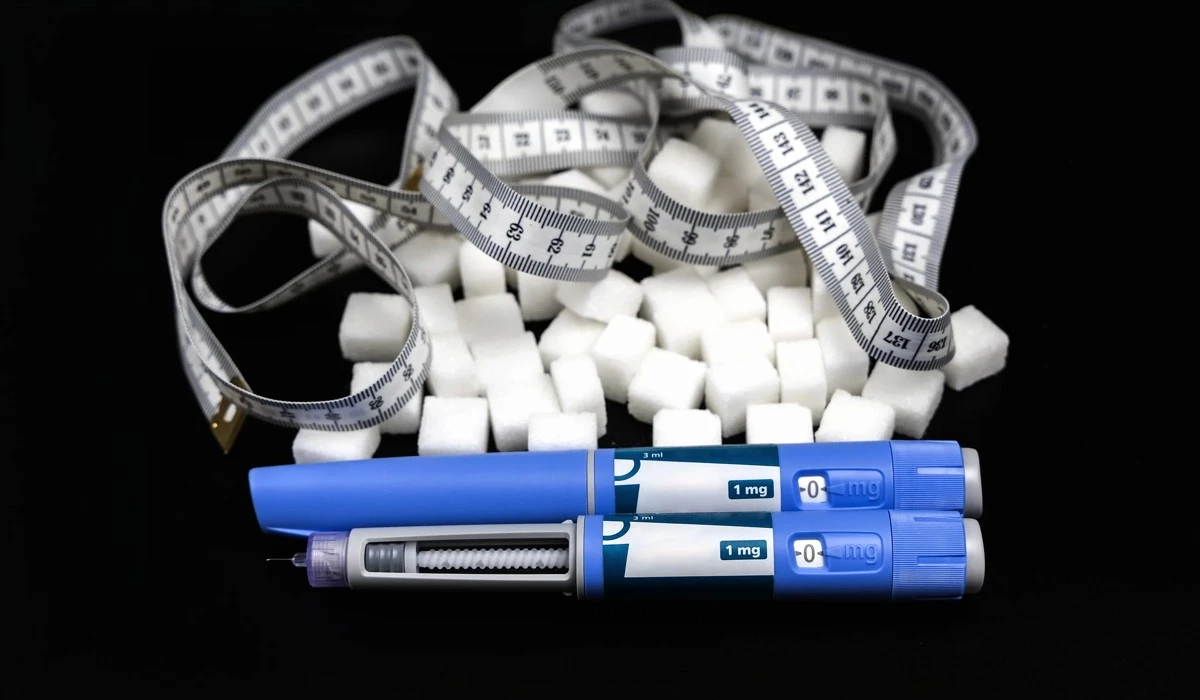
Weight Loss Drug Withdrawal
When you chemically silence your appetite, you aren't fixing a broken switch; you are holding a high-tension spring down with your thumb. The moment you let go, the recoil hits harder and faster than the initial pressure ever did.
For thousands of patients, the silence of "food noise" feels like freedom. But that silence is rented, not owned. Once the weekly injections stop, the body does not simply return to its old baseline. It panics. It perceives the sudden drop in medication as a starvation threat and launches an aggressive campaign to restock energy reserves immediately.
This reality catches users off guard. They expect a gradual return of old habits, but they often face a biological tsunami. Hunger doesn't just knock; it kicks down the door. Patients like Tanya, who lost 6 stone (38kg) over 18 months, report that stopping the treatment feels like a light switch flipping back on. The starvation sensation is instant.
We need to talk about weight loss drug withdrawal. This isn't just about willpower or calories. It is about a physiological rebellion that happens when the artificial guardrails vanish. Understanding this reaction is the only way to survive the transition without losing everything you worked for.
The Biological Shock of Stopping
Your metabolism treats a sudden drop in medication not as a return to normal, but as an emergency signal to stockpile energy immediately. When patients abruptly cease high doses of drugs like Wegovy or Mounjaro, the physical shock is profound. Dr. Al-Zubaidi compares this sudden cessation to "jumping off a cliff." The body has spent months or years relying on a synthetic hormone to regulate digestion and hunger signals. When that support disappears, the natural systems don't just wake up; they overcompensate.
Tanya describes this experience vividly. After 18 months of treatment, she attempted to stop multiple times. Each attempt triggered an immediate, intense return of hunger. The drug had successfully mimicked the GLP-1 hormone to turn off the constant "food noise" in her brain. Without it, the noise returned at maximum volume.
This "cliff" effect is the primary driver of rapid regain. The body defaults to its previous state with a vengeance. Users describe an "avalanche" of cravings that feels impossible to ignore. What happens to your body during weight loss drug withdrawal? Your appetite center, previously suppressed, reactivates aggressively, often driving users to consume calories to make up for prior deprivation.
The Role of Gastric Emptying
According to FDA Access Data, these drugs fundamentally work by delaying gastric emptying. The Guardian explains that this mechanism works by lowering blood sugar levels and slowing down how quickly food is digested, sending prolonged fullness signals to the brain while signaling the pancreas to release insulin. When you remove the drug, the stomach empties at its normal—or even accelerated—rate again. The brain no longer receives the "full" signal, and the appetite center screams for fuel. This physical shift happens regardless of your emotional state or intentions.
Why The Regain Happens So Fast
Traditional diets teach your body to tolerate hunger slowly, but injections bypass that lesson entirely, leaving you defenseless when the prescription runs out. The velocity of weight return after stopping these drugs is startlingly different from standard diet failure. According to data reported by telecareaware.com, which reviewed 11 studies covering 6,370 adults (an Oxford analysis), the regain speed following drug cessation significantly exceeds the relapse rate of dietary changes alone.
When you diet naturally, regain might creep back over five years. With weight loss drug withdrawal, the majority of the weight can return in less than two years. Projections estimate that 60-80% of lost weight returns within one to three years post-drug.
This rapid rebound occurs because the behavioral coping strategies often remain undeveloped. Susan Jebb from Oxford notes that while medication efficacy is high for loss, the behavioral bridge is missing. The drug does the heavy lifting. When it leaves the system, the user is left holding the weight without the muscle memory to carry it.
Comparing Diet vs. Drug Timelines
- Diet Regain: Slow erosion of habits over ~5 years.
- Drug Regain: Sharp physiological spike in <2 years.
People frequently ask, why do you gain weight back after stopping Ozempic or Wegovy? The drug suppresses biological hunger signals without necessarily changing the environmental triggers or habits that caused the weight gain originally. The Oxford data highlights a critical gap: the drugs work while you take them, but they do not permanently rewire the body's natural set point.
The Mental Battle for Control
We assume addiction requires a high, but these patients get hooked on the silence of their own cravings. The psychological impact of weight loss drug withdrawal is just as potent as the physical side. Users develop a dependency not on a chemical high, but on the feeling of control the drug provides. Tanya spoke about the removal of the "mental barrier." The drug gave her permission to stop eating. Without it, she felt she lost the ability to say no.
This creates a form of "impostor syndrome." Users question whether they are in charge or if the drug is running the show. The fear of regain keeps them locked in a cycle of use, even when they want to stop. Tanya admitted to an "addiction" to that feeling of control.
Ellen, who lost over 8 stone (51kg) total—3.5 stone of which fell off during a 16-week treatment with Mounjaro—shared a similar sentiment. She realized her emotional state was irrelevant to her binging. Whether sad or happy, her internal filter simply didn't exist without the medication. The drug acted as an artificial conscience.
Removing that artificial conscience leaves the user exposed. The return of cravings feels like a personal failure, even though it is a biological inevitability. This psychological dependency makes the exit strategy incredibly difficult. Patients aren't just fighting fat; they are fighting the terrifying realization that their "willpower" was actually a prescription.

Comparing Mounjaro, Wegovy, and Saxenda
While one drug simply mimics a hormone, the newer versions hack multiple signals to convince your brain you just ate a Thanksgiving dinner. Not all withdrawal experiences are identical because the drugs function differently. Semaglutide (Wegovy/Ozempic) is a weekly injection that mimics the GLP-1 hormone. It reduces risks of heart attack, stroke, and death by 20%, as detailed in Nature.
According to research indexed in PubMed, Tirzepatide (Mounjaro), however, is a dual-action agent that mimics both GLP-1 and GIP hormones. This double-barrel approach appears more effective. In efficacy comparisons, Tirzepatide showed a 20.2% weight loss compared to Semaglutide's 13.7%.
Then there is Liraglutide (Saxenda), a daily injection. The frequency of dosing changes the withdrawal rhythm. A daily drug leaves the system faster than a weekly one, potentially making the crash more acute but shorter in duration.
Emerging Side Effects
Long-term safety remains a question mark. While these drugs deliver results, 1 in 10 users experience digestive issues, and 1 in 100 may face acute pancreatitis. There is also potential for muscle mass loss, which further slows metabolism and complicates maintenance.
Ellen considers her chapter with Mounjaro "closed," but for many, the superior results of Mounjaro make it harder to quit. Is Mounjaro better than Wegovy for weight loss? Studies suggest Mounjaro leads to greater weight reduction because it targets two hunger-regulating hormones instead of just one.
The False Promise of a Simple Fix
Treating obesity as a simple chemical deficiency ignores the toxic environment that created the problem in the first place. Dr. Al-Zubaidi argues that we have misidentified the enemy. Obesity is not simply a GLP-1 deficiency waiting for a synthetic replacement. It is a response to a food environment that promotes weight gain at every turn.
The drugs treat the symptom—the weight—but leave the root cause untouched. When you undergo weight loss drug withdrawal, you enter the same toxic ecosystem that made you sick, but now you do so with a confused metabolism. Tam Fry of the Obesity Forum emphasizes that medication is not a magic fix. Lifestyle modification is non-negotiable.
Without changing the environment or the habits, regain is inevitable. The drug creates a temporary bubble of protection. Once that bubble pops, the user is back in the real world of ultra-processed foods and sedentary jobs. Dr. Al-Zubaidi insists we need to prioritize overall health parameters over a simple focus on the scale.
Financial Costs and The Support Gap
The healthcare system is eager to write the prescription but vanishes the moment you need an exit strategy. The UK market alone has an estimated 1.5 million private users. These patients pay roughly £240 per month for access. While the NHS provides exit plans for its patients, the private sector often lacks any form of aftercare. You pay for the drug, not the landing gear.
This support gap is dangerous. Susan Jebb highlights the dilemma: public health must balance short-term drug costs against the reality of lifetime therapy requirements. If a patient cannot afford the £240 monthly fee forever, they face an abrupt "cliff" withdrawal without medical guidance.
The NHS limits access, typically to two years, and reserves treatments for those with a BMI over 35 plus comorbidities, handled through Tier 3 or 4 clinics. The Guardian reports that Mounjaro is planned for rollout to 220,000 people in England over the next three years, but the criteria remain strict.
For the private user, the financial burden is heavy. When the money runs out, the drug stops. Without a stepped care approach—like the one suggested by psychologist Jane Ogden—patients are left to navigate the physical and mental crash alone.
Navigating The Exit Strategy
Successful withdrawal requires treating the injection as a training wheel rather than the engine itself. Exiting these medications requires a plan. Cold turkey is rarely the answer. Ellen managed her transition by tapering off Mounjaro after 16 weeks, rather than stopping abruptly. Tapering allows the body to adjust slowly to the returning hunger signals.
Jane Ogden argues for psychological counseling as an essential partner to the prescription. If you treat the obesity without treating the mind, abandonment of the treatment leads to failure. Patients need to build the scaffolding of healthy habits while the drug is working, not after it stops.
The Long-Term Unknowns
We are flying blind regarding the long-term outlook. Dr. Meera Shah from the Mayo Clinic notes that 3-5 year data is still missing. We do not know the optimal withdrawal timeline. We do know that the body attempts to reset to its default appetite signals post-drug.
Patients should ask, how do you stop taking weight loss drugs safely? Experts recommend a supervised tapering schedule combined with intensive lifestyle and psychological support to manage the returning appetite.
The Reality of the Reset
The narrative that these injections are a "cure" is dangerous. They are a pause button. They hold back the tide of hunger, giving you a chance to breathe and build new structures. But the water is still there, waiting.
Weight loss drug withdrawal proves that biology is stubborn. The rapid regain, the return of "food noise," and the psychological battle for control reveal that the drug is only half the solution. The other half involves navigating a toxic food environment and rebuilding a relationship with hunger.
If you use these tools, know that the silence they bring is temporary. The real work begins not when you take the first shot, but when you prepare for the last one. Without a robust exit plan, the cliff edge is waiting.
Recently Added
Categories
- Arts And Humanities
- Blog
- Business And Management
- Criminology
- Education
- Environment And Conservation
- Farming And Animal Care
- Geopolitics
- Lifestyle And Beauty
- Medicine And Science
- Mental Health
- Nutrition And Diet
- Religion And Spirituality
- Social Care And Health
- Sport And Fitness
- Technology
- Uncategorized
- Videos

