
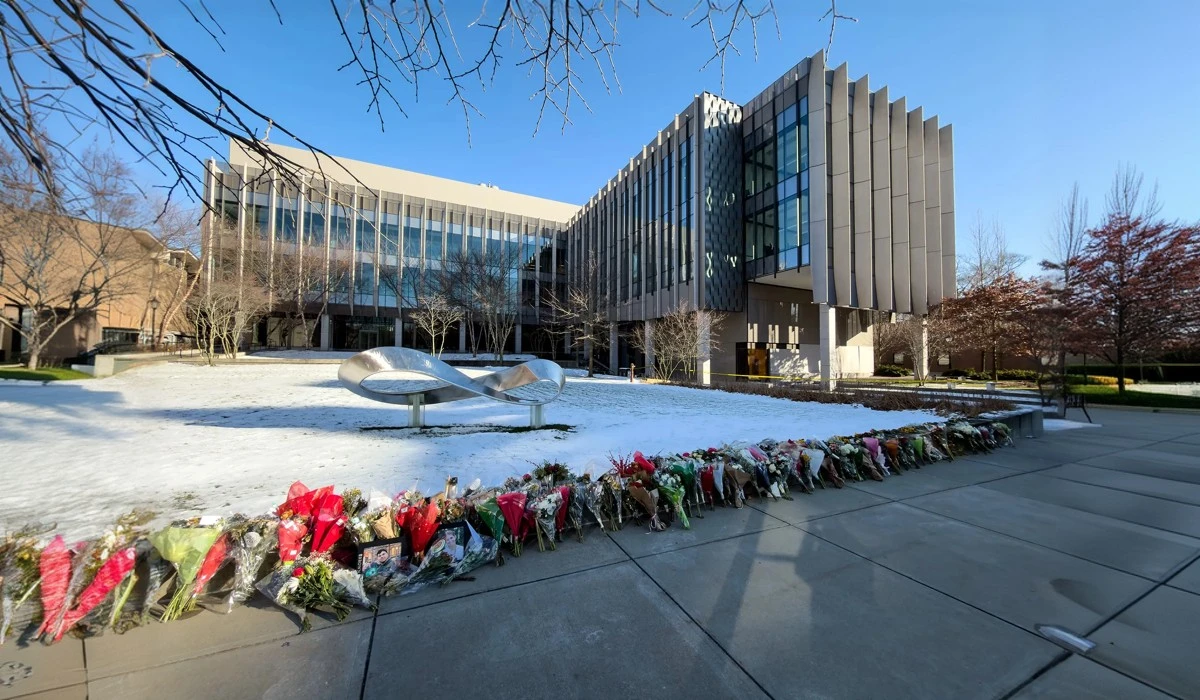
Image by- Kenneth C. Zirkel, CC BY-SA 4.0, via Wikimedia Commons
Brown University Shooting: The Digital Clue
Public safety often relies less on million-dollar surveillance grids and more on a single, sharp-eyed observer. While police forces invest heavily in automated tracking systems, critical breakthroughs frequently come from regular citizens who notice something out of place. The recent Brown University shooting investigation highlights this exact dynamic. A massive technological network failed to catch a fleeing suspect, yet a stranger on the internet provided the key that unlocked the entire case.
Authorities spent days hunting a ghost. They had ballistics, grainy footage, and a growing list of victims. The Guardian confirms the suspect was accountable for the attack where 2 people were killed and 9 others wounded. He moved through the shadows of New England, evading capture while law enforcement scrambled for leads. The pressure mounted with every passing hour. Then, as reported by AP News, a tipster on Reddit changed everything. This individual did not wear a badge or carry a weapon. He simply saw a grey Nissan acting strangely and decided to speak up. This digital breadcrumb led police straight to the suspect, proving that human intuition still outpaces algorithms in high-stakes manhunts.
The Brown University Shooting Investigation Stalls
Technology promises total coverage, yet a suspect can vanish in plain sight until human eyes intervene. Boston.com notes that investigators bowed to the Flock Safety camera network to help recognize the shooter. Specifically, AP News reports that officers tapped into a network of over 70 of these cameras designed to scan license plates and monitor traffic flow. Ideally, these cameras create an inescapable digital net. A vehicle enters the zone, the system logs it, and police receive an alert.
In this case, the system missed its mark. The suspect navigated the city without triggering an immediate takedown. He moved through the streets, fired over 40 rounds, and slipped away before the digital perimeter could lock him in. The Brown University shooting suspect exploited a gap in the automated shield. This failure forced investigators to rely on slower, traditional methods. They needed a witness, not just another data point. The reliance on automation created a blind spot, and the gunman drove right through it.
Crowdsourcing the Manhunt
Critical intelligence frequently hides in public forums rather than secure police databases. While the FBI and local police coordinated their official search, a parallel investigation unfolded online. The Providence subreddit became a hub for information sharing. Traffic to the page spiked from 155,000 to 225,000 visitors in days. Users swapped theories, photos, and updates.
One user, known as "John," held the missing piece of the puzzle. He did not realize the significance of his encounter initially. He had seen a grey Nissan with Florida license plates circling the area. The driver behaved erratically. When "John" approached the vehicle to ask questions, the driver reacted with hostility. The suspect claimed harassment and drove off. "John" later recognized the man from police photos released in connection with the Brown University shooting. He posted his account on Reddit. Another user, "Joe," who had originally posted the FBI flyer, flagged this comment. This digital exchange moved the tip from a comment section to the Attorney General’s desk.
Linking the Brown University Shooting to MIT
Two seemingly separate tragedies can share a single, decades-old origin point. As police chased the lead on the grey Nissan, a darker pattern emerged. The violence was not random. It appeared calculated, rooting back to academic circles from the late 1990s.
Ballistics evidence connected the Brown campus attack to a murder in Brookline, Massachusetts. MIT Professor Nuno Loureiro was killed at his house on 15th of december. The same weapons used in Providence appeared to match the evidence in Brookline. A 48-year-old Portuguese national became the primary suspect. He had attended Brown University on an F1 Visa between 2000 and 2003 but withdrew without a degree. Records showed he and Professor Loureiro were both physics students in Portugal during the late 90s. Witness accounts suggest they had divergent personalities and operated in a highly competitive environment. Years of silence masked a deadly grudge that eventually surfaced across two state lines.
Inside the Suspect’s Movements
A fugitive’s path often looks erratic on a map but follows a strict internal logic of evasion. The suspect did not just snap; he planned his route. He lived in Miami in 2025 but traveled north specifically for this violent campaign. He checked into a Boston hotel on November 26 and stayed until November 30.
On December 1, he rented the car that would later become the focus of the manhunt. He acquired a storage unit in Salem, New Hampshire, using it as a base or a final destination. Inside, he stockpiled a satchel, two 9mm firearms, high-capacity magazines, and a bulletproof vest. He prepared for a prolonged conflict. According to the Los Angeles Times, he evaded recognition by swapping the identifiable Florida plates for unregistered Maine plates to confuse tracking systems. This calculated movement made him a ghost on the highway. He drifted between states, striking his targets and retreating to the periphery.
How did police find the Brown University shooter?
A Reddit user recognized the suspect's grey Nissan and Florida plates, leading authorities to his location.
The Disconnect in Time of Death
A manhunt can continue aggressively even after the target has already ceased to exist. Police intensified their search throughout the week. They chased leads, analyzed surveillance, and warned the public of an armed and dangerous man. They finally located the suspect’s body on a Thursday in the Salem storage facility.
However, the autopsy revealed a contradiction. The medical examiner estimated the time of death as Tuesday, December 16, and WMUR reports that his death has been ruled a suicide. The suspect had been dead for two days while police mobilized SWAT teams and locked down neighborhoods. The threat had ended by his own hand days before law enforcement arrived. The timeline creates a strange reality where the investigation accelerated to catch a man who was already gone. The fear in the community persisted long after the danger had passed.
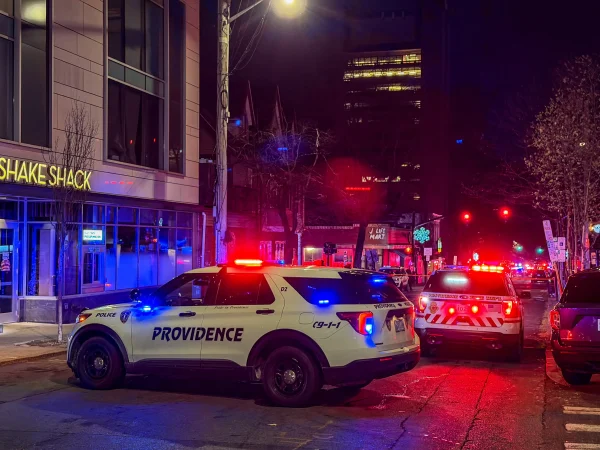
Image by- Kenneth C. Zirkel, CC BY-SA 4.0, via Wikimedia Commons
The "Phantom" Lead
Information vacuums generate false signals that distract from the biological reality. During the search, investigators received a report that the suspect called the car rental agency on Thursday. This lead gave them hope that he was alive and active. It directed resources and attention toward negotiating a surrender.
The autopsy proved this call impossible. The suspect died on Tuesday. The Thursday call was a "phantom" lead—a mistake or a misidentified caller that skewed the timeline. Investigators chased a ghost in the literal sense. This error highlights the chaos of active investigations. Data points conflict. Witnesses misremember. Systems generate noise. The police had to filter through these impossibilities to find the truth. The realization that the call was false closed the loop on the investigation.
The Tipster’s Reality
Heroes in real life often live on the margins rather than in the spotlight. The Mayor described the key tipster as a Brown alumnus motivated by community stewardship. This description paints a picture of a stable, well-connected citizen. Other reports suggest a harder reality.
Some sources indicate the tipster, "John," had no fixed abode and stayed in the basement of an engineering building. Despite his circumstances, he provided the $50,000 lead. He recognized the danger and acted. He physically interacted with the suspect, faced hostility, and still came forward. His testimony broke the deadlock. The Attorney General confirmed that this single piece of information accelerated the entire process. The reward money now stands as a potential life-changing sum for someone living on the edge of the university community he helped protect.
Was the Brown University shooter found alive?
No, police discovered the suspect deceased in a New Hampshire storage facility days after the attack.
Digital Crowdsourcing vs. Chaos
Online communities transform from chaotic distinct forums into unified intelligence agencies during crises. The internet often gets a bad reputation during investigations. The 2013 Boston Marathon bombing saw Reddit users misidentify innocent people, causing harm and confusion.
time, the platform corrected its course. The moderation was tighter. The users focused on verifiable details rather than wild speculation. The shift from sharing memes to analyzing evidence happened instantly. User "Joe" acted as a filter, ensuring "John's" critical info reached the FBI. They crowdsourced the surveillance that the city’s 70 cameras missed. They proved that a decentralized group of observers can outperform a centralized system when focused on a single goal. The community protected itself.
The Arsenal and the Intent
Physical evidence tells the story of a planned war rather than a spontaneous crime. When police breached the storage unit, they found more than just a body. They found a soldier’s kit. The suspect had packed a bulletproof vest and high-capacity magazines. He intended to survive a firefight.
The firing of 40+ rounds at Brown University was not an accident. It was a barrage. The presence of two separate firearms suggests he had a backup plan for weapon failure. He brought the tools of a combatant into an academic setting. The storage unit in Salem was not just a hiding spot; it was an armory. He staged his equipment to maximize damage. The tragedy is that he succeeded in taking lives before his own timeline ran out.
Did Reddit help solve the Brown University shooting?
Yes, a user provided critical details about the suspect's vehicle that accelerated the investigation significantly.
The Final Resolution
The Brown University shooting investigation concludes with a mix of relief and unanswered questions. The suspect is dead. The weapons are secured. The tipster is qualified for the reward. Yet, the path to this conclusion was messy. It required a Reddit user to do what a surveillance network could not. It involved chasing a man who was already dead. It revealed old academic rivalries turning into modern bloodshed.
The case proves that safety is a collective effort. Technology provides tools, but people provide answers. The grey Nissan would have remained just another car on the road without a human observer. The digital clues needed a human mind to connect them.
The Human Element Remains
Systems fail, but awareness succeeds. The Brown University shooting case serves as a stark reminder of the limits of automation. Cameras blink. Data lags. Suspects swap license plates. In that chaos, the most powerful tool remains a person paying attention. A man in a basement saw what the authorities missed. He spoke up. That choice bridged the gap between a cold case and a closed investigation. As the Los Angeles Times notes, the fired over 40 rounds reward validates his contribution, but the real value lies in the lesson learned. When the grid goes dark, the community must light the way.
Recently Added
Categories
- Arts And Humanities
- Blog
- Business And Management
- Criminology
- Education
- Environment And Conservation
- Farming And Animal Care
- Geopolitics
- Lifestyle And Beauty
- Medicine And Science
- Mental Health
- Nutrition And Diet
- Religion And Spirituality
- Social Care And Health
- Sport And Fitness
- Technology
- Uncategorized
- Videos

