
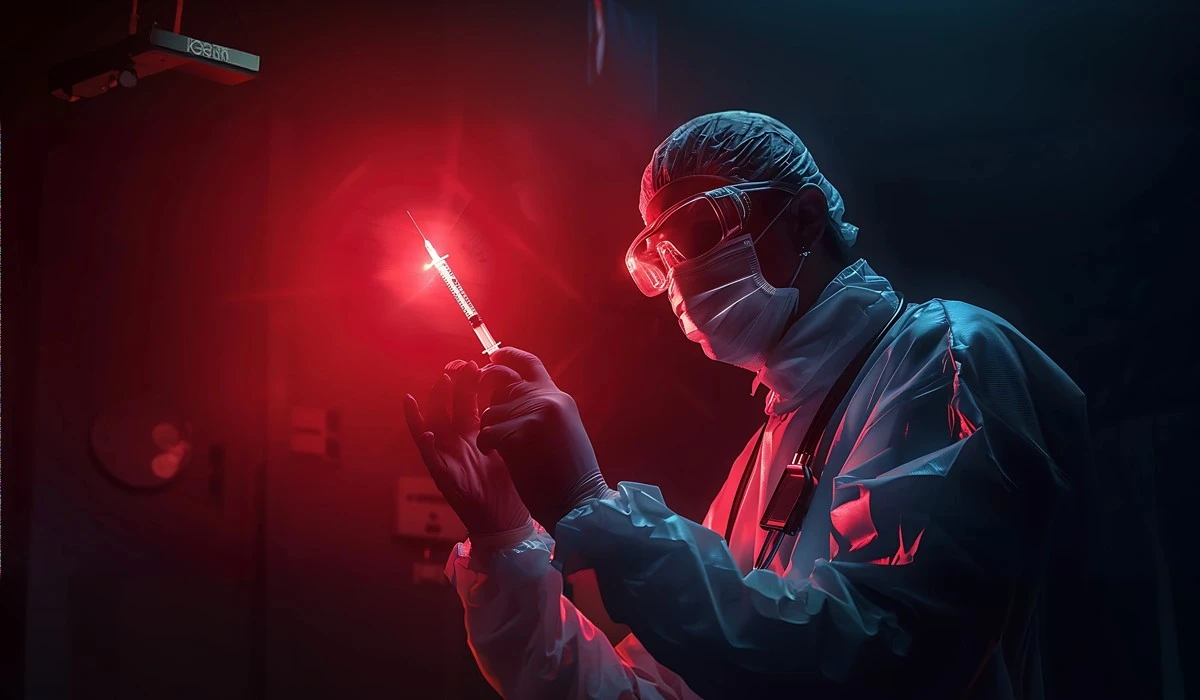
Frédéric Péchier Trial Ends in Life Sentence
A doctor secures his reputation as a genius by secretly creating the very emergencies he then solves with perfect precision.
The Frédéric Péchier trial recently reached its conclusion in a Besançon court, bringing an end to one of the most chilling medical cases in French history. For years, the operating rooms of local clinics became dangerous environments where patients entered for routine procedures and never woke up. The evidence reveals a man who viewed human beings as tools for his own professional advancement. He used lethal substances to trigger heart attacks, then rushed in to "save" the victims while his colleagues panicked. This pattern of behavior turned a place of healing into a site of targeted sabotage.
Prosecutors described a person who felt a deep need for power. He wanted to prove his superiority over every other doctor in the building. To do this, he intentionally poisoned IV bags, ensuring that his rivals would fail while he succeeded. The scale of the tragedy covers nearly a decade of medical practice. Families waited years for the legal system to acknowledge that these deaths resulted from deliberate acts rather than simple mistakes. The trial has finally provided that acknowledgment, stripping away the mask of a "star anesthetist" to reveal a serial poisoner.
The Dual Life of a Star Anesthetist
High-performing doctors often hide deep feelings of inadequacy behind a curtain of professional arrogance. Frédéric Péchier came from a family of medical professionals. His father worked as an anesthetist, and Péchier followed in those footsteps with high expectations. Colleagues at the Saint-Vincent Clinic and the Franche-Comté Polyclinic viewed him as a highly talented practitioner. He maintained a reputation as a "star" in his field, showing immense skill during high-pressure situations. However, this public image hid a controlling nature and what experts call "perverse traits."
He lived a double life that colleagues compared to the story of Dr. Jekyll and Mr. Hyde. On one hand, he offered expert advice and saved lives during resuscitations. On the other hand, he created those very emergencies by tampering with medical supplies. This duality allowed him to maintain his status while satisfying a narcissistic need for ego gratification. He didn't want to be a regular doctor; he wanted people to see him as an elite practitioner who could handle anything.
The Rise of a Medical Reputation
Péchier built his career on being the person everyone called when things went wrong. During the Frédéric Péchier trial, witnesses recalled how often he appeared at the exact moment a patient’s heart stopped. He used these opportunities to demonstrate his "superior" resuscitation skills. This reliance on his expertise by peers fueled his sense of importance. He believed he belonged to a different class of professionals than his coworkers.
Cracks in the Professional Mask
Despite his success, Péchier struggled with his own mental health. He attempted suicide in 2014 and again in 2021 by falling from a window. These events suggest a person who could not handle the pressure of his own fabrications. Prosecutors argued that his internal feelings of inadequacy drove his external need for total control over the operating room.
How the Frédéric Péchier Trial Uncovered the Poisonings
Evidence often sits in plain sight for years until a single bag of salt water reveals a pattern of murder. The Frédéric Péchier trial highlighted a horrifying trend that began in 2008. The first fatality involved Damien Iehlen, who suffered a cardiac arrest during kidney surgery. Over the next nine years, suspicious "serious adverse events" occurred with alarming frequency at the Besançon clinics. At the Saint-Vincent Clinic, the heart attack rate jumped to six times the national average. These incidents only happened when Péchier was on duty. When he took time off or left the building, the medical emergencies stopped immediately.
Investigators eventually looked into over 70 serious adverse events. They narrowed the focus to 30 poisoning victims, 12 of whom died. The victims ranged in age from a four-year-old boy to an 89-year-old senior. These individuals were healthy enough for surgery but suffered sudden, inexplicable heart failures the moment their IV drips began. What did Frédéric Péchier do? He injected lethal doses of potassium chloride and other drugs like lidocaine and heparin into saline bags to trigger these arrests.
The Discovery of Tampered Bags
In January 2017, the pattern finally broke. A patient named Sandra Simard suffered a cardiac arrest, but doctors managed to save her. When staff examined her saline bag, they found something impossible. The bag contained a potassium concentration 100 times higher than the expected dosage. This discovery launched a formal investigation in March 2017 and led to Péchier being barred from medical practice.
The Scale of the Police Inquiry
The police conducted a massive inquiry to ensure they had the right suspect. They interviewed 1,514 individuals who had access to the operating rooms. They also ordered the exhumation of four bodies to perform forensic tests years after the burials. These tests confirmed the presence of toxins that should never have been in the patients' systems. How many people did Frédéric Péchier kill? Investigators linked him to 30 poisonings and 12 total deaths over a nine-year period.
The Sabotage of Peers in the Operating Room
Professional jealousy turns lethal when a doctor uses patients as biological weapons to humiliate his rivals. The prosecution argued that Péchier did not kill out of a traditional "mercy" motive. Instead, he wanted to discredit his rivals. By poisoning a patient under another doctor's care, he forced that doctor to face a life-or-death emergency. When the colleague failed to stabilize the patient, Péchier would step in and "save the day." This created a narrative where Péchier appeared competent and his peers appeared incompetent.
Lawyer Morgane Richard, representing the victims, stated that Péchier used patients as "cannon-fodder." He treated human lives as biological weapons to fire at his colleagues. He didn't care about the recovery of the patients; he only cared about the professional destruction of the people he worked with. This motive turned the clinic into a battlefield where the patients were the only ones getting hurt.
Discrediting Rivals Through Emergencies
Péchier focused his efforts on creating "serious adverse events" during shifts where he felt he needed to assert dominance. If a colleague questioned his methods or gained more praise, an emergency often followed. He used these moments to heighten his own status. What was the motive of Frédéric Péchier? Prosecutors argued he wanted to sabotage his colleagues' reputations while showing off his own superior resuscitation skills.
Creating a Saviour Persona
The "saviour" archetype defined Péchier’s professional life. He needed his peers to rely on him. By creating the crisis, he ensured that he remained the most valuable person in the room. He turned the operating room into a stage where he could play the hero, ignoring the fact that his "heroics" only existed because he had poisoned the victim minutes earlier.
Inside the Potassium Overdose Evidence
A heart stops when potassium levels reach one hundred times the normal limit, leaving a clear signature of intent. Potassium chloride is a common medical substance, but in high doses, it stops the heart instantly. During the Frédéric Péchier trial, forensic experts explained how Péchier used this and other toxins to manipulate patient outcomes. He also used adrenaline, lidocaine, and heparin. These substances are difficult to detect during standard post-mortem exams unless investigators specifically look for them. This allowed the crimes to continue for nearly a decade without detection.
The 2017 incident with Sandra Simard provided the "smoking gun" for the prosecution. The 100x concentration of potassium in her IV bag ruled out any possibility of a simple pharmacy error. Such a high dose requires deliberate manual injection. This evidence shifted the case from "medical malpractice" to "intentional poisoning." Péchier had carefully selected toxins that would mimic natural surgical complications, making it harder for his peers to suspect foul play.
The Physics of a Heart Attack
When Péchier injected these substances, he knew exactly what would happen. The potassium would disrupt the electrical signals in the heart, causing it to seize. He timed these injections to occur when he was nearby, allowing him to be the first one to respond to the alarm. This level of planning showed a deep understanding of medical science used for the purpose of harm.
The Defense Strategy
Péchier’s defense team tried to argue that these events were just "medical errors" by other staff members. They claimed there was a "poisoner at large" in the clinic and that Péchier was being framed. However, they could not explain why the incidents stopped the moment the police arrested him. The defense also pointed to a lack of forensic proof in some of the earlier cases, but the statistical evidence and the 2017 bag discovery proved too strong to overcome.

The Long Search for Justice in Besançon
Victims wait decades for answers because the medical establishment protects its own through a wall of presumed innocence. The victims of Frédéric Péchier carried their trauma for years while the legal system moved slowly. Amandine Iehlen, the daughter of the first victim, waited 17 years for a final verdict. She expressed shock that her father's death was only the beginning of a long string of crimes. For many families, the trial of Frédéric Péchier represented more than just a legal proceeding; it was a battle to prove that their loved ones had been murdered.
The survivors also shared their stories of lifelong suffering. Tedy, who was poisoned at age four during a simple tonsillectomy in 2016, now lives with permanent physical and cognitive delays. He is now 14 and must deal with the consequences of being used as a tool in a doctor's professional feud. His father, Hervé Hoerter Tarby, described the situation as a total betrayal of medical trust. A child should be safe in a hospital, but Péchier turned that safety into a nightmare.
The Impact on Survivors
Sandra Simard survived her poisoning but says her body now feels like that of an elderly person. She suffers from persistent pain that worsens during the winter. For her, the end of the trial marks the conclusion of a long-term terror. She can finally stop looking over her shoulder and begin the process of healing, though the physical damage remains permanent.
Restoring Peace to the Community
Jean-Claude Gandon, another survivor, spoke about finding peace during the holiday season following the verdict. The community of Besançon had lived under the shadow of these crimes for years. With more than 150 representatives as civil parties in the case, the trial was a massive public event. The verdict finally allows the city to move past the infamy of "Doctor Death."
Psychological Profile: The Saviour Archetype
Some men require a crisis to feel important, so they manufacture catastrophes to play the role of the hero. Throughout the Frédéric Péchier trial, psychologists examined the defendant's mind. They found a man who lacked responsibility for the distress he caused families. Péchier claimed he only cared about protecting his own household, showing a cold detachment from the people he poisoned. He refused the title of "poisoner," insisting that he always adhered to Hippocratic principles.
This refusal to admit guilt is a common trait in people with his psychological profile. They believe their own lies because those lies protect their ego. By pretending to be a savior, Péchier could ignore the reality that he was a killer. He saw himself as an elite practitioner, and any evidence to the contrary felt like an attack on his identity. This is why he claimed his colleagues were the ones making mistakes, even when the data showed otherwise.
The Narcissistic Need for Power
Péchier’s actions were not about the patients at all. They were about how he felt in the eyes of others. He needed the rush of a resuscitation and the praise that followed it. This narcissistic drive pushed him to take greater and greater risks. Eventually, his need for power outweighed his fear of being caught.
The Rejection of Guilt
Even when faced with the life sentence, Péchier maintained his innocence. He portrayed himself as a victim of a conspiracy by his peers. This psychological defense mechanism allowed him to stay "the hero" in his own mind, even as the court labeled him a murderer. He could not accept a world where he was just an ordinary, or even a failed, doctor.
The Final Verdict and Life Sentence
The legal system finally closes the door on a killer who refused to admit his crimes until the very end. On a recent Thursday, the Besançon court delivered the final verdict. The judge sentenced Frédéric Péchier to life in prison with a minimum term of 22 years. This sentence reflects the gravity of poisoning 30 people and causing 12 deaths. The four-month trial concluded on a Friday, leaving the victims' families with a sense of resolution. The prosecutor’s label of "Doctor Death" will now follow Péchier for the rest of his life, replacing the "star" reputation he fought so hard to maintain.
The Frédéric Péchier trial serves as a warning about the potential for harm when ego goes unchecked in the medical field. The trust between a patient and a doctor is sacred, and Péchier broke that trust in the most violent way possible. By using his knowledge to stop hearts rather than heal them, he earned his place as one of the most notorious figures in French criminal history. The conclusion of this case ensures that he will never again have the opportunity to step into an operating room or hold a patient's life in his hands.
Ultimately, the justice system looked past the medical jargon and the professional standing of the defendant. It focused on the reality of the saline bags, the potassium levels, and the pattern of heart attacks that only happened when one specific man was present. The families of the 12 deceased victims can now close this chapter of their lives. While the pain of their loss remains, they no longer have to fight to prove the truth. The truth is now part of the public record: Frédéric Péchier was a poisoner who traded lives for professional vanity.
The resolution of the trial brings a sense of justice to those who suffered under his care. The survivors continue to deal with the physical fallout of his actions, but they no longer live in the shadow of an unsolved crime. As the clinics in Besançon move forward, they do so with stricter protocols and a reminder that even the most talented professional can hide a dark and destructive motive. The life sentence ensures that the "Doctor Death" narrative ends here, providing a final, definitive answer to a decade of mystery and tragedy.
Recently Added
Categories
- Arts And Humanities
- Blog
- Business And Management
- Criminology
- Education
- Environment And Conservation
- Farming And Animal Care
- Geopolitics
- Lifestyle And Beauty
- Medicine And Science
- Mental Health
- Nutrition And Diet
- Religion And Spirituality
- Social Care And Health
- Sport And Fitness
- Technology
- Uncategorized
- Videos

