
Australia’s Social Media Ban Changes Everything
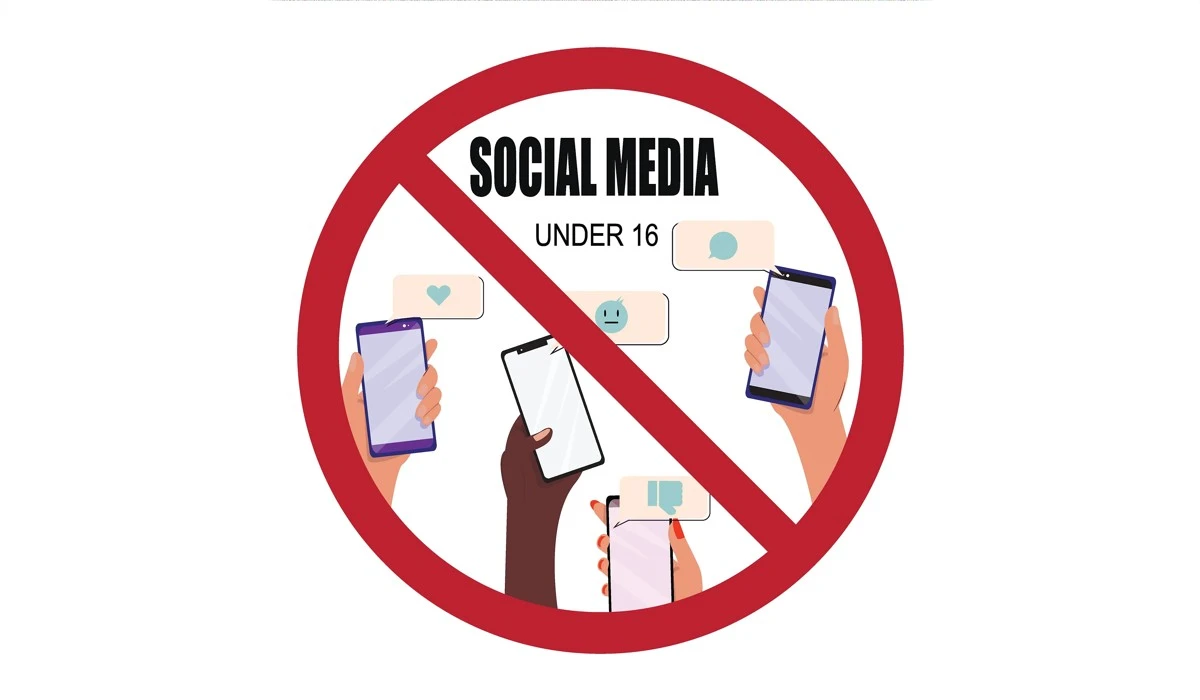
Governments often try to control how people behave, but rarely do they attempt to rewire the infrastructure of the internet itself. When a nation decides to parent millions of children at once, it forces technology companies to choose between breaking their business models or breaking the law. This week, a digital wall went up across an entire continent. The new regulations shift the heavy lifting from parents directly to the platforms. The Australia social media ban is no longer a theoretical debate; it is a live experiment impacting millions of users right now.
This law forces a massive change in how digital spaces operate. Technology giants must now act as gatekeepers for an entire population. The government argues this step prioritizes safety over unrestricted access, aiming to protect young minds from harmful algorithms. However, the move has triggered immediate resistance. Legal challenges are already mounting, and critics argue the restrictions might do more harm than good. The world is watching closely to see if this bold strategy actually works or if it simply pushes the problem further into the shadows.
The Hard Line Drawn at Sixteen
Setting a rigid age limit attempts to solve a behavioral problem with a single biological number, ignoring maturity differences entirely. As reported by Reuters, the legislation officially launched this Wednesday, marking Australia as the first country to strictly ban social media for children under 16. It requires ten major platforms to bar any user under the age of 16. This is the world’s strictest age cutoff for social media. Unlike other countries that allow parental consent to override age restrictions, Australia denies that option. The government insists that parental permission should not grant access to harmful environments.
Prime Minister Anthony Albanese compares this new rule to alcohol laws. He argues that society accepts age limits for drinking, and social media requires a similar standard. The Australia social media ban targets specific giants like TikTok, Meta’s apps, and Reddit. The goal is to stop the feed from influencing young users before they have the mental tools to handle it. However, the government admits that perfection is unlikely immediately. They expect "teething issues" as the system rolls out across the nation.
Reddit and Teens Fight Back
Challenging a law often reveals that the intended shield for one group becomes a sword against the rights of another. The legal backlash began almost immediately. Reddit has filed a legal challenge, arguing that the law infringes on privacy rights. They claim that the strict verification measures required to enforce the ban will force intrusive checks on adults, not just children.
Two teenagers from New South Wales are also taking the fight to the High Court. These 15-year-old litigants argue that the ban breaches their implied freedom of political communication. Macey, one of the teens, states that civic rights apply before voting age. She believes democracy includes the voices of youth. Why is Reddit suing Australia? As detailed in a filing covered by Reuters, Reddit believes the verification requirements infringe on privacy rights for everyone, not just teens. The platform argues that keeping users safe is possible without blocking access entirely or demanding sensitive ID data from every user.
The High Price of Non-Compliance
Financial penalties work only when the cost of breaking the law exceeds the profit gained from ignoring it. The Australian government backed this legislation with serious consequences. According to Reuters, companies facing the Australia social media ban risk fines up to AUD 49.5 million (roughly USD 32 million) for non-compliance. Minister Anika Wells emphasized that the government will not back down against Big Tech firms. She stated that the law prioritizes parent interests over corporate profits.
Tech executives like Scheeler call this a "seatbelt moment" for the industry. The comparison suggests that imperfect regulation is still better than total inaction. However, the sheer size of the fines proves the government is serious. They want companies to know that ignoring these rules will hurt their bottom line. The eSafety Commissioner is also monitoring the situation closely. They are watching for unintended consequences, such as changes in sleep patterns or a rise in antidepressant use among youth who feel isolated.
Identity Checks and Privacy Fears
Demanding proof of age accidentally creates a massive database of sensitive personal identities ripe for exploitation. To make the ban work, platforms must verify who is sitting behind the screen. Methods under consideration include government ID checks, facial estimation technology, email verification, or third-party services like K-ID. This raises significant privacy concerns for all Australians.
The Guardian notes that adults will likely need to prove their age to access these platforms, not just the under-16 demographic. This means handing over personal data to global tech companies just to scroll through a feed. Reddit specifically highlighted this issue in their statement. They argue that protecting youth should not come at the cost of adult privacy. How will Australia verify age for social media? Platforms may use government ID, facial analysis technology, or third-party services to check user ages. Critics worry that these databases could become targets for hackers, putting millions of citizens at risk of identity theft.

The Reality of Loopholes and VPNs
Building a digital fence invites users to find the holes before the paint even dries. While the law is strict on paper, the practical reality is much messier. Teen users like Felix point out that the blockage is likely temporary. He believes workarounds are inevitable and easy to find. Many teens already use VPNs to access content restricted in their region. Others simply lie about their age or use accounts created by their parents.
The Australia social media ban faces a difficult battle against tech-savvy youth. Research suggests that when you block one avenue, users migrate to another. The eSafety Commissioner flagged the risk of teens moving to the "dark web" or unregulated spaces where safety tools do not exist. Whistleblowers also claim that existing safety tools are often ineffective, with a report by the Irish Examiner finding that nearly two-thirds of such measures fail. If teens bypass the ban, they may end up in corners of the internet with zero supervision.
Who Gets a Free Pass?
Creating a list of "safe" apps implies that danger resides in the platform's design rather than the user's interaction. The legislation does not ban everything. Exemptions include Roblox, WhatsApp, YouTube Kids, and Google Classroom. The government decided these platforms offer essential communication or educational value. However, critics argue this creates a false sense of security.
Roblox, for example, is a massive social hub for young people. Excluding it from the ban suggests it is safe, yet it contains many of the same social elements as banned platforms. Which apps are banned in Australia for under 16? Major platforms like TikTok, Instagram, Snapchat, and Reddit are restricted for users under sixteen. Academic research from the Lancet suggests that total screen time might not decrease. Instead, usage will simply shift to these exempted platforms or gaming. The goal of increasing physical activity might fail if teens just swap TikTok for Roblox.
The World Is Watching
One nation’s bold experiment serves as a free field test for other countries too cautious to risk their own political capital. Australia is the first to attempt a ban this strict without a parental override. Countries like the UK, Malaysia, Denmark, and Norway are watching closely. The European Union is also monitoring the outcome. They view the Australia social media ban as a "proof of concept."
A statement released via Archewell confirms that Prince Harry and Meghan praised the action as bold. They stated that a reckoning is needed between society and profit-driven tech companies. The global community wants to know if legislation can truly tame the algorithms. If Australia succeeds, other nations will likely follow suit. If it fails, it will serve as a warning about the limits of government control over the internet.
A New Digital Reality
This legislation forces a fundamental rethink of how young people interact with the digital world. The Australia social media ban strips away the ambiguity of previous rules and draws a hard line in the sand. While the intent to protect children is clear, the path forward is full of obstacles. Legal challenges, privacy fears, and simple workarounds threaten to undermine the law's power. Yet, a standard is now set. The government has signaled that the era of unregulated access for children is over. Whether this specific law holds up in court or works in practice, it has already changed the global conversation about online safety.
Recently Added
Categories
- Arts And Humanities
- Blog
- Business And Management
- Criminology
- Education
- Environment And Conservation
- Farming And Animal Care
- Geopolitics
- Lifestyle And Beauty
- Medicine And Science
- Mental Health
- Nutrition And Diet
- Religion And Spirituality
- Social Care And Health
- Sport And Fitness
- Technology
- Uncategorized
- Videos

