
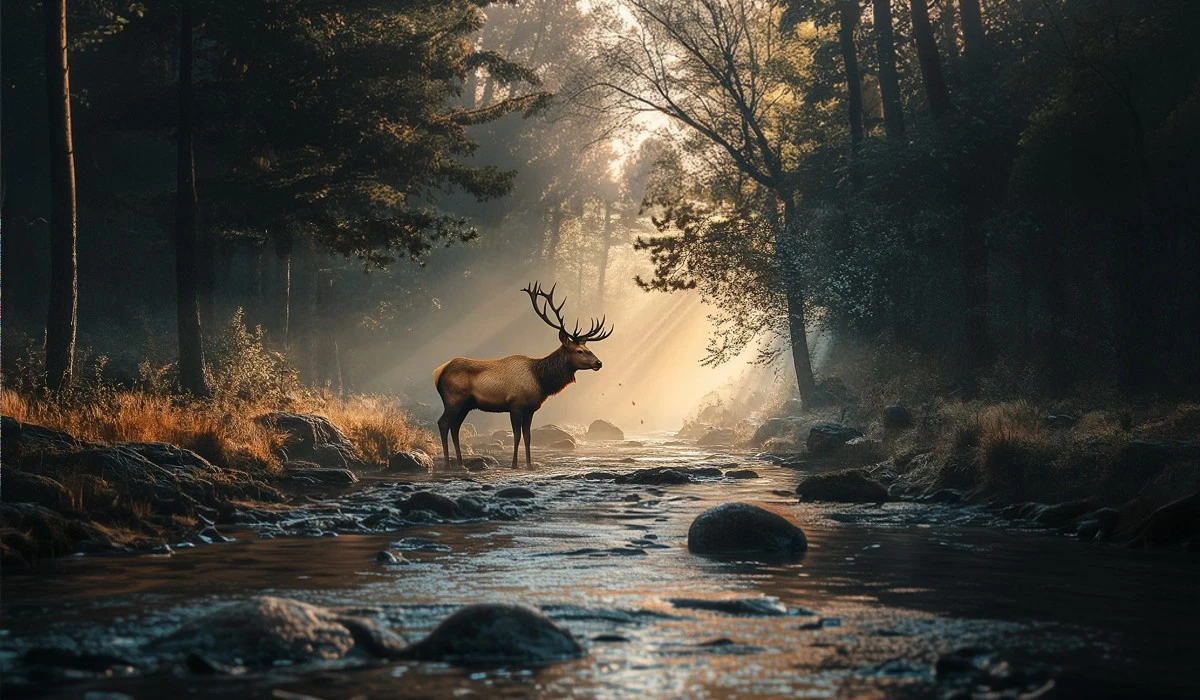
Reindeer Herding Adopts High Tech
Survival often forces you to adopt the very tools that seem to threaten your identity. When an ancient practice meets the modern world, the result is rarely a simple clash of eras; it is a calculated fusion of them. In the frozen expanses of Scandinavia, maintaining a tradition that spans two millennia now requires the precision of military-grade technology. The popular image of a solitary figure gliding on wooden skis has quietly shifted. The Guardian reports that modern reindeer herding involves thermal sensors, heavy equipment, and precise biological management. This evolution is not about abandoning the past. It is about using every available advantage to keep it alive in a world that refuses to wait.
Real preservation requires adaptation, not stagnation. The challenges facing herders today—climate shifts, aggressive predators, and shrinking pastures—demand a response faster than nature alone can provide. Reindeer naturally move into the wind to detect threats, a behavior that protects them but makes containment difficult for humans. Herders must counter this deep-seated instinct with advanced tracking and rapid mobility. Peter, a modern herder in Grövelsjön, operates within this high-stakes tension daily. His family history traces back to a grandfather arriving in western Sweden in the 1930s to reverse a government eradication policy. By 1955, his father was competing in the Winter Olympics. Now, the operation relies on a mix of ancestral knowledge and digital surveillance.
The Fusion of Drones and Ancestral Chant
Efficiency demands the surrender of slow methods to save the core practice. You might expect a total rejection of modernity in favor of purity, but the reality on the ground is purely pragmatic. Peter and his colleagues do not view technology as an enemy. They view it as a necessary survival kit.
In the village of Grövelsjön, the cooperative manages a herd of 800 animals. While the government allowance caps the herd at 2,700, the current numbers reflect a balance between economic reality and environmental limits. Managing these animals requires speed and reach. Elvijn, another herder, explains the integration clearly. They mount speakers on drones to play various calls that guide the animals. The Guardian notes that thermal imaging cameras on these devices cut through the winter darkness, revealing heat signatures that human eyes would miss. The dogs still do the heavy lifting on the ground, but the aerial view changes the operational scope.
Traditional tools remain, but they serve specific roles alongside the new tech. The "Joik," a traditional chant with a loop structure and no defined start or end, still resonates in the mountains. It acts as a personal signature and a calming tool. Yet, when the snow is deep and the herd scatters, a snowmobile offers speed that skis cannot match. Peter notes that while traditions define their identity, reindeer herding is a tough business. They use any modern tools they can to ensure the herd survives the winter.
Language as Survival Software
Communication in the Arctic requires more than just standard words. Standard Swedish or English lacks the precision needed to describe snow conditions or reindeer positioning instantly. The Sami vocabulary acts as specialized software for the environment. It contains distinct terms for terrain, snow texture, and animal behavior that would take full sentences to explain in other languages. Peter emphasizes that their language is made for this environment. It allows for rapid, accurate information transfer during a crisis, proving that linguistic heritage functions as a practical tool for safety rather than just a cultural artifact.
Economic Survival Beyond the Meat
Solvency depends on external revenue streams, not just the product itself. A functional business model often looks different from the outside than it does on the balance sheet. For many, the assumption is that selling meat provides a complete living. The numbers tell a different story.
Raising reindeer generates income, but it rarely covers all the costs of modern life and operations. Subsidization is not a sign of failure; it is a structural necessity in the current economy. Herders often supplement their income through tourism and handicrafts. They sell meat, hides, and antlers, but the profit margins are tight. The annual slaughter in the Grövelsjön cooperative is around 700 animals. This harvest provides meat for food, sinews for sleds, and hides that offer protection against temperatures as low as -50°F.
The meat itself is high-value. It contains roughly 2% fat and is rich in protein. Every part of the animal serves a purpose. Blood becomes sausage. Antlers become knife handles and crafts. However, the economic pressure remains high. Helena, a local source, points out that while most Sami have reindeer, many cannot afford the time to look after them full-time. The shift from a subsistence lifestyle to a cash-economy operation forces herders to balance their time between the mountains and other employment. What is the main financial challenge for herders? Reindeer meat sales alone often cannot support a family, requiring income from tourism or crafts to stay afloat.
Predator Management in Reindeer Herding
Safety is not a static state but a constant, violent negotiation with nature. We often romanticize the wild as a harmonious place, but for a herd, it is a battlefield. The herders lose more than 10% of their stock to predators every year. This loss creates a constant drain on the cooperative’s resources and emotional reserves.
The main threats include bears, wolves, wolverines, and eagles. In some areas, lynx pose a massive problem. A single male lynx can kill approximately 22.5 reindeer in a month. This level of predation forces herders to be vigilant. Technology helps here too. Thermal imaging can spot a predator before it strikes, giving the herders a chance to intervene. However, the rules of engagement differ by species.
Peter states bluntly that wolves and reindeer cannot live in the same place. The disruption a wolf pack causes is total. Bears, on the other hand, are managed differently. With technology, herders can monitor bear populations. The cabin in Grövelsjön sits less than half a mile from hibernating bears. This proximity requires constant awareness. The herders do not want to destroy the local wildlife, but they must protect their livelihood. The balance is razor-thin, and reindeer herding requires constant intervention to maintain it.
Climate Stress Factors
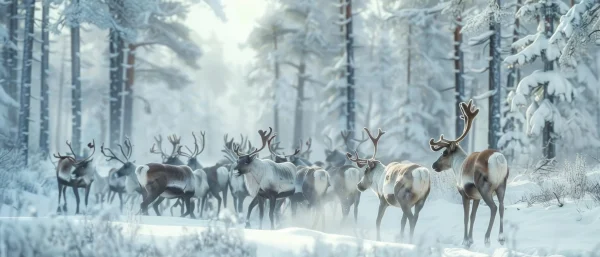
Predators are not the only threat; the changing climate adds a layer of difficulty. Reindeer herding relies on the animals’ ability to dig for lichen beneath the snow. When freeze-thaw cycles occur, a layer of ice forms over the lichen. This "rain in winter" phenomenon locks the food away. The reindeer cannot break the ice, leading to starvation. This environmental pressure forces herders to supply supplemental feed, further increasing costs and altering the traditional migration patterns.
Biological Hierarchies and Myths
Physical traits dictate hierarchy, overturning cultural myths. Nature prioritizes survival over human assumptions about gender roles. The most famous example involves the reindeer pulling Santa’s sleigh. In the reindeer world, males shed their antlers in late autumn after the mating season ends. They enter the deep winter without them. Discover Wildlife explains that females retain their antlers throughout the spring until they calve. This biological quirk serves a vital purpose. The females need the antlers to defend their food patches in the snow. They use them to push away competitors, including the antlerless males, ensuring they have enough nutrition for their pregnancy.
This means that any reindeer depicted with antlers in late December is biologically female. The hierarchy of the herd shifts based on this cycle. The females dominate the food sources during the harshest months. Understanding this cycle is crucial for herders managing the health of the group. They know which animals will be aggressive and which will need protection. Do female reindeer keep their antlers in winter? Yes, females keep their antlers until spring to defend food sources while pregnant, unlike males who shed them in autumn.
Legal Borders Versus Natural Instinct
Political borders disrupt the natural biological flow of the herd. Governments draw lines on maps, but animals follow the logic of terrain and season. This disconnect creates legal and logistical headaches for the Sami people.
The history of reindeer herding spans across Norway, Sweden, Finland, Russia, and beyond. Originally, the Sami lived a nomadic existence, moving freely across these lands. Borders established in 1751, 1852, and 1889 severed these routes. Forced assimilation policies, including mandatory schooling and religious conversion, further attacked the culture. During World War II, the dynamic shifted again. The Sami initially held a neutral stance, but German treatment of them as "sub-human" drove many to support the Allies as guides and pilots.
Today, the legal landscape varies by country. Documents from the CCPR Centre indicate that in Norway and Sweden, the right to own a herd and an official earmark generally belongs only to those of ethnic Sami lineage. This law aims to protect the cultural heritage. However, Finland operates differently. There, reindeer ownership is open to any EU citizen resident in the district. This creates a different competitive dynamic. According to the ICR Arctic Portal, "concession" villages in the Torne Valley in Sweden allow non-Sami to own up to 30 deer, provided they employ a Sami herder.
The Impact of Pasture Loss
Land use conflict shrinks the available space for herding. Data from the ICR Arctic Portal shows that in Norway alone, herders have lost over 30% of their pasture land to encroachments like mines, cabins, and wind power projects. Reindeer need vast areas to roam, especially as they rotate pastures to avoid overgrazing. When industry cuts into these lands, it squeezes the herd into smaller, less sustainable pockets. The legal battles for land rights are as critical to the future of reindeer herding as the daily management of the animals.
The Social Barcode of the North
Clothing and knives act as immediate social barcodes. In a harsh environment, visual markers convey identity and status instantly. The Sami culture embeds this information into their daily attire and tools.
The traditional clothing, known as the Gákti, tells a story. The buttons on a belt communicate marital status: square buttons indicate a married person, while round buttons signal they are single. The hem of the garment reveals the wearer's regional origin. This system allows Sami from different areas to recognize connections and distinctions immediately.
Knife culture starts early. Children receive their first knife around age two. This is not a toy; it is a primary tool for survival. The knife handles, often made from antler, are essential for chopping wood, butchering meat, and repairing gear. The "Siida" system further organizes the community. This ancient structure forms a working partnership between families to manage resource rights. It distributes the labor and the risks, ensuring that no single family has to face the Arctic winter alone. How do Sami buttons show marital status? Square buttons mean the wearer is married, while round buttons mean they are single.
A Future Forged in Snow
The continuity of this lifestyle relies on a constant, active defense against erasure. It is easy to view traditional practices as fragile things that break under the weight of the future. The reality in Grövelsjön proves the opposite. The herders there do not cling to the past; they carry it with them into the future. By adopting drones, snowmobiles, and GPS tracking, they ensure that the core of their culture remains intact.
Peter, Elvijn, and the other herders demonstrate that reindeer herding is not a museum exhibit. It is a living, breathing economy that adapts to survive. The threats of predation, climate instability, and industrial encroachment are real. Yet, the response is equally tangible. Through a combination of biological understanding, legal navigation, and technological adoption, the Sami continue to command the mountains. They prove that the strongest traditions are the ones that learn how to change.
Recently Added
Categories
- Arts And Humanities
- Blog
- Business And Management
- Criminology
- Education
- Environment And Conservation
- Farming And Animal Care
- Geopolitics
- Lifestyle And Beauty
- Medicine And Science
- Mental Health
- Nutrition And Diet
- Religion And Spirituality
- Social Care And Health
- Sport And Fitness
- Technology
- Uncategorized
- Videos

