
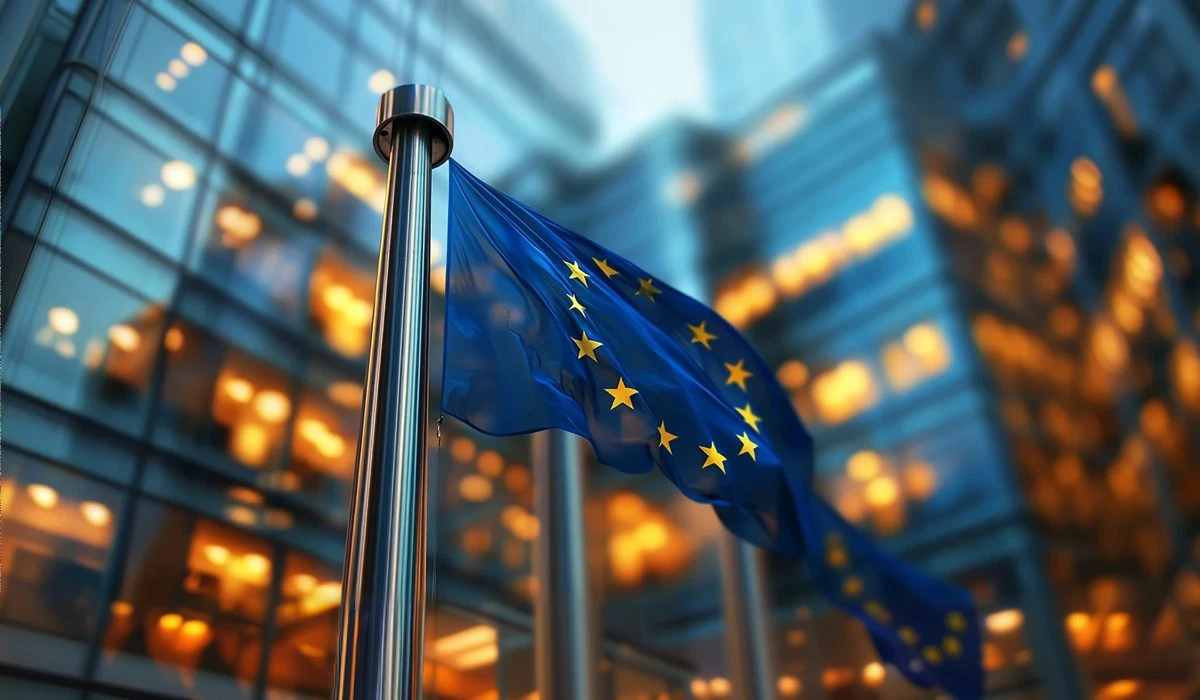
EU Votes On Social Media Ban Law
Strasbourg Strikes Back: EU Lawmakers Demand Digital Curfew for Minors
Legislators gathering in Strasbourg have taken their most aggressive step yet against Silicon Valley. An overwhelming majority voted on Wednesday to demand a strict prohibition on social network access for anyone under sixteen. The parliamentary decision insists that digital platforms must block minors unless a parent specifically opts in. This move represents a seismic shift in how Europe regulates technology, moving from soft guidelines to hard barriers. Politicians argued during the debate that the era of self-regulation has failed completely. The chamber expressed deep frustration with tech companies that prioritize engagement over safety. While this resolution does not immediately change the statute books, it compels the executive branch in Brussels to draft binding rules. The consensus among the representatives is that protecting the mental health of the next generation requires forceful state intervention.
Defining the New Digital Barrier
The proposal envisions a strict "safety by default" mechanism for the internet. Tech giants would face a legal requirement to prevent any user younger than sixteen from creating an account. This effectively establishes a digital age of consent that supersedes current norms. The burden of proof shifts entirely onto the corporations, who must verify the age of every user. Critics argue this might be technically difficult, but supporters insist that banking-grade verification is necessary for child safety. The current system, where a child simply enters a fake birth date, would be rendered obsolete. By mandating a default blockade, the EU aims to create a friction point that slows down the rush to join these platforms. This pause is designed to give families time to assess whether their child is truly ready for the pressures of the online world.
The Parental Override Mechanism
Lawmakers included a crucial clause that allows families to retain some autonomy. Parents can choose to override the ban for adolescents between thirteen and sixteen. This "opt-in" model reverses the current dynamic, where parents struggle to keep kids off apps. Instead, guardians must make an active, conscious choice to allow access. The goal is to empower mothers and fathers who currently feel overwhelmed by peer pressure and ubiquity. By setting the default switch to "off," the legislation supports parents who want to delay smartphone adoption. However, this nuance also places a heavy responsibility on guardians to understand the digital landscape. Debates in the chamber highlighted that this is not about stripping rights, but about restoring parental authority in the digital home.
Mental Health Crisis Among Youth
The driving motivation for this legislative push is the deteriorating mental well-being of European youth. Speakers cited harrowing statistics regarding anxiety, depression, and body image disorders among teenagers. The constant need for validation through likes and comments is damaging self-esteem. The resolution explicitly links these mental health struggles to the business models of major apps. Politicians shared stories of families destroyed by cyberbullying and online eating disorder communities. The argument is that social networks act as an accelerant for the natural insecurities of adolescence. By raising the entry age, officials hope to shield developing brains during their most vulnerable years. The consensus is that the profit motives of advertising companies can no longer supersede the psychological safety of children.
Breaking the Cycle of Addiction
A central pillar of the text targets the specific engineering used to keep eyes on screens. The resolution calls for a complete prohibition on "sticky" features for any minor who is allowed online. This includes banning the "endless feed" mechanism where content loads perpetually without a stopping point. It also targets videos that play automatically, removing the user’s choice to engage. Notifications that demand immediate attention would also be restricted for young users. These features are often compared to slot machines, designed to trigger dopamine hits. The EU wants to strip these manipulative tools away, forcing platforms to offer a neutral, less stimulating experience. The objective is to break the compulsion loop that disrupts sleep and homework.
Learning from the Australian Model
European officials are looking closely at legislative experiments happening in the Southern Hemisphere. Canberra recently finalized its own world-first law to block social media for those under sixteen. That Australian bill, set to activate next month, imposes massive fines on companies that fail to enforce the age limit. Brussels sees this as a vital proof of concept. If Australia can successfully force tech giants to implement age gates, it weakens the argument that such measures are technically impossible. The European Commission is currently analyzing the text of the Australian law. This cross-continental alignment suggests a growing global consensus. Democratic governments are increasingly willing to impose hard borders on the virtual world to protect their citizens.
Von der Leyen Takes a Stand
The head of the EU executive, Ursula von der Leyen, has staked her political capital on this issue. In a fiery address last September, she used vivid imagery to describe the threat. She spoke of a "tsunami" of digital influence that leaves parents feeling helpless in their own living rooms. Her critique focused on algorithms that are programmed to exploit the fragility of young minds. She committed to forming a specialist advisory group before the current year concludes. This panel will guide the drafting of the new European rules. Her personal involvement signals that this is a top priority for her administration. It ensures that the parliamentary vote will not just gather dust but will likely evolve into a concrete directive.
The Findings from France
France has served as a policy laboratory for these strict measures. President Emmanuel Macron commissioned a detailed inquiry last year to study screen time effects. The resulting report was stark in its recommendations. Experts advised that children should have no access to smartphones before age thirteen. Furthermore, they suggested keeping users off major networks like Instagram, Snapchat, and TikTok until age eighteen. These radical proposals heavily influenced the debate in Strasbourg. The French study provided the scientific backbone for the political arguments. It validated the fears of many parents with hard data on cognitive development. Macron continues to champion a "digital majority" at the EU level, pushing for harmonized rules across the bloc.
Schaldemose Leads the Charge
The resolution was shepherded through the assembly by Christel Schaldemose. This Danish representative, a member of the Social Democrats, has been a vocal critic of big tech. She told the press that relying on parents alone is an unfair strategy. Society, she argued, must intervene to ensure the digital public square is safe. Her report emphasized that platforms must be redesigned from the ground up for minors. She insists that safety must be baked into the code, not just added as a setting. Schaldemose believes that companies have had enough chances to self-regulate. Her leadership on this file suggests a hardened stance from the center-left political groups in Europe.

The Economics of Attention
The debate acknowledges that this legislation strikes at the heart of the surveillance capitalism model. Platforms make money by harvesting data and selling attention to advertisers. Teenagers are a prime demographic because they form lifelong brand habits. By cutting off access to under-16s, the EU threatens a significant revenue stream. Lawmakers stated clearly that "habit-forming mechanisms" are not accidental but intentional. They are the engine of profit for Silicon Valley. This legislation essentially declares that this business model is incompatible with child welfare. The conflict between corporate profit and public health guarantees a fierce lobbying battle ahead. Tech companies will likely argue that these rules stifle innovation and harm the digital economy.
Interference from Washington
The vote in Strasbourg attracted immediate negative attention from the United States government. The White House has actively pressured the EU to water down its digital rulebook. This tension became explicit during a visit by the US Commerce Secretary, Howard Lutnick. In meetings with Brussels counterparts, he linked tech regulation to trade tariffs. Lutnick suggested that if Europe wants relief from duties on steel and aluminum, it must treat American tech firms more gently. This transactional approach angered many European lawmakers. They view the safety of children as a non-negotiable value, not a bargaining chip. The US stance frames the regulation as protectionism rather than a health measure.
The Threat of Trade War
The suggestion of a quid pro quo deal involving metal tariffs and digital laws has raised the stakes. Steel and aluminum duties have long been a source of friction between the two economic powers. Leveraging them to influence social media policy escalates the dispute. European leaders now face a difficult dilemma. They must balance the economic interests of their heavy industries against the social demand for digital safety. However, the mood in Parliament suggests they will not blink. Supporters of the ban argue that American commercial interests cannot dictate European social policy. This clash highlights the widening philosophical gap between the US libertarian approach and EU interventionism.
Defending Digital Sovereignty
European politicians reacted with fury to the comments made by the visiting American delegation. Stéphanie Yon-Courtin, a prominent French lawmaker, issued a stinging rebuke. She declared that Europe is not a "regulatory colony" subject to foreign whims. In her post-vote statement, she emphasized that the bloc’s laws are not for sale. Yon-Courtin asserted that they would not retreat on child protection just because a foreign billionaire demands it. This defiant tone resonated across the political spectrum. It reinforces the concept of digital sovereignty—the idea that Europe has the right to govern its own digital space. The exchange signals a potentially rocky period for transatlantic relations regarding technology.
Gaps in Current Legislation
The EU already has the Digital Services Act (DSA) in its arsenal. This landmark law was designed to clean up the internet and increase transparency. However, the new resolution argues that the DSA is insufficient for this specific problem. While the DSA handles illegal content well, it is vague on the psychological tricks used by apps. Schaldemose, who helped write the DSA, admitted its limitations. She noted that they need more precision to tackle "dark patterns" and addictive loops. The new initiative seeks to layer additional rules on top of existing frameworks. It is an admission that the target moves faster than the legislative process.
The Menace of Dark Patterns
A significant portion of the debate focused on deceptive user interfaces, known as "dark patterns." These are design choices that trick users into doing things they did not intend, like sharing data or staying online. For children, these tricks are particularly effective and damaging. The resolution demands a specific ban on such practices when the user is a minor. It calls for neutral interfaces that do not "nudge" the user toward dependency. Lawmakers want to outlaw the psychological manipulation built into the buttons and menus of apps. This shifts the focus from content moderation to behavioral design regulation.
The Challenge of Verification
Enforcing an age limit of sixteen presents a massive technical hurdle: age verification. Current methods are easily bypassed by any tech-savvy teenager. To make the ban real, platforms might need to use biometric estimation or government ID uploads. This raises valid concerns about privacy and data security. The resolution acknowledges this difficulty but insists the industry must solve it. Parliamentarians argued that if banks can verify identity securely, social networks have no excuse. They are pushing for a solution that proves age without exposing the user’s identity. The success of the entire policy hinges on this technology working effectively.
Privacy Versus Protection
The push for strict age checks creates inevitable tension with privacy rights. Digital advocacy groups warn that mandatory verification could end online anonymity. Requiring everyone to prove they are over sixteen means creating vast databases of user identities. Hackers could target these repositories, putting millions at risk. The resolution attempts to mitigate this by demanding "privacy-preserving" methods. However, skeptics remain unconvinced that such a system can be totally secure. The debate illustrates the complex trade-offs in digital governance. Lawmakers insist that the right to privacy does not include the right for corporations to exploit minors.
Impact on the Classroom
Teachers and educational unions have thrown their support behind the measure. Schools report that smartphones are destroying concentration and facilitating bullying. The constant ping of notifications disrupts lessons and creates conflict. Many schools have already implemented their own bans, but they need support outside the gates. The Parliamentary text aims to cut the problem at its source. If students are not up all night doom-scrolling, they will arrive at school rested. The resolution cites studies linking heavy phone use to poor academic grades. Aligning the digital curfew with educational needs creates a powerful coalition for change.
The Plight of the Parents
Ultimately, this legislation is a response to the cries of parents across the continent. Families feel they are fighting a losing battle against the smartest engineers in the world. They cannot monitor every second of their child’s screen time. The "opt-in" system is designed to give them back control. It changes the social norm from "everyone has it" to "you get it when you are ready." Lawmakers shared anecdotes from constituents who feel their children have been stolen by screens. This emotional resonance is what drove the large majority in the vote. The EU wants to act as the "bad cop" so parents don't have to fight the battle alone.
The Brussels Effect
If Europe succeeds in implementing these rules, the impact will be global. The "Brussels Effect" describes how EU regulations often become global standards. Multinational companies rarely build separate products for different regions; they often adapt to the strictest rules. If Instagram and TikTok must change their design for Europe, those changes might roll out worldwide. This would export European safety standards to the US and Asia. The resolution therefore carries weight far beyond the EU borders. It signals the potential end of the "Wild West" era of the internet.
Next Steps for the Commission
The ball is now in the court of the European Commission. Bureaucrats must translate this political will into a watertight legal text. They must navigate the complexities of the GDPR and trade laws. The Commission is already studying the Australian bill for guidance. Observers expect a formal proposal to emerge in the coming months. The pressure is on the executive to deliver a framework that survives court challenges. Big tech will undoubtedly sue to stop or delay the implementation. However, the political momentum in Strasbourg suggests that change is inevitable.
A New Era for the Internet
This vote marks a turning point in the relationship between democracy and technology. For two decades, the internet has developed largely without guardrails. Europe is now asserting that the digital space is a public utility that must be regulated. The focus on children provides the strongest moral argument for intervention. If these rules pass, the internet of the future will look very different. It will be a gated community where entry is controlled and design is regulated. Europe is betting that this safer, more controlled environment will produce a healthier society. The experiment has begun, and the world is watching.
Recently Added
Categories
- Arts And Humanities
- Blog
- Business And Management
- Criminology
- Education
- Environment And Conservation
- Farming And Animal Care
- Geopolitics
- Lifestyle And Beauty
- Medicine And Science
- Mental Health
- Nutrition And Diet
- Religion And Spirituality
- Social Care And Health
- Sport And Fitness
- Technology
- Uncategorized
- Videos

