

Image by- Aerra Carnicom, CC BY-SA 4.0
Military Junta Rules Guinea Bissau
Night Flight to Dakar: Military Junta Tightens Grip as Guinea-Bissau Leader Exits
Authorities in Dakar officially stated that the deposed head of state, Umaro Sissoco Embaló, reached Senegalese territory without harm. Just days after soldiers seized the capital and dissolved his administration, commanders in Bissau permitted the former leader to depart. A special army aircraft ferried him across the border during the night, ending a tense forty-eight-hour standoff. Senegal’s Foreign Ministry issued a short update confirming his safe arrival. Regional diplomats from ECOWAS negotiated this exit strategy, fearing that keeping him in Bissau might trigger violence between loyalists and the new regime. This departure marks a total collapse for a politician who recently expected a second term. His exit leaves a complete power vacuum that troops have quickly occupied.
The General Takes Command
Back in Bissau, troops wasted little time cementing control over government machinery. Officers swore in General Horta N'Tam as the interim head of state during a quiet ceremony at headquarters. The general, previously holding the top rank of army chief, now wields absolute executive authority. He vowed to guide the nation through a twelve-month transition, promising stability instead of the political chaos that defined the prior era. This rapid installation of a uniformed leader happened less than a day after soldiers raided state buildings and halted the electoral commission. Troops now man checkpoints throughout the city, standing as a stark symbol of democratic failure. General N'Tam spoke via state broadcasters, claiming soldiers intervened solely to rescue the republic from internal threats.
Allegations of a Narco-Conspiracy
Commanders defended their sudden power grab by describing a complicated conspiracy involving international crime. The junta published a statement claiming they intercepted plans regarding a plot to ruin the nation. According to spokespersons, anonymous politicians allied with a famous narcotics kingpin to manipulate state mechanisms for profit. The army insisted this group intended to plunge the nation into violence if voting outcomes did not suit them. To counter this supposed danger, the new regime enforced a strict night curfew, ordering everyone to stay inside. Patrols roam empty streets after dark, enforcing the lockdown with arrest threats. Critics dismiss these assertions as convenient lies designed to provide moral cover for an illegal seizure of power.
The Vote Counts Vanish
This military intervention effectively cancelled the publication of vital voting data that the public eagerly awaited. Voters flocked to polling stations on Sunday, casting ballots in numbers exceeding sixty-five percent of registered electors. Officials planned to share the initial counts on Thursday, a deadline the takeover preempted by mere hours. Tension simmered for days as rival camps leaked conflicting numbers suggesting they won. The decision by soldiers to suspend the entire procedure leaves the country in the dark, rendering millions of votes meaningless. Experts note that the timing—striking right before the winner declaration—suggests a deliberate effort to suppress the people's will. By stopping the count, the junta ensured no civilian can claim a democratic mandate.
Challenger Claims Victory
Fernando Dias, the main challenger to the ousted president, continues to argue that he won the election decisively. His team claims internal tallies showed him securing roughly fifty-two percent of all ballots, enough to skip a runoff and take the presidency immediately. Dias spoke to foreign reporters before the crackdown, describing himself as the legitimate leader. He argued that voters clearly rejected the incumbent and chose a new path. His supporters view the army takeover not as restoring order, but as stealing their democratic victory. The silencing of the electoral commission prevented Dias from proving his claim, leaving his victory declaration as a political statement rather than a legal fact.
Suspicion of a Staged Event
A strange theory has taken root among the local political class. Many residents believe the deposed president orchestrated this event against himself. Proponents of this "fake takeover" theory argue he knew he lost the election to Dias and used troops to flip the board before the loss became official. By creating a security crisis, the reasoning goes, he could nullify results and eventually come back to rule under a new arrangement. The appointment of Ilidio Vieira Te as the new Prime Minister supports this suspicion. Te served as the ousted leader's campaign director recently, making his sudden promotion by the junta appear highly suspicious. This distrust suggests lines between the old government and new rulers remain blurred.
A Legacy of Intervention
This nation suffers from a chronic inability to maintain civilian rule for long periods. Since breaking away from Portuguese control in 1974, the country has endured no fewer than nine successful or failed takeovers. The military views itself as the final judge of political disputes, frequently stepping in when civilian leaders falter. This culture of interference prevents democratic institutions from taking deep root. Soldiers often act with impunity, knowing they hold real power regardless of who sits in the palace. General N'Tam’s rise follows a path trodden by previous commanders who traded barracks for executive suites. For average citizens, seeing tanks on the streets feels like a recurring nightmare rather than a shock.
The Narcotics Hub Problem
Geography has cursed this small West African nation with a role in the global narcotics trade that it cannot shake. The coastline features a maze of islands and river deltas called the Bijagós Archipelago, offering perfect cover for smugglers. South American cartels utilize these remote islands as a logistics hub, moving vast amounts of cocaine across the Atlantic before shipping it north to Europe. This illicit industry generates hundreds of millions, dwarfing the legitimate economy. The immense wealth from drugs allows traffickers to buy influence within the government and army. Experts frequently label the country a "narco-state" because dirty money permeates the political system. The junta mentioning narcotics in their justification taps into a dangerous dynamic defining the nation.
Families Live in Fear
Ordinary families in Bissau find themselves trapped in anxious uncertainty. Schools and businesses shut their doors as the military consolidated its grip. One local woman with three children shared her terrifying experience with foreign journalists, recounting how gunfire sent her family fleeing. She described the panic of packing bags while waiting to learn the election outcome, only to face guns instead. Her story mirrors the experience of thousands who have lived through multiple upheavals. The psychological toll creates a population living in perpetual readiness for disaster. Residents express a mix of resignation and anger, wondering why their country cannot simply conduct a peaceful vote without descending into armed chaos.
Economy Under Siege
The political crisis threatens to strangle an economy that already ranks among the poorest globally. Most citizens rely on the cashew nut trade or subsistence farming to survive, industries requiring stability. Border closures, even if temporary, disrupted trade routes that essential goods travel along. Prices for basic food items often spike during unrest, pushing vulnerable families closer to starvation. International investors, scared by the constant threat of mutiny, avoid putting capital into the country. This lack of investment leaves infrastructure in ruins and denies young people employment opportunities. The takeover guarantees that major partners like the World Bank will pause their programs, further isolating the nation’s weak financial system.
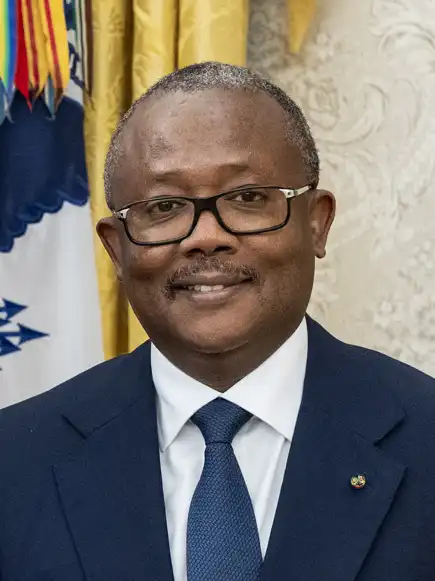
Image credits- Wikimedia Commons
The General’s Difficult Path
General Horta N'Tam represents the old guard of the military establishment. His career spans decades, surviving various purges that eliminated his rivals. Known for a stoic demeanor, he commands loyalty from the rank-and-file soldiers who executed the seizure. His relationship with the deposed president remains a subject of intense speculation. While he officially removed the leader from power, their past close association fuels rumors of collusion. N'Tam now faces the difficult task of managing a country that the international community has ostracized. He must balance the demands of his troops for higher wages against pressure from regional neighbors to restore civilian rule. His success will determine if the nation slides into isolation.
World Leaders Condemn Actions
Global powers reacted to news from Bissau with immediate condemnation. The top official at the United Nations, Antonio Guterres, issued a stern statement expressing deep concern over the breach of legal governance. He demanded that soldiers release all detainees and return to their bases immediately. The African Union echoed these sentiments, rejecting any unconstitutional change of government. Western nations, including the United States and Portugal, warned that this event jeopardizes future aid. Diplomats view this incident as part of a worrying trend across West Africa, where democracy seems to be retreating. The universal rejection of the junta’s authority sets the stage for a tense diplomatic standoff lasting month.
Regional Bloc Strikes Back
The Economic Community of West African States responded with swift punitive measures. The regional bloc barred Guinea-Bissau from all internal meetings, effectively silencing its voice in West African affairs. Leaders view this seizure as an existential threat to regional stability, fearing that success encourages soldiers elsewhere. Julius Maada Bio, the President of Sierra Leone who currently leads the alliance, personally intervened to ensure the ousted leader’s safety. However, the bloc’s track record on reversing takeovers remains poor, having failed to stop juntas in Mali or Niger. Critics argue that the organization issues strong statements but lacks leverage to force determined military rulers to step down.
Questionable Prime Minister Choice
Commanders selected Ilidio Vieira Te to serve as the new Prime Minister, a decision that baffled analysts. Te acted as campaign manager for the ousted president during the recent election, making him a die-hard loyalist of the man the army supposedly just overthrew. This single appointment provides strong evidence for those who believe the event constitutes a grand charade designed to keep the ruling elite in power. By placing a close ally of the deposed leader in charge, General N'Tam effectively maintained the previous administration's influence while scrapping election results that would have removed them. This strategic move suggests the transition will prioritize continuity over genuine reform.
Contagion of Instability
West Africa currently faces a contagion of military takeovers undoing decades of democratic progress. A "coup belt" now stretches across the Sahel to the Atlantic, creating a contiguous bloc of junta-led nations. The fall of Bissau adds another domino to this chain, emboldening authoritarian factions in neighboring democracies. Security experts warn that this instability creates fertile ground for extremist groups and criminal networks to expand operations. The inability of regional organizations to protect elected governments has eroded public trust in democracy itself. Citizens in many nations now celebrate takeovers, viewing soldiers as the only force capable of removing corrupt civilian elites. This shift poses a dangerous challenge.
Silencing the Opposition
Soldiers did not stop at seizing the presidential palace; they also targeted the opposition’s command structure. Troops detained Domingos Simões Pereira, a one-time Prime Minister and the political patron of Fernando Dias. Pereira leads the PAIGC, the historic liberation party that fought for freedom from colonial rule. Authorities banned his group from running a candidate, forcing them to back Dias as an independent. His arrest signals the junta’s intent to decapitate political rivals and prevent organized resistance. Reports indicate soldiers rounded up other key figures, holding them incommunicado. This crackdown suggests the army views the opposition, rather than the deposed government, as its primary adversary.
Analyzing the Drug Narrative
The military’s specific claim about a famous narcotics lord supporting the opposition warrants close scrutiny. Politics in Bissau have long intersected with the drug trade, but using this connection as a pretext for a takeover introduces a new dynamic. The junta has not named the alleged criminal, nor provided evidence linking him to the candidate. Analysts suggest this accusation serves two purposes: it demonizes opponents and provides a convenient excuse for indefinite rule. By framing intervention as a law enforcement operation against organized crime, soldiers hope to gain international legitimacy. However, given the army’s own historical involvement in trafficking, many locals view this narrative with extreme skepticism.
The Deposed Leader’s Record
The deposed leader governed with a style that often-courted controversy. A former general himself, he frequently clashed with parliament, showing little patience for checks and balances. He dissolved the legislative assembly late last year after a previous security incident, ruling by decree for much of his term. Critics frequently charged that he invented crises to justify authoritarian measures, a tactic that eventually eroded his popularity. His administration failed to deliver economic promises, leaving the population frustrated. The recent election served as a referendum on his aggressive leadership style, a test that available data suggests he failed. His departure leaves a complicated legacy.
Bravery Amidst Suppression
Despite heavy troop presence, local activist groups have bravely voiced dissent. Organizations like the Popular Front issued statements condemning the "fake takeover" and demanding the publication of true election counts. These activists represent the conscience of the nation, refusing to accept the martial narrative at face value. They argue that the people’s vote constitutes a sovereign mandate no soldier can erase. These groups face immense risks, as the new regime outlawed public demonstrations and threatened those who disturb national tranquility. Their continued resistance proves the desire for democracy remains strong among the populace, even as guns dominate the streets.
Uncertainty of Transition
The twelve-month timeline announced by General N'Tam offers a vague roadmap. History shows that martial transitions in this region rarely adhere to original schedules. Juntas often extend their rule, citing security concerns or administrative delays. The opposition fears this year will serve as a consolidation period for the ruling clique rather than a bridge to democracy. Restoring the voting system will require rebuilding the dissolved commission and regaining the trust of voters who feel cheated. Without significant external pressure and internal dialogue, the transition risks becoming a permanent state of governance.
Strategic Coastal Importance
While small in size, this nation holds strategic importance due to its location. Control over territorial waters allows for monitoring maritime traffic in a region rife with piracy and illegal fishing. International partners, particularly the European Union, invested heavily in trying to secure these waters. The collapse of order jeopardizes these security arrangements, potentially opening a blind spot in Atlantic surveillance. The junta’s relationship with foreign security forces remains unclear. If they sever ties with Western partners, the country could become an even more attractive haven for illicit actors, threatening shipping lanes and regional safety.
Battle for Information
Commanders moved quickly to control the information space, shutting down broadcasts and intimidating journalists. State television now airs only approved content, featuring martial music and official decrees. This blackout makes it difficult for citizens to know what is happening in their own country. However, young people use social media to bypass restrictions, sharing videos via encrypted apps. The digital battleground has become just as important as the physical one. The inability to fully silence the internet proves that modern dictators face challenges that previous generations did not encounter. Truth still finds a way to leak out.
Resources Going to Waste
The land possesses significant natural resources, including phosphates, bauxite, and potential offshore oil reserves. However, political instability prevents the exploitation of this wealth for the public good. Corruption and conflict deter the long-term investment needed to build mines and rigs. The population watches as potential prosperity vanishes into the pockets of corrupt officials. As one resident noted earlier, the ingredients for a prosperous existence exist, yet violence prevails. The takeover ensures this potential remains unlocked, keeping the population in poverty despite the riches beneath their feet.
A Wait for Resolution
The coming weeks will determine the fate of the nation for years to come. If the world maintains pressure, the junta may force a compromise. However, if attention shifts elsewhere, the general and his backers could entrench their rule. The key variable remains the internal cohesion of the army. If factions within the barracks begin to fight over spoils, the country could slide into civil war. For now, an uneasy quiet hangs over the capital. Soldiers stand guard, politicians sit in jail or exile, and people wait, hoping to break the cycle of instability.
Recently Added
Categories
- Arts And Humanities
- Blog
- Business And Management
- Criminology
- Education
- Environment And Conservation
- Farming And Animal Care
- Geopolitics
- Lifestyle And Beauty
- Medicine And Science
- Mental Health
- Nutrition And Diet
- Religion And Spirituality
- Social Care And Health
- Sport And Fitness
- Technology
- Uncategorized
- Videos

