
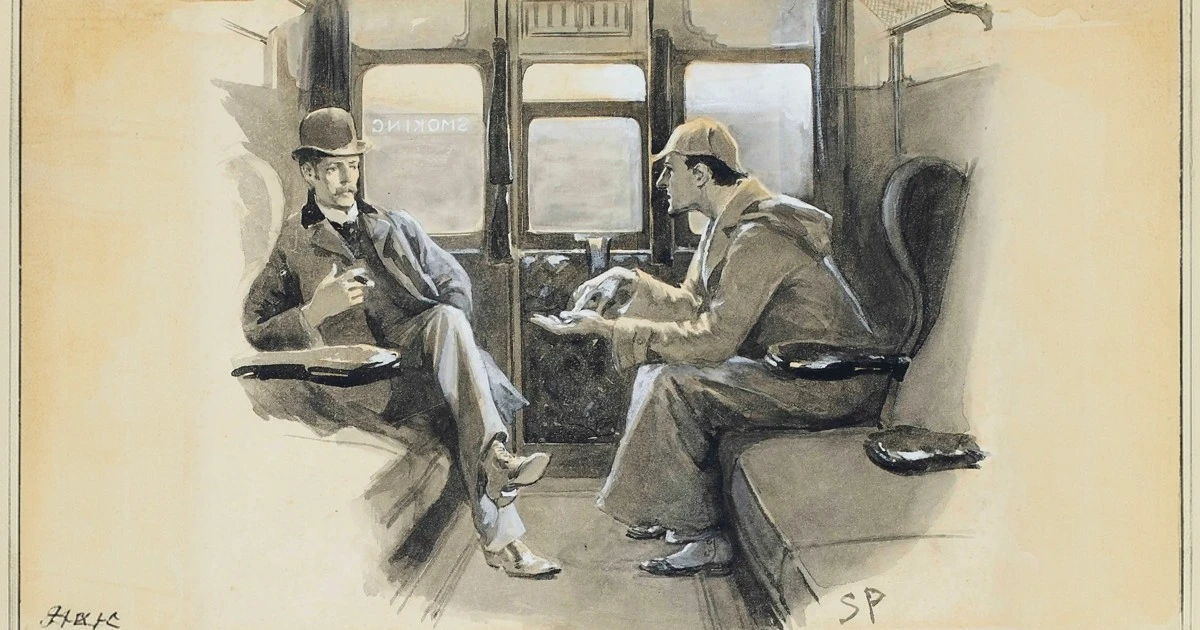
Image Credit - Wikimedia Commons
Sherlock Holmes And Male Fragility
Unmasking the Melancholy: Arthur Conan Doyle’s Investigation into Victorian Male Fragility
The creator of Sherlock Holmes stands as a giant in the world of crime writing. Most people know him only as the inventor of the famous detective. However, this Scottish doctor had a complicated mind that often explored deep psychological areas. He regularly looked into topics that polite society in the Victorian era tried to ignore. The writer used his made-up world to illuminate hard truths about how people feel. His tales look into the emotional frailty of men and their psychological battles with unexpected insight. These subjects meant a lot to him personally during his career. He did not just make up these hardships for a good story. Doyle saw the damage of mental sickness in his own house while growing up. This background shaped what he wrote in a big way. The well-known mystery books give us more than just smart riddles and foggy streets. They grant a clear view of the quiet wars men fought inside themselves in the nineteenth century.
The Tragic Decline of Charles Altamont Doyle
A childhood full of fear and shaky ground marked the author's early years. Charles Altamont Doyle, the writer's dad, fought a hard battle with heavy drinking and epilepsy. These issues brought money problems to the whole house. The family lived with the constant threat of Charles acting out and getting sicker. Doctors finally stepped in to handle his failing health. They put Charles in a mental care home in 1881. He stayed in different facilities for twelve years until he died. This sad break left a deep scar on his son. Arthur saw his dad disappear behind the walls of the asylum. That event planted a seed of interest in the young author about how easily the mind can break. He witnessed how a smart artistic soul could fall apart because of sickness and addiction. This tragedy later changed how he wrote his best characters.
Artistic Expression Behind Asylum Walls
Charles kept making art even while locked up tight. He drew strange and fun pictures in sketchbooks during his time at the Montrose Royal Lunatic Asylum. These drawings often showed fairies and magic beasts. The art shows a brain trying to run away from a sad life. The future author likely viewed these sketches as proof of his father’s pained brilliance. The difference between the pretty drawings and the dark hospital was huge. It showed the thin border between being creative and being mad. The son took this lesson into his own work life. He saw that having skill does not save a man from pain. In fact, he often wrote that being smart and sensitive felt like a heavy load instead of a gift. We see this view a lot in the stories about the detective. Holmes pays a high mental cost for his amazing brain power. The asylum's shadow hangs over the books.
Sherlock Holmes as a Flawed Protagonist
Sherlock Holmes exists as a clear sign of men’s emotional openness. Movies often get him wrong, showing him as a cold robot without feelings. Doyle actually made him a person with deep cracks. The sleuth fights boredom, being alone, and sad moods all the time. He has a sharp brain that hurts him when he has nothing to do. Holmes says his mind needs action to work right. Without a tough case, he falls into a deep slump. This picture went against the Victorian idea of a hero who never fails. People liked Holmes because he had human faults. He was not a stone statue of goodness. The character appears as a man battling his own ghosts while catching bad guys. His brilliance grows directly from his obsessive ways, not in spite of them. Doyle hints that big brain power often brings shaky emotions. The hero fights a non-stop war to stay balanced.
The Seven-Per-Cent Solution and Addiction
Drugs play a big part in the famous sleuth's life. Holmes uses cocaine and morphine to get away from the boring daily grind. He keeps a seven-per-cent mix of cocaine right on his shelf. The investigator shoots the drug into his arm when he has no riddle to fix. This habit scares his pal Dr Watson. Watson warns Holmes often about how bad these things are. But the detective claims he needs the chemical boost to make his thoughts clear. People in Victorian times saw drugs differently than we do now. Still, Doyle clearly shows it as a way to handle mental pain. Holmes uses the stuff to treat his own heavy sadness. The tales do not make this habit look cool. They show a smart guy trying hard to control his own stormy head. This real detail adds deep layers to the role. It paints a picture of an individual trying to dull his own smarts.
Dr Watson’s Medical Perspective on Trauma
Dr John Watson stands as the steady emotional heart of the books. He looks at his friend's odd ways through the eyes of a trained doctor. Watson frets all the time about his pal's body and psychological state. The physician notes often how thin Holmes looks and how wild his energy gets. He spots the signs of a person driving himself to the edge of a crash. Watson’s worry shows just how bad the detective's state really is. The story uses Watson to say what the reader fears about the sleuth. Doyle uses this team to look at how friends help keep a mind safe. Watson does not blame Holmes for his cracks. He just gives help and stays close. This bond hints that being with people keeps us steady. The lonely genius needs a buddy to keep him tied to the real world. Watson acts as the anchor in a wild life.

Image Credit - Wikimedia Commons
The Crushing Weight of Victorian Expectations
Society in the Victorian era put huge weight on guys to win. The culture said a man must feed his kin and keep a good name. Any miss in meeting these goals brought deep shame. Men often hurt in silence instead of saying they felt weak. Doyle sews this social truth into his mystery plots. His male figures often face a crash not from thugs, but from money or social shame. They go to wild lengths to keep their mistakes hidden from everyone. The dread of public scorn pushes the action in many Holmes tales. The detective often hears the confessions of these scared souls. He gets the scary power of what society expects. Doyle attacks a system that makes men pick between being honest and keeping their fame. The writer reveals how easily the "tough" male image can break.
Neville St Clair’s Desperate Double Life
The Man with the Twisted Lip shows this theme perfectly. The tale presents Neville St Clair as a good family guy. He kisses his spouse goodbye each day and goes to the City. His kin thinks he works in a normal office job. The truth turns out much stranger than they guess. St Clair actually spends his hours asking for alms on the roads of London. He changes into a scarred beggar called Hugh Boone. This trick lets him make way more cash than he ever could as a writer. The story rests on the far limits a man will reach for money safety. St Clair builds a whole second life to keep up his style. He bets everything to dodge the shame of being poor. The role shows the high pressure to provide no matter the cost.
The Economics of Begging versus Working
St Clair finds a weird money truth in Victorian London. He sees that pity pays more than hard work. His job as a newsman paid him a tiny wage. Asking for alms brings in hundreds of pounds a year. This cash lets him buy a big home in the green country. He gives his family a life of ease and riches. But this ease comes with a scary price. St Clair lives in non-stop fear of being found out. He has to swap his clothes and scrub off his face paint in an opium den every single day. The pressure of maintaining two separate identities is huge. He locks himself in a jail he built. Doyle uses this guy to ask what respect is really worth. St Clair sells his pride daily to keep his social rank. The plot reveals how silly the money system was.
Pride and the Fear of Truth
The main character finally tells his dark secret to Holmes. St Clair says that his ego pushed his acts. He could not stand the idea of his family knowing the facts. He tells the sleuth that he would take jail or even death instead of disgrace. This claim shows the poisonous side of manhood in that era. A guy would really pick dying over losing his good name. St Clair sees his panhandling as a stain on his kin that would wreck his kids' future. Doyle shows how crazy this way of thinking is. St Clair has done no violent crime. But he feels like a crook because he failed to make cash in a "proper" way. The tale attacks the stiff class rules that made such fear. It shows how ego can turn into a wrecking ball.
Financial Anxiety in The Stockbroker’s Clerk
The Stockbroker’s Clerk looks at similar fears of money terror. The plot follows a young worker named Hall Pycroft. He loses his post and feels instant panic about what comes next. A strange firm proposes a new role with odd high pay. Pycroft takes the deal because he needs the cash bad. He later finds out he serves as a pawn in a theft plan. The bad guy, Harry Pinner, tries to kill himself after the detective exposes the reality. Pinner tries to use a rope instead of meeting the authorities. This wild reaction highlights the tie between job failure and self-harm. The figure sees no exit other than the grave. Doyle demonstrates how fast money worries can spin into a mental health crash. The dread of prison comes second to the dread of ruin.
The Harsh Reality of Economic Insecurity
The 1890s were a time of big money swings. Many guys lived on the brink of total loss. A lost gig could mean the poorhouse for a whole family. Doyle catches this deep fear in his pages. His clients often come to Holmes because they face a money disaster. They do not just fear losing coins. They fear losing their self-worth as men. The power to earn a wage defined a man's value back then. Doyle paints this reliance on money success as risky. It leaves guys open to being used and sad. The crooks in these books often hunt on this exact worry. They trick victims by promising easy gold or job safety. The tales act as warnings about money despair.
Victor Hatherley’s Traumatic Ordeal
The Adventure of the Engineer’s Thumb gives a graphic look at trauma. Victor Hatherley comes to Watson’s clinic with a nasty wound. A machine cut off his thumb during a job meet that went bad. The young builder is in a state of shock. He looks strong in the body but broken in the head. Doyle paints him as ghostly white and shaking with nerves. The writing highlights the mental hit of the violence he lived through. Hatherley laughs like a madman and fights to hold his feelings in. He shows clear signs of sudden stress. Doyle looks just as much at the man’s mind as his bloody hand. The story admits that body wounds often bring a heavy mental cost. The scene captures the moments right after huge violence.
The Physiological Signs of Hysteria
Watson watches Hatherley fighting to stay calm. The builder relies on every bit of mental willpower to avoid yelling. This picture fits with Victorian views on self-control. Men had to squash their pain and stay tough. But Hatherley’s body gives him away. He breaks into cold sweats and almost passes out. Doyle lists these body reactions to terror. He demonstrates that the stiff upper lip breaks at some point. The trauma pushes feelings to the top despite the victim’s best tries. Hatherley stands for the breaking point of male toughness. He can no longer mask his pain behind a calm face. The writer confirms the man’s hurt by painting it so clearly. It is a raw look at human pain.
Sherlock Holmes as a Compassionate Therapist
Holmes takes a soft role in this specific tale. He sees Hatherley’s pain and offers help fast. The sleuth urges the youth to rest on the sofa. He tells Hatherley to get completely comfortable. Holmes even orders a strong drink to help the builder get his energy back. This act differs from his usual cold way. He plays the guard and the listener. Holmes hears the scary tale without stopping him. He makes a safe spot for Hatherley to handle his shock. This moment looks like a therapy meeting. The detective puts the victim’s mind safety above the facts of the crime. He sees the need for emotional aid.

Image Credit - Wikimedia Commons
Separating Physical and Mental Care
The narrative makes a clear split of work between the two heroes. Watson fixes the cut thumb with wraps and cleaner. Holmes fixes the broken mind with brandy and care. This division shows the need to treat the whole person. Doyle hints that doctor care alone is not enough for victims of force. Men need mind support to heal from violence. Holmes backs up Hatherley’s fear and doubt. He does not wave off the builder’s feelings as weak. This team work between Watson and Holmes shows a full way to look at health. They join forces to bring back the victim’s balance. The writer says that mind care matters just as much as surgery. The brain needs just as much care as the limbs.
Echoes of Victorian Struggles Today
Readers today find these tales oddly familiar. The crushing weights Doyle wrote about over a hundred years ago still stay. Men still fight the shame around psychological wellness. The dread of failure and the heavy load of what people expect remain strong. Sherlock Holmes stands as a lasting hero because he holds these fights inside him. He shows the battle to stay in charge in a wild world. Doyle’s study of men's emotional frailty connects with talks we have now about being a man. The books remind us that even the toughest folks face inner wars. They push for a kinder view of mind sickness. Doyle showed that owning your cracks is step one to real power. His work stands as proof of the lasting nature of the human soul.
Recently Added
Categories
- Arts And Humanities
- Blog
- Business And Management
- Criminology
- Education
- Environment And Conservation
- Farming And Animal Care
- Geopolitics
- Lifestyle And Beauty
- Medicine And Science
- Mental Health
- Nutrition And Diet
- Religion And Spirituality
- Social Care And Health
- Sport And Fitness
- Technology
- Uncategorized
- Videos

