
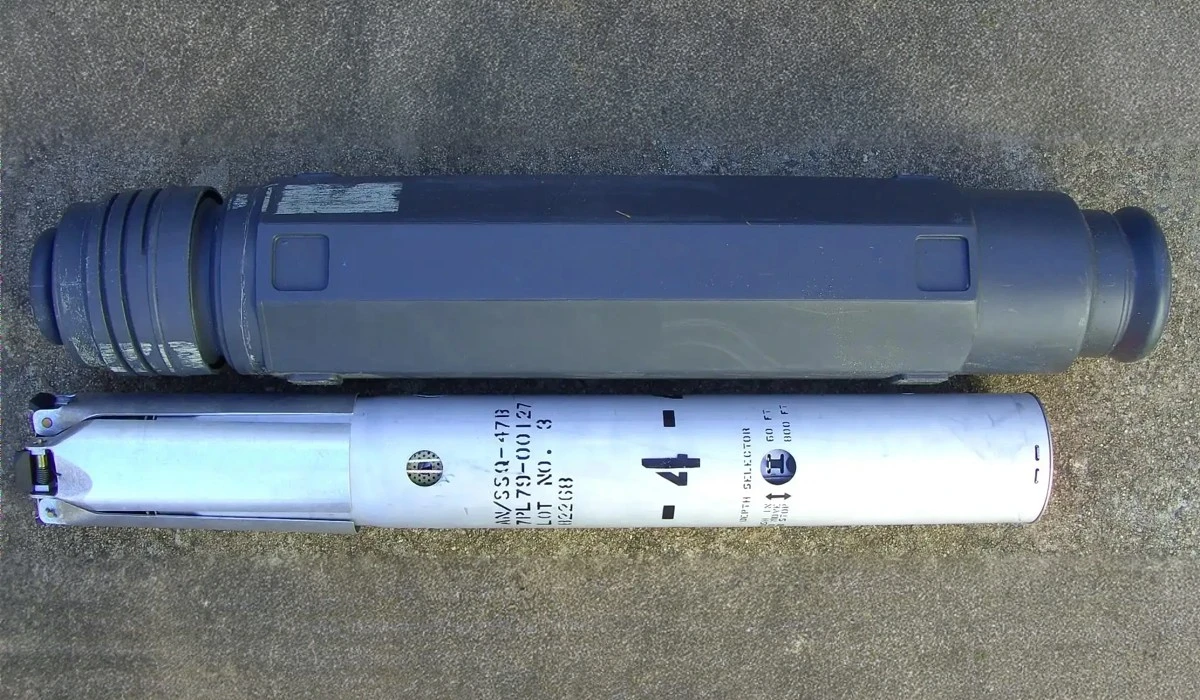
Image Credit - by Peter Ellis at English Wikipedia, CC BY-SA 3.0, via Wikimedia Commons
Russian Spy Tech Found Off Welsh Coast
Russian Spy Tech Surfaces Near Welsh Shoreline
Volunteer divers scanning the seabed for trash discovered a piece of military history this week. The team, representing Neptune’s Army of Rubbish Cleaners (NARC), executed a standard cleanup dive inside the Skomer Marine Conservation Zone in Pembrokeshire. While swimming through the cold currents near Wooltack Point on November 15, volunteer Tim Smith-Gosling spotted a strange metallic cylinder jammed into a rocky gulley. The object appeared beaten up and covered in sea growth, suggesting it had rested there for some time. At first glance, the group assumed the debris was merely a broken boat marker or perhaps discarded fishing gear. They rigged inflation bags to the heavy item and carefully floated it up from the depths. Once on the boat, the true nature of the cylinder became apparent, sparking immediate curiosity among the crew members present.
Identifying the Mystery Object
Upon closer inspection on the deck, the team realized this was no ordinary piece of marine litter. The object measured approximately 1.2 metres long and weighed about 15 kilograms. Its size and shape did not match standard fishing gear or boat parts. Crew members noticed distinct features that resembled acoustic monitoring equipment used by naval forces. They spoke with staff at the Port Authority Waterway to discuss the find. Discussions quickly turned to the possibility that this was a sonobuoy, a specialized tool that hunts submarines. The NARC team, led by chairman Dave Kennard, examined the battered casing and noted its similarity to military hardware found elsewhere in Britain. They photographed the device and documented its condition before taking further steps. The realization that they handled potential foreign military technology shifted the mood from a standard cleanup to a significant security event.
Confirming the Russian Source
Images of the recovered cylinder were sent to independent analysts for verification. Experts identified the object as an RGB-1A device from Russia with a high degree of confidence. This specific model serves as a passive hydroacoustic receiver, designed to listen for the distinct sound signatures of enemy submarines. Analysts pointed out key diagnostic features, such as the arrangement of hydrophones stacked vertically. The device showed signs of implosion, likely caused by the immense pressure of deep water before it washed into shallower areas. Dr Andy Scollick, a consultant on strategic defence, noted that the buoy missed its outer sleeve, which typically bears orange paint and serial numbers. He explained that a Tu-142M, a Russian plane for maritime patrol, often drops these devices. The identification confirmed that Moscow's assets had actively monitored waters bordering the United Kingdom recently.
The Role of Volunteers
The group known as Neptune’s Army of Rubbish Cleaners has operated along the shores of Wales for decades. This organization consists of dedicated volunteers who spend their free time removing hazardous litter from the marine environment. Since 2005, the team has retrieved thousands of kilograms of lost fishing gear, lead weights, and plastic debris that threaten marine life. Their work primarily focuses on protecting habitats for seals, porpoises, and seabirds within the conservation reserves. Finding military hardware falls outside their usual remit. Dave Kennard, the group's chairman, expressed surprise at the discovery but noted that the ocean floor often hides unexpected items. He emphasized that while their primary goal remains environmental protection, they occasionally uncover objects of national interest. This discovery highlights the dual nature of their work, where environmental stewardship sometimes intersects with national security and the legacy of naval operations.
Following Official Procedures
Dave Kennard acted as the marshal for the dive on the day of the discovery. He immediately sought advice from a friend who served in the Navy to ensure the team followed correct procedures. The contact advised him to alert the Coastguard without delay. NARC followed this protocol and logged the incident with the Maritime and Coastguard Agency on November 19. A representative for the agency confirmed receiving the report. They stated that no immediate rescue or search mission was required since no individuals were in distress. The agency registered the communication and left the matter for relevant authorities to investigate further. This calm, procedural response contrasts with the potential geopolitical implications of the find. It underscores the routine nature of such reports in a region heavily traversed by military vessels. The divers handed the device over for official assessment, ensuring it left civilian hands safely.
A Pattern of Military Debris
This incident is not an isolated case of foreign equipment washing up on British shores. Security experts highlighted that identical RGB-1A units have appeared on beaches across the region recently. Similar discoveries occurred near Ireland and Cornwall during 2021. More recently, beachcombers in Lithuania found comparable devices in 2024. Even within Russia, reports emerged of these buoys appearing in the Novosibirsk area during 2023. The widespread distribution of this debris suggests a consistent pattern of deployment by Moscow's forces. The relatively good condition of the Skomer device, despite the implosion damage, implies it entered the water lately. It lacks the heavy marine growth associated with objects submerged for decades. This evidence points to ongoing and active surveillance operations rather than legacy waste from the Cold War era, raising questions about current naval activities.
The Yantar Connection
Finding the device coincided with heightened naval tensions in the area. Just days after divers retrieved the object, John Healey, the Defence Secretary, verified that a notorious Russian vessel was nearby. The ship, named the Yantar, officially operates as an oceanographic research vessel. However, Western intelligence agencies classify it as a spy ship operated by the Main Directorate of Deep-Sea Research, or GUGI. The Yantar loitered bordering the UK waters during the exact week the device surfaced. This vessel carries distinct equipment capable of cutting cables and manipulating underwater objects. Its presence near critical infrastructure always triggers alarms within NATO. The proximity of the ship to the location where divers found the buoy suggests a coordinated effort to monitor the underwater environment. This correlation reinforces fears that Russia is actively mapping the seabed for future strategic advantages.
Aggression with Lasers
The situation escalated when the Ministry of Defence released details about the Yantar's hostile behaviour. Healey revealed that the Russian crew directed lasers at pilots from the RAF patrolling above the ship. He described this action as deeply dangerous and unacceptable. Using lasers against aircraft can blind pilots and cause catastrophic accidents. This aggressive tactic marks a significant departure from standard maritime encounters, where opposing forces usually observe each other passively. The incident occurred while patrol planes monitored the spy ship's movements north of Scotland. It signals a willingness by opposing forces to engage in "grey zone" warfare, testing the reactions of British military personnel. The government condemned the act immediately. Officials warned that such behaviour increases the risk of miscalculation and could lead to unintended conflict on the high seas.
Government Issues Warning
John Healey used strong language to address the provocation. He issued a direct public warning to the Kremlin during a press briefing. Healey stated clearly that the military stands ready to respond if the Yantar attempts to move further south into sensitive waters. He emphasized that British forces closely track every move the foreign vessel makes. The Navy deployed Type 23 frigates and P-8 Poseidon aircraft for maritime patrol to shadow the intruder. This "we see you" message aims to deter further aggression or espionage. The government wants to reassure the public that it maintains total situational awareness. Healey’s comments reflect a hardening stance against naval incursions. The UK is signaling that it will no longer tolerate reckless actions like laser dazzling within its Exclusive Economic Zone, promising robust countermeasures if necessary.
Threats to Undersea Lines
The primary concern regarding ships like the Yantar involves the security of undersea cables. These fibre-optic lines carry over 90 percent of the world's internet traffic and financial data. Trillions of dollars in transactions pass through these cables daily. A coordinated attack on this infrastructure could cripple the economy and sever communications with allies. The Yantar carries mini-submersibles designed to interact with these seabed lines. Experts believe Russia is mapping the cable network to identify vulnerabilities. In the event of a conflict, severing these connections would cause chaos. Finding the buoy adds another layer to this threat. It suggests Moscow is also monitoring the acoustic environment, perhaps to track British submarines that protect these same cables. The combination of cable mapping and acoustic surveillance represents a comprehensive strategy to dominate the undersea domain.
How the Technology Works
Understanding the threat requires knowledge of the technology involved. The term "sonobuoy" blends "buoy" and "sonar." These expendable devices contain a hydrophone system and a radio transmitter. Aircraft or ships eject them into the ocean in canisters. Upon hitting the water, the device deploys a float to keep the transmitter above the surface. The heavy sensor array drops to a pre-selected depth on a wire. It listens for the engine noise or propeller cavitation of submarines. The gathered acoustic data travels up the wire to the float, which then broadcasts it via radio to the launching aircraft. Crews on the plane analyze the signals to pinpoint the submarine's location. Active versions can also emit "pings" to bounce sound waves off the target. The RGB-1A found in Wales is a passive model, meaning it listens silently without revealing its own position.
History of Acoustic Tracking
The technology behind these devices dates back to the desperate struggles of the Second World War. Allied forces developed early sonobuoys to counter the devastating threat of German U-boats in the Atlantic. Since radio waves cannot penetrate deep water, aircraft needed a way to detect submerged enemies. Dropping a floating microphone provided the solution. The technology matured rapidly during the Cold War, becoming a staple of anti-submarine warfare. Both NATO and Soviet forces seeded the oceans with millions of these sensors to track each other's nuclear-powered submarines. Today, they remain a critical tool for modern navies. They played key roles in high-profile search operations, such as hunting for the lost Flight 370 from Malaysia Airlines and the Titan submersible. The presence of a Russian model in Welsh waters serves as a reminder that the underwater game of cat and mouse never truly ended.
Image Credit - by Soljaguar, CC BY-SA 3.0, via Wikimedia Commons
Impact on the Environment
Finding military debris in a protected zone raises environmental concerns. The Skomer Marine Conservation Zone protects a fragile ecosystem teeming with life. Manx shearwaters, puffins, and grey seals depend on these waters for survival. Discarded sonobuoys introduce hazardous materials into this pristine habitat. They contain batteries, heavy metals, and electronic components that can leach into the water over time. While NARC volunteers usually focus on plastic and fishing line, military waste poses a different challenge. The "battered" condition of the recovered buoy suggests it may have tumbled along the bottom, potentially damaging corals or other marine structures. Conservationists worry that increased naval activity leads to more pollution. The intersection of geopolitical maneuvering and environmental preservation creates a complex problem. Protecting national security should not come at the cost of destroying the very natural heritage the nation seeks to defend.
Strategic Value of Wales
The coastline of Wales holds significant strategic value for both the UK and its adversaries. The waters off Pembrokeshire offer deep channels and complex acoustic environments suitable for submarine exercises. Britain's Royal Navy frequently uses these areas for training. Consequently, foreign powers take a keen interest in monitoring activity here. Placing sonobuoys in these shipping lanes allows adversaries to gather intelligence on British naval signatures. They can record the acoustic "fingerprints" of new submarines or surface ships leaving port. This data helps them build a library of sounds to identify vessels during a conflict. Finding the buoy near a major waterway suggests a deliberate attempt to tap into this flow of information. It confirms that the quiet coastline of West Wales remains a frontline in the invisible war for information dominance beneath the waves.
The Shadow Fleet Problem
The Yantar is not the only vessel causing headaches for defence planners. A "shadow fleet" of aging oil tankers and mysterious cargo ships also operates near these waters. These vessels often turn off their tracking transponders to hide their movements. While ostensibly moving commercial goods, they can serve as platforms for espionage. Some have been spotted lingering near wind farms and gas pipelines in the North Sea. The blurring of lines between civilian and military ships complicates the response. A sonobuoy dropped from a passing "civilian" aircraft or ship is harder to attribute than one from a marked warship. This hybrid warfare tactic allows opponents to exert pressure without triggering a direct military conflict. The government faces the difficult task of policing thousands of miles of coastline against an adversary that hides in plain sight among legitimate maritime traffic.
Advice for Public Safety
Authorities have issued clear warnings to the public regarding these devices. Beachcombers and divers who encounter suspected military debris must exercise extreme caution. Sonobuoys can hold toxic chemicals, such as lithium batteries or pyrotechnic charges used for scuttling. Handling them can result in chemical burns or explosions. The official advice states that no one should handle or shift these objects. Instead, discoverers should note the location, take photographs if safe, and request the Coastguard. The agency then coordinates with bomb disposal units to secure and remove the item safely. The NARC team's decision to consult experts was the correct one. Their experience underscores the need for public awareness. As more debris washes ashore, ordinary citizens become the first line of detection in this unfolding maritime drama.
Vigilance for the Future
The incident near the shores of Wales serves as a wake-up call for maritime security. It demonstrates that Russian surveillance activity extends right up to the shoreline. The Royal Navy has pledged to continue monitoring the UK seas using various assets, including frigates and patrol aircraft. Collaboration with NATO allies remains crucial to maintaining situational awareness across the North Atlantic. However, the ocean is vast, and detecting every small device is impossible. The role of civilian groups like NARC becomes increasingly vital. Their eyes on the bottom of the sea complement high-tech military surveillance. As tensions with Moscow persist, the UK must remain vigilant above and below the surface. The silent struggle for control of the underwater domain shows no signs of abating, requiring constant attention from both the military and the public.
Recently Added
Categories
- Arts And Humanities
- Blog
- Business And Management
- Criminology
- Education
- Environment And Conservation
- Farming And Animal Care
- Geopolitics
- Lifestyle And Beauty
- Medicine And Science
- Mental Health
- Nutrition And Diet
- Religion And Spirituality
- Social Care And Health
- Sport And Fitness
- Technology
- Uncategorized
- Videos

