
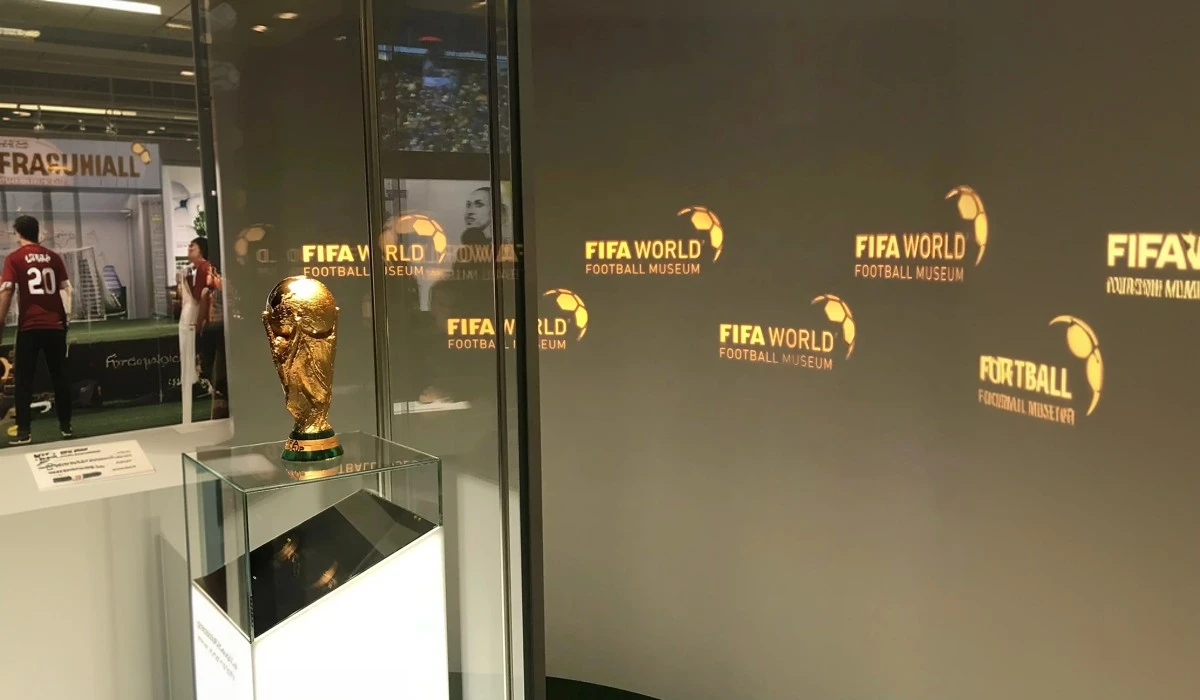
Image Credit - by Ank Kumar, CC BY-SA 4.0, via Wikimedia Commons
Saudi Arabia FIFA Infrastructure
The New Financial Order: Riyadh and FIFA Redefine the Global Game
Global football governance experienced a monumental transformation this week as FIFA solidified its financial future through a massive alliance with Saudi Arabia. The world governing body finalised a formal pact with the Riyadh administration to direct immense capital toward stadium projects worldwide. Leaders from both entities signed a binding accord on Monday, pledging up to £762m ($1bn) in fresh funding. This capital will flow via the Development Fund of Saudi Arabia to provide low-interest credit to football associations lacking adequate facilities. Emerging economies will gain priority access to these financial resources under the specific terms of the deal. Gianni Infantino, the president of FIFA, hailed the agreement as a vital evolution for the sport’s international footprint. He argued that while talent exists everywhere, the concrete arenas required to stage elite matches remain absent in many regions. This pact aims to bridge that physical divide by funding modern sporting grounds.
Bridging the Stadium Deficit
Gianni Infantino defends this partnership by highlighting a critical shortfall in FIFA’s current support mechanisms for member nations. While the organisation distributes operational funds, those grants rarely cover the multimillion-dollar costs required to erect national stadiums. Infantino stated that many associations simply lack the facilities required to stage FIFA-approved tournaments, which stifles the sport's growth potential. He insisted that this new credit line acts as a vital move to ensure football becomes truly global. The loans will target the construction of new sites and the rehabilitation of aging grounds. By securing financing at discounted rates, federations can upgrade their premises to meet international safety and broadcast standards. This initiative effectively outsources the heavy lifting of infrastructure capital to Riyadh. Critics note that this deepens FIFA’s reliance on a single wealthy nation for its core developmental objectives, raising questions about future political debts.
The Role of the Development Fund
Riyadh's development agency operates as the primary financial engine driving this ambitious global project. Established in 1974, this government body traditionally concentrated on essential infrastructure like dams, roads, and power plants across the developing world. Its portfolio includes major projects such as recent hydropower investments in Pakistan, yet this venture into sports marks a strategic pivot. The agency now identifies building projects as a central pillar within its growth plans. Sultan bin Abdulrahman Al-Marshad, the fund’s chief executive, emphasised that sport generates employment and boosts tourism just as effectively as industrial factories. By offering loans at concessional rates, the fund allows poorer states to construct arenas that might otherwise remain financial fantasies. This strategy aligns with the kingdom’s broader foreign policy, using financial might to cultivate diplomatic goodwill. FIFA views this resource as a necessary supplement to its own limited development grants.
The Sole Bidder for 2034
This financial agreement arrives as Saudi Arabia prepares to stage the 2034 men's global tournament. The Gulf kingdom secured the hosting rights after a bidding process that saw no opposing candidates stand against them. FIFA allocated the 2034 edition specifically to Asia and Oceania, and potential rivals like Australia ultimately chose not to bid. This left Riyadh as the sole contender, allowing the nation to claim the tournament by acclamation. The scope of construction required for the 2034 event dwarfs that of previous competitions. Saudi planners have proposed 15 stadiums across five cities, including eight separate venues in the capital, Riyadh. This domestic building boom mirrors the international spending promised through the new loan deal. Analysts view the global loan scheme as a method to shore up support among voting member nations. By financing stadiums in Africa and Asia, Riyadh ensures diplomatic backing for its long-term sporting ambitions.
Architectural Marvels and Engineering Feats
The domestic plans for the 2034 World Cup reveal an appetite for architectural extravagance that challenges engineering limits. Official bid documents showcase designs that appear almost futuristic. The most discussed venue involves a stadium situated within "The Line" at Neom, a linear megacity currently under development in the northwest. Planners intend to build this arena 350 metres above ground level, creating a visual spectacle unlike anything in sports history.
Another proposed venue sits atop the Tuwaiq cliffs near Riyadh, featuring a massive LED wall that overlooks the city below. These projects aim to demonstrate the kingdom's modernisation and technical prowess to a global audience. Construction teams have already broken ground on several sites to meet the tight deadline. The sheer scale of these projects requires hundreds of billions of dollars, making the $1bn international loan fund appear modest. However, the international loans serve to expand influence rather than showcase domestic grandeur.
Aramco Secures Top-Tier Sponsorship
Commercial partnerships form another robust layer of the ties linking FIFA with the Saudi state apparatus. Aramco, the state-owned oil giant, officially became a major worldwide partner of FIFA earlier this year. This sponsorship deal extends through 2027 and grants the energy company access for the 2026 male tournament and the 2027 Women’s World Cup. Financial terms remain confidential, but industry experts value such top-tier packages at multimillion-dollar figures. The agreement grants Aramco massive visibility at tournaments played in the United States, Canada, and Mexico. For FIFA, this contract provides a lucrative revenue stream to bolster its reserves. For Riyadh, it places its most valuable economic asset at the centre of global culture. Environmental groups have criticised the deal, arguing that a fossil fuel company should not sponsor major sporting events. Despite this pushback, FIFA maintains that the revenue remains vital for developing football worldwide.
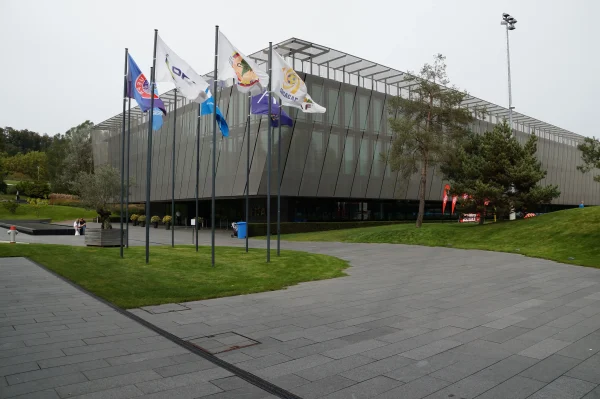
Image Credit - by albinfo, CC BY-SA 4.0, via Wikimedia Commons
Player Revolt Against Oil Sponsorship
The involvement of Aramco has triggered significant resistance within the women's game specifically. Over 100 professional female players signed an open letter urging FIFA to terminate the sponsorship deal. High-profile stars like Vivianne Miedema stated that partnering with a state-owned oil firm contradicts the values of the sport. They pointed to Saudi Arabia’s record on women’s rights and the criminalisation of LGBTQ+ individuals as reasons to reject the money. The players argued that FIFA cannot claim to support inclusivity while taking funds from a nation with such laws. This internal revolt creates a headache for Gianni Infantino, who has positioned himself as a champion of women's football. However, the governing body has shown no signs of backing down. FIFA officials argue that commercial revenues benefit all member associations, including those investing heavily in the women's game. The conflict highlights the tension between financial growth and ethical values.
Dominating the Airwaves via DAZN
Saudi investment also permeates the broadcasting landscape through strategic acquisitions in media technology. The Sovereign Wealth Fund utilised its sports subsidiary, Surj Sports Investment, to acquire a significant share of the streaming platform DAZN. This deal, valued at approximately $1bn, gives Saudi interests a foothold in global sports media distribution. DAZN subsequently secured the permissions to air the Club World Cup globally. The streamer announced that it would show the tournament for free to fans worldwide, a move made possible only by the financial backing involved. This arrangement solves a major problem for FIFA, which had struggled to find broadcasters willing to pay high fees for the new tournament format. By effectively subsidising the broadcast, Saudi capital ensures the competition reaches a global audience. This three-way connection involving FIFA, DAZN, and the sovereign fund illustrates the integrated nature of Riyadh’s sports strategy.
Saving the Expanded Club Tournament
The 2025 club championship serves as the immediate testing ground for this new financial order. Scheduled for the United States, the expanded 32-team tournament initially faced skepticism regarding sponsorship interest and prize money. The intervention of Saudi entities has proven decisive in stabilising the event's commercial viability. The state sovereign fund signed on as a formal sponsor for the competition, injecting necessary capital. Combined with the DAZN broadcasting solution, Riyadh has effectively underwritten the tournament's success. Gianni Infantino has championed this expanded format as the future of club football, but Saudi money turned the concept into a reality. The kingdom’s subsidiary firm, Surj, plays a pivotal role in this ecosystem. By investing in the infrastructure of broadcasting and sponsorship, Saudi Arabia ensures that FIFA’s newest flagship product relies heavily on its support. Without this injection of cash, the tournament faced the risk of financial embarrassment.
Comparing Loans with Existing Grants
Distinguishing between existing funding programs and this new initiative helps clarify FIFA's financial landscape. FIFA's Forward initiative distributes revenue generated from the World Cup directly to member associations. Bryan Swanson, FIFA’s press chief, recently noted that these funds primarily cover operational costs, travel for national teams, and smaller development projects. For instance, a federation might use Forward funds to build a training pitch or pay staff salaries. However, building a 40,000-seat national stadium costs far more than the annual grants provide. The new Saudi loan scheme targets this specific high-cost gap. It offers a capital-intensive solution that the grant-based system cannot match. While FIFA Forward provides the daily bread for associations, the Saudi loans offer the bricks and mortar. This separation of duties allows FIFA to claim it supports development while outsourcing the debt risk to the Saudi state.
Economic Diversification Strategies
All these investments align perfectly with "Vision 2030," the kingdom's master plan to diversify its economy away from oil dependence. Prince Mohammed, the heir apparent, views sports not just as recreation, but as a sector capable of generating immense economic activity. The strategy involves creating a sports ecosystem that boosts tourism, improves public health, and creates private-sector jobs. By hosting major events and financing global infrastructure, Riyadh positions itself as a central node in the international sports economy.
The government believes that becoming a hub for global football will attract foreign investment and modernise the country’s image. Critics label this approach "sportswashing," arguing that the glamour of sport distracts from other political realities. However, the move by the fund from Riyadh to back sports infrastructure indicates that the state sees this as hard economics. The $1bn loan fund exports this vision to poorer states, expanding the kingdom's sphere of economic influence.
Scrutiny Over Labour Standards
The massive construction projects associated with these ambitions have drawn sharp scrutiny from human rights organisations. Groups such as Amnesty International and Human Rights Watch have repeatedly raised alarms regarding the treatment of migrant workers in the kingdom. The 2034 World Cup will require a building boom of unprecedented speed, relying heavily on foreign labour. Reports cite concerns over the kafala sponsorship system, protection from extreme heat, and the enforcement of safety standards. FIFA’s own human rights assessment acknowledged risks but expressed confidence in the bidder’s commitments. Activists argue that awarding the tournament without binding labour reforms repeats the mistakes of previous mega-events. The construction of 11 new stadiums and the refurbishment of others will demand hundreds of thousands of workers. Monitoring their welfare remains a primary point of contention. FIFA insists it possesses processes to ensure compliance, but external observers remain skeptical given the scale and timeline.
Questions on Ecological Impact
The environmental impact of this infrastructure drive also prompts significant questions from sustainability experts. Constructing stadiums in the desert climate requires energy-intensive cooling systems to make them usable. The "Neom" project, in particular, involves massive terraforming and engineering interventions. Critics argue that building new concrete structures globally contradicts the sporting world’s pledges to reduce its carbon footprint. FIFA has emphasised its commitment to sustainability, but the logic of flying teams across the globe to play in air-conditioned venues faces opposition. Furthermore, the global loan scheme encourages developing nations to pour concrete for new stadiums rather than upgrading existing community facilities. The construction industry contributes massively to global carbon emissions. By incentivising a new wave of stadium building worldwide, the partnership may inadvertently increase the sport's environmental toll. Proponents argue that modern stadiums can be energy-efficient, but the initial carbon cost of construction remains undeniably high.
High-Stakes Diplomatic Maneuvers
The relationship between football’s governing body and the Saudi leadership extends beyond contracts into the realm of high-level diplomacy. Gianni Infantino has become a regular visitor to Riyadh, frequently appearing alongside Prince Mohammed bin Salman. Their public rapport signals a total alignment of interests between the organisation and the state. Recently, Infantino accompanied the Saudi ruler to Washington to converse with American leader Donald Trump. This presence at top-tier diplomatic summits illustrates FIFA's integration into geopolitical maneuvering. Infantino acts not just as a sports administrator but as a bridge between the kingdom and Western political powers. These interactions suggest that football serves as a key diplomatic tool for Riyadh. The ability to facilitate meetings and broker deals through the medium of sport enhances the Crown Prince's soft power. FIFA, in turn, gains access to the corridors of power in both Washington and Riyadh.
The European Divide
While developing nations have welcomed the promise of infrastructure funding, the reaction from European football bodies has appeared markedly cooler. European federations, which possess their own wealthy leagues and stadiums, have less need for Saudi loans. Consequently, they have been the most vocal critics of FIFA’s drift toward Riyadh. Associations in nations like Norway and Germany have previously protested against human rights abuses linked to World Cup hosts. The lack of a competitive bidding process for 2034 caused unease among UEFA members, though few openly opposed the final decision. A growing divergence exists between the wealthy European bloc and the rest of the FIFA membership. The Riyadh funding pact reinforces Infantino’s power base in Africa and Asia, effectively insulating him from European criticism. By delivering tangible benefits to the Global South, the football body and the kingdom render European disapproval politically toothless.
A New Geographic Center
The cumulative effect of these deals represents a decisive shift in the centre of gravity for global football. For nearly a century, Europe and South America dominated the sport's culture, economy, and governance. Today, the financial power moves rapidly toward the Gulf. Saudi Arabia effectively funds the venues, the tournaments, and the broadcasts. This transition mirrors the broader geopolitical trends of the 21st century. FIFA has adapted by becoming a conduit for this capital, arguing that it must serve the entire world, not just the traditional powerhouses. The $1bn infrastructure fund stands as a tangible symbol of this new era. It empowers nations that were previously on the periphery, giving them resources that European bodies never provided. As stadiums rise in Africa and Asia funded by Riyadh, the loyalty of those member associations will likely follow the money.
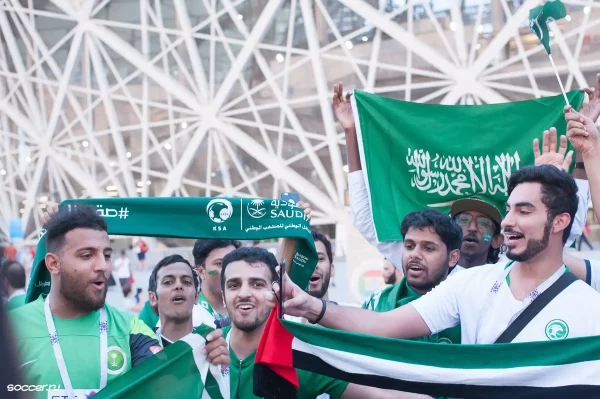
Image Credit - by Анна Нэсси, CC BY-SA 3.0 GFDL, via Wikimedia Commons
Innovation in Stadium Design
The stadiums financed by this partnership will likely incorporate technologies that redefine the spectator experience. Saudi Arabia’s domestic projects already promise climate control systems, retractable pitches, and integrated digital environments. Saudi Arabia's loan agency could export simplified versions of these innovations to emerging countries. Modern venues now require robust connectivity for digital engagement, advanced lighting for high-definition broadcasts, and sustainable water management systems. FIFA’s requirement for "modern multi-sport venues" suggests that this fresh wave of builds will function as versatile community hubs rather than single-use facilities. The goal involves creating assets that generate revenue year-round. If successful, this construction drive could upgrade the baseline quality of soccer amenities globally. However, the challenge remains ensuring that these technologically advanced arenas do not become "white elephants" that prove too expensive for local federations to maintain once the initial funding runs out.
Recently Added
Categories
- Arts And Humanities
- Blog
- Business And Management
- Criminology
- Education
- Environment And Conservation
- Farming And Animal Care
- Geopolitics
- Lifestyle And Beauty
- Medicine And Science
- Mental Health
- Nutrition And Diet
- Religion And Spirituality
- Social Care And Health
- Sport And Fitness
- Technology
- Uncategorized
- Videos

