

Image Credit - Wikimedia Commons
Oscar Wilde: Radical vs. Dandy
The Rebel's Heart: Wilde's Lost Play Reveals a Soul Divided
A youthful and fiery drama by Oscar Wilde, long relegated to the footnotes of literary history, offers a fascinating glimpse into the mind of a playwright torn between radical politics and refined aesthetics. The drama, Vera; or, The Nihilists, involves a plot to assassinate a Russian ruler. The scheduled debut in London had to be abruptly called off when the actual Tsar Alexander II was killed. Now, a rare revival of this forgotten work shines a light on the profound internal conflict that shaped one of literature's most iconic figures.
A Voice for the Voiceless
One writer posed a provocative question: what purpose would crime serve in a world where private property was a relic of the past? In a theatrical piece by the same author, a revolutionary woman laments the injustice of a king who can slaughter his subjects by the thousand, while the people cannot manage to depose a single crowned tyrant in Europe. Many would attribute these sentiments to the socialist playwright George Bernard Shaw. In truth, they sprang from the pen of Oscar Wilde. The first idea appeared in his non-fiction work The Soul of Man Under Socialism, and the second is a passionate declaration from the drama Vera; or, The Nihilists. The Brockley Jack Studio Theatre in London is scheduled to mount a professional production of this rarely seen work in September.
A Play Lost to History
Even among Wilde's most ardent admirers, Vera remains largely unknown. He wrote the play in 1879, drawing loose inspiration from the account of a young Russian radical, Vera Zasulich, and her attempt to kill the police chief in St Petersburg. Wilde relocates the setting to Moscow, where his main character, Vera Sabouroff, displays a similar political passion, leading a group of nihilists in a plot against the tsar. This revolutionary fervour provides the explosive starting point for a loud and theatrical melodrama. The drama was set for a London debut in 1881. The real-life killing of Tsar Alexander II that March, however, combined with the fact that the Prince of Wales was married to the new tsarina's sister, rendered the play's subject matter too controversial for the stage. The eventual 1883 production in New York was met with scornful reviews and quickly faded into obscurity.
A Reflection of Wilde's Inner Turmoil
Despite its flaws, the drama possesses several compelling qualities. A key point of fascination is the insight it provides into Wilde's own divided character. While the conflict in his sexuality is well-documented, a comparable chasm separated his progressive political beliefs from his aesthetic leanings. This tension finds a flawless resolution in his masterpiece The Importance of Being Earnest, where social commentary is wrapped in exquisite comedy. In a premature piece such as Vera, however, the division between earnest political conviction and witty epigram is a raw and open wound. The script is loaded with impassioned speeches against tyranny and grand pronouncements on the nature of liberty.
The Cynic and the Revolutionary
The most compelling character in the drama, however, is not the revolutionary heroine, but Prince Paul. As the prime minister for Russia, he acts as a defender of the tsarist regime and a master of clever, cynical pronouncements. He communicates using polished epigrams, such as his observation that experience is the term people use for their past errors. The character is a clear forerunner to Lord Henry Wotton in The Picture of Dorian Gray, and to the many other unbothered aristocrats who populate Wilde's later social comedies. Through Prince Paul, Wilde gives voice to a dandified cynicism that stands in stark contrast to the revolutionary idealism of Vera and her co-conspirators.
A Shared Dilemma
While Wilde clearly values revolutionary passion, he is also captivated by the detached, cynical wit of the aristocracy. This clash between morality and artistry was not a conflict found only in Wilde's writing. Henry James, writing in 1885, investigated a similar theme with far more nuance in his book The Princess Casamassima. The protagonist, Hyacinth Robinson, was born outside of marriage to an English aristocrat and a working-class French woman, and his entire life reflects the conflict inherent in his background. He is drawn to the beauty and privilege of the aristocracy but also feels a deep commitment to social equity that compels him to become part of a secret group of political plotters.
Two Sides of the Same Coin
Henry James, it should be noted, held little personal affection for Wilde. He famously and shockingly declined to add his name to a petition for the mitigation of Wilde's prison sentence in 1895. Nonetheless, the two authors shared more similarities than might be apparent. The novel The Princess Casamassima echoes the puzzle at the heart of Vera: how can a person balance a desire to transform society with an appreciation for its existing culture? To state it differently, how does one find a harmonious middle ground between social consciousness and sophisticated taste? This fundamental question, explored with such different results in the works of these two literary giants, remains as relevant today as it was in the tumultuous political landscape of the late nineteenth century.
The Rise of Nihilism
To understand the world of Vera, one must first understand the concept of nihilism as it existed in 19th-century Russia. The term, derived from the Latin "nihil" meaning "nothing," was popularised by Ivan Turgenev in his 1862 novel Fathers and Sons. It described a philosophical and revolutionary movement that rejected the authority of the state, the church, and the family. Russian nihilism was a product of its time, born from the disillusionment of a generation of young radicals who felt that the social reforms of the past had not gone far enough. They embraced materialism, atheism, and a deep scepticism of all traditional values.
A Philosophy of Negation
At its core, Russian nihilism was a philosophy of negation. It sought to tear down the existing social order, which it saw as corrupt and oppressive. However, the nihilists were often vague about what they proposed to build in its place. Their primary focus was on destruction, and they were not afraid to use violence to achieve their goals. The movement became associated with terrorism and political assassination, culminating in the 1881 murder that killed Tsar Alexander II. This act, carried out by the revolutionary group "People's Will," sent shockwaves across Europe and had a profound impact on the political climate of the time.
Wilde's Socialist Vision
While Wilde was not a nihilist in the Russian sense, he was deeply interested in radical politics. His essay from 1891, which has the title The Soul of Man Under Socialism, details his vision for a libertarian socialist society. Wilde argued that capitalism forced people into an "unhealthy and exaggerated altruism," making them waste their lives solving the social problems created by the very system they were living under. He believed that the abolition of private property would lead to the flourishing of "true, beautiful, healthy Individualism." In Wilde's view, socialism was not about creating an authoritarian state but about liberating the individual to pursue their true passions, particularly art.
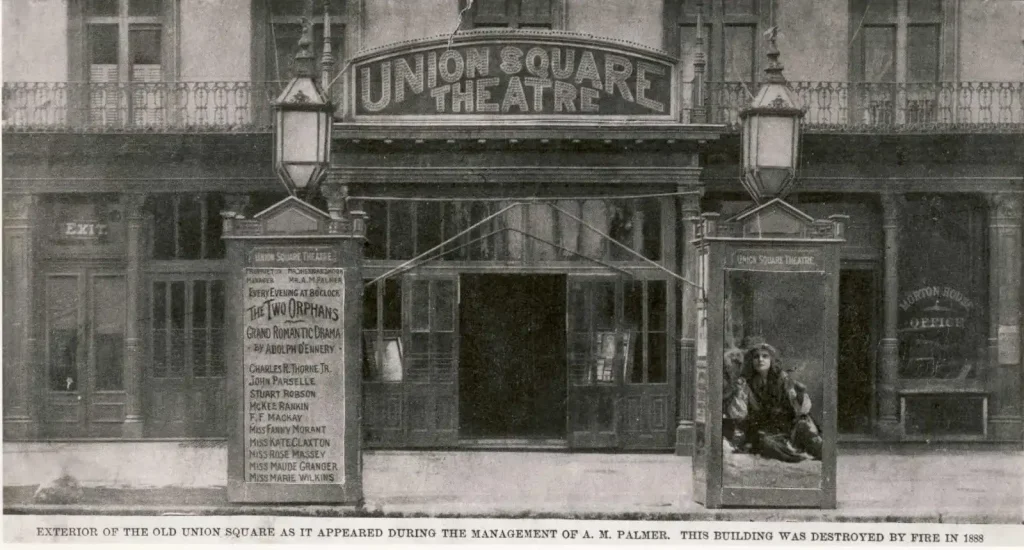
Image Credit - Wikimedia Commons
Art and Individualism
For Wilde, art and individualism were inextricably linked. He saw art as a "disturbing and disintegrating force" that challenged the status quo and pushed society forward. In a socialist society, he argued, art would no longer be the exclusive domain of the wealthy but would be accessible to all. This would lead to a cultural renaissance, where creativity and self-expression would be valued above all else. Wilde's vision of socialism was, in essence, an aesthetic one. He believed that by creating a more just and equitable society, we could also create a more beautiful one.
The Ill-Fated Premiere
Wilde completed the first draft of Vera in 1880 and immediately began seeking a theatre to produce it. He was full of youthful ambition, hoping the play would launch his career as a professional writer. However, the political climate was not in his favour. After the 1881 assassination of Tsar Alexander II, the play's subject matter became too sensitive for a London audience. The scheduled debut was scrapped, and Wilde was forced to look for other opportunities. He eventually found a producer in America, and the play’s opening occurred in 1883 in the city of New York. However, it was not the success he had hoped for. The play was met with negative reviews and closed after only one week.
A Critical Failure
The reviews for Vera were scathing. The New York Herald called it "long-drawn dramatic rot," while the New York Times dismissed it as "wearisome." Even the satirical magazine Punch weighed in, declaring the play to be "Vera Bad." Wilde himself was devastated by the play's failure, describing it as the "sharpest agony" of his life. He never attempted to revive the play, and it remained unpublished during his lifetime. For many years, Vera was seen as a youthful mistake, a piece of apprentice work with little intrinsic merit.
A Re-evaluation
In recent years, however, there has been a renewed focus on Vera and its position within Wilde's collection of works. Scholars have begun to re-examine the play, not as a failed melodrama, but as a complex and revealing exploration of Wilde's political and artistic ideas. They argue that the play's themes of revolution, idealism, and the tension between a person and government authority remains relevant. The upcoming production at the Brockley Jack Studio Theatre in London provides a rare opportunity for audiences to judge the play for themselves.
The Brockley Jack Production
A well-regarded Off West End venue, London's Brockley Jack Studio Theatre has a reputation for staging new works and classic dramas. The new production of Vera; or, The Nihilists is being mounted by Third Thing Productions, with Cecilia Thoden van Velzen directing. The production promises a fresh take on Wilde's forgotten play, reimagining it for contemporary viewers. It will be the first-ever London revival of the play, making it a significant theatrical event.
Recently Added
Categories
- Arts And Humanities
- Blog
- Business And Management
- Criminology
- Education
- Environment And Conservation
- Farming And Animal Care
- Geopolitics
- Lifestyle And Beauty
- Medicine And Science
- Mental Health
- Nutrition And Diet
- Religion And Spirituality
- Social Care And Health
- Sport And Fitness
- Technology
- Uncategorized
- Videos

