

Danish FKU Assessment Test
The Countdown: A Controversial Test Is Tearing Inuit Families Apart in Denmark
Just two hours after childbirth, authorities took Keira Alexandra Kronvold’s daughter. It was the third time officials had removed an infant from her custody. A contentious "parenting competency" assessment, which is now outlawed for its disproportionate use against Inuit women, led to the separation. Keira is now in a desperate fight for her infant to be returned.
A Fleeting Moment of Joy
A countdown started with the words: "Your two hours are now starting." This announcement on November 7, 2024, marked the beginning of a torturous period for the new mother. The 38-year-old was initially given only sixty minutes with her newborn before foster parents were due to arrive. A midwife's plea, however, managed to extend this precious time. Keira's wishes for the delivery were simple. She wanted impressions made of her baby's hands and feet. Most of all, she wanted to be the one to catch Zammi at the moment of birth, creating an immediate, primal connection.
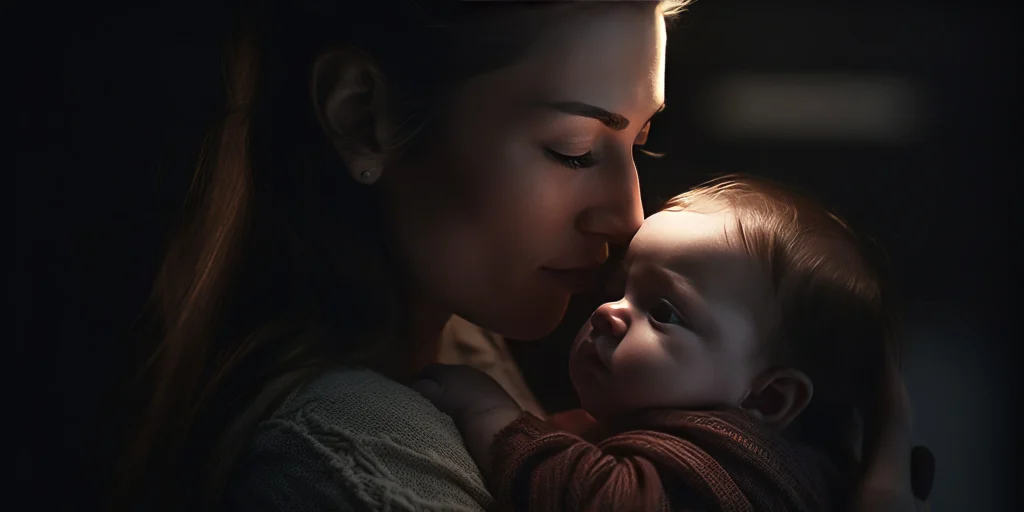
The labor was short, lasting about ninety minutes. Keira's main concern was for her daughter Zoe, aged 20, who was witnessing a delivery for the first time. Keira stifled her own cries so she would not disturb other new mothers and infants nearby. With Zammi's arrival, the preceding months of anxiety and strain dissolved into pure happiness. From her residence in the Danish town of Thisted, she demonstrates the moment, her arms cradled as she explains the need to keep the baby warm. The feeling, she says, was beyond words: unconditional love and profound joy. She offered birthday wishes to Zammi and spoke of her deep affection, with tears falling as she counted each of her infant's tiny digits.
The Shift into Darkness
Then, the atmosphere fractured. Keira describes it as entering a void, her body tensing at the memory. The happiness evaporated, replaced by the grim reality of counting down the minutes. In that moment, she finally let her own emotions surface. She began to breastfeed her baby, each second an agony. Even allowing for the midwife's performing of routine checks was torture. After an hour, she was instructed to get ready for the handover.
The items she packed in the bag for the baby remain painfully vivid seven months later. It contained a bottle, pacifier, cozy garments, a covering, shampoo, and lotion. "I changed her into a fresh diaper and dressed her," Keira says, weeping at the recollection. She fought to stop her tears from landing on the baby's face. Zoe got to hold her little sister for a few precious moments. Keira clings to every last characteristic from their parting.
A Mother's Promise
Zammi's nose was very small and she had a delightful laugh. Her hair was dark and her eyes were blue at birth. Her hands, Keira remembers, resembled Zoe's, but her feet, however, were clearly her father's. A heart-shaped mark was visible at the junction of her chest and neck, with another on the inner part of her tiniest finger. The beautiful sound of her voice overwhelmed Keira. "There was an immediate, powerful bond," she states. She recalls how Zammi looked at her while nursing, then shut her eyes, as if feeling completely safe.
When a woman from the authorities came for the infant, Keira gave Zammi a kiss. She made a solemn promise to advocate for her, vowing to send weekly floral arrangements and that she would return home soon. Once Zammi had been taken, Keira was on the bed, crying for a considerable time, her body trembling as a midwife attended to her stitches. The same care provider suggested she remain overnight, but the idea was unbearable. She returned home by herself, carrying only a container with her placenta, as congratulatory messages poured in from people who were unaware of the forced separation. Across town, a baby only a few hours old was meeting her new foster parents during this initial occasion.
A System Under Scrutiny
Many Greenlandic women residing in Denmark, Keira included, have had their children removed from them after undergoing deeply contested parenting skill evaluations. The official name for these assessments is forældrekompetenceundersøgelse (FKU). Authorities used them to decide if parents were fit to raise their kids. Following a frequent pattern, Zammi's placement was with a Danish foster family, which sparked Keira's fears that her daughter would lose her cultural identity and native language. For years, human rights organizations and activists have condemned the FKU. They assert it is unsuitable from a cultural standpoint for individuals of Inuit heritage, making it inherently discriminatory.
The Flawed Assessment
Clinical psychologist Isak C. Nellemann, who once conducted FKUs on behalf of Denmark, now advises families fighting the system. He explains that these evaluations are typically for cases where an infant is suspected of having behavioral, emotional, or cognitive issues. For Greenlandic individuals, however, ethnicity alone can be sufficient to attract notice from social services. The assessments, which take 15-20 hours, cover attachment styles, cognitive functions, personality characteristics, and psychopathology.
Nellemann states that successfully passing the tests is virtually impossible; he, along with his colleagues, has not been able to do so. The questions show a deep cultural bias. Queries like "What materials make up glass?" or "What do people call the large staircase in Rome?" are poor methods for measuring intelligence or parenting ability. Nellemann argues the evaluations are culturally biased and a flawed way of gauging a person's inherent intelligence. He says there is “widespread prejudice against Greenlandic individuals.” He compares the assessments to a fascist instrument, where only one type of person—the white, "real" Dane—is the norm. When Keira was tested concerning Zammi, she claims it was explained that the purpose was to determine if she had sufficient "civilization."
Disproportionate Impact
The statistics are stark. In Denmark, children whose parents are from Greenland face a much higher probability of entering state care. According to a report from 2022, officials had removed 5.6% of these children, compared with just one percent of children who have Danish heritage. According to Louise Holck, who directs the Danish Institute for Human Rights, the FKU evaluations do not properly consider "potential language obstacles or cultural distinctions." For their inherent cultural bias, the tests have also been condemned by the UN Special Rapporteur on the rights of Indigenous Peoples.
A Colonial Legacy
The issue's roots run deep. Until 1953, Denmark ruled Greenland as a colonial territory. Now, it is integrated into the kingdom of Denmark, where Copenhagen manages its security and foreign policy. Over the last few years, several scandals have been revealed about historical population-control practices. Many in Greenland, including a past prime minister, have labeled these events genocidal. They include the notorious IUD scandal, where thousands of girls and women received contraceptive devices without their agreement or knowledge. The details of these coercive measures, which took place from the 1960s to the 1970s, have become public knowledge only in recent times.
The "Little Danes" experiment of 1951 is another dark chapter. In it, 22 Inuit children were removed from their families and heritage to be assimilated into Danish culture in Denmark, leaving many with long-term trauma. These historical injustices form the backdrop to the current struggles that Greenlandic families in Denmark face, highlighting a persistent pattern of systemic discrimination and the erasure of culture.
A Decade of Fighting
Keira's ordeal did not start with Zammi. An FKU evaluation in 2014 was a factor when her two older children were taken. Her daughter Zoe was nine, and her son Nolan was just an eight-month-old infant. Nolan, now 11, lives with his father, and Keira has visits with him twice per week. A decade later, the very same psychologist, who is a Danish speaker and was also Keira's therapist, administered the test that resulted in Zammi's removal. Keira's native tongue is the West Greenlandic dialect of Kalaallisut; she isn't a fluent Danish speaker and received no interpreter for either evaluation.
Legal Battle and Systemic Flaws
Jeanette Gjørret, who is Keira's lawyer, is a leading expert on children's rights in Denmark and a fierce critic of the system. She points to "numerous procedural mistakes in this matter, including within the psychological evaluations." The choice to remove Zammi happened before her birth and was based largely upon the flawed cases involving her older two children. Keira wasn't offered the chance of living in a supportive housing environment, a measure she would have willingly accepted if it had been available. Removing all three of her children, Gjørret adds, is mainly due to one person's judgment, and Keira had no legal representation during the assessments.
That year's FKU report was completed just one month before Zammi's birth. It determined that while "Keira genuinely desires to take her small daughter home" and the infant was "growing and flourishing [in utero]", Keira's own personality "had not matured adequately" enough to provide the necessary cognitive and linguistic development. The assessment cited Keira's Greenlandic communication style, where small facial cues carry great meaning, as a potential hindrance for a child being raised in Denmark. For her child to be returned, the document said she must improve in several areas and "demonstrate progress," which included "communicating in Danish" and adopting a "more nuanced" approach to her surroundings.
A Glimmer of Hope
After an appeal was lost in April, the case was applied to the nation's high court. A law enacted in May that prohibits using the FKU assessment for people of Greenlandic origin is central to her appeal. A victory could set a major precedent for other Greenlandic individuals affected by these evaluations. Despite this prohibition, Gjørret says municipalities are still using parenting competency evaluations as justification against parents from Greenland before the social matters appeals board, a claim that the Social Affairs and Housing Ministry refutes. The Ministry states that since the law was altered, the board hasn't utilized the tests in such cases.
Change may be on the horizon. Laila Bertelsen, who founded an organization called Foreningen Mapi that assists parents of Inuit heritage in Denmark, knows of a single mother that has successfully regained custody of her own children following the legal change. Bertelsen says that cultural distinctions—in family structure, personal history, and language—are frequently misconstrued in Danish professional evaluations and studies, disconnecting children away from their cultural heritage and identity. A forced removal immediately after birth should happen only in "critically urgent circumstances where a documented threat exists," she contends, with support and attachment as the primary goals for families.
A Residence Prepared for a Baby
The presence of an empty cot radiates from Keira's apartment. The empty bassinet, which is tenderly adorned with a transparent cloth and a mobile with bee and dragonfly figures, is a silent testament to a painful absence. A small baby seat and an infant bouncer are ready for use nearby. Tiny diapers, arranged upon the changing table beside an unopened container of infant lotion and some cotton balls, are also visible. A well-read copy of a Danish guide to attachment parenting rests upon the windowsill. The most poignant evidence, however, is a cupboard filled with neatly folded newborn clothes for a baby who has never resided here.
For the past seven months, Keira's residence in Thisted has been awaiting Zammi's arrival. Keira gets a single, one-hour visit with her youngest child every Friday morning. Only one time each month are her older children, Zoe and Nolan, allowed to see their new sibling. Keira, who is employed at a fish processing plant, passes each week just waiting for 10:30 a.m. on Friday. She has trouble sleeping and finds eating to be a challenge. Nights feel endless. In the beginning, she counted the hours.
Finding Strength in the Struggle
Returning to her job ten weeks post-delivery was an immense challenge for Keira; she had difficulty standing for extended times and sometimes needed to retreat to the restroom to weep. She has dedicated the past ten years to the struggle for reunification with her older two kids, and currently with Zammi, yet she somehow summons the fortitude to persevere. She focuses on plans to recover her baby and is documenting her journey in a book. She is constantly thinking about, “What is the following action? What must I do?" But the sight of Zammi's empty bed can make her crumble.
Zammi's father, from Denmark, remains a part of their lives, but he has refrained from public comment. Keira says he loves his daughter but is afraid of public judgment and the mental toll it would take. Keira, however, found her voice on the evening she returned from the hospital alone. Overwhelmed with questions, she explained her situation in a Facebook video that quickly went viral. The hundreds of communications from individuals offering sympathy provided the impetus for her to resist. While her situation is one among many, the overwhelming majority of individuals whose children are removed from their care lack the emotional capacity to share their story publicly.
From Personal Pain to Political Action
Demonstrations concerning Keira's case were held in both Greenland's capital of Nuuk and in Copenhagen. As relations between Denmark and Greenland were receiving global scrutiny, the campaign gained political attention. Keira went to a demonstration 32 days postpartum, even as she was also experiencing postpartum bleeding and difficulties with lactation. In January, her fight was a factor in the Danish government's announcement of the ban on FKU testing. Keira says she speaks out because if she fails to act, no one else will. She believes that if she can effect a change now, she can create a better future for Zammi.
A Childhood Lost
For Keira's daughter, Zoe, sitting quietly inside the living room during the conversation, time cannot be turned back. Following her removal from her mother's care from the age of nine, she lived through her formative years in foster care and also in group homes, a situation she says involved emotional abuse. Now, she is committed to seeing justice on behalf of her sister, hoping a reunion with their mother can happen prior to the baby's first birthday. At the court proceeding in April, she was outside in a quiet protest, holding fabric banners she made, which read: "Please let my little sister return home" and "FKU is only for Danish citizens."
She speaks in a soft tone, explaining that before being compelled to reside in foster care, she enjoyed her schoolwork and had a particular talent for speaking English, mathematics, and chess games. She has warm recollections of her mother, an early riser, braiding her hair when she was still sleeping. Keira says that unannounced visits from social services started after Zoe enrolled in school, with the stated purpose of checking on the children's care. She asserts that what they were truly communicating was, "You must do things the Danish way, not the Greenlandic way." Among the issues they raised with Keira's methods was their use of Greenlandic in the home instead of Danish.

A Culture on Trial
Coming from a community where she describes "everyone was like a family member," the official interference she faced in Denmark felt foreign and deeply unsettling. She was under constant observation in her own home. She was required to provide a Danish translation to the social worker if she communicated with her kids in Greenlandic. What officials identified as "errors" began to accumulate, and they confronted her with them months afterward. These issues, she explains, could be as minor as her tone of voice with Zoe at the dinner table or her reluctance to let her eight-year-old daughter walk home from school by herself. "It was terrifying, alarming," says Keira. "I was perpetually on edge. I constantly felt immense pressure."
Her daughter Zoe, who recently received a schizophrenia diagnosis, began to have hallucinations while living with her foster parents. Keira quietly mentions her daughter felt suicidal at one stage. Zoe presents some of her recent sketches of faces she perceives. One image portrays an individual responsible for her supervision after her removal from her mother's custody. When Keira learned she became pregnant with Zammi and chose to notify the Thisted municipality, aiming to collaborate to let her keep the baby after its birth. She was anxious about her doctor's appointment as she claims to have previously received an ultimatum: either terminate the pregnancy or risk having the baby removed after delivery. She consented to take a different parenting skill evaluation as a show of cooperation. However, during the meeting, the psychologist questioned her about her past abortions and instructed her to demonstrate her parenting abilities by interacting with a toy doll through play, song, and conversation, monitoring if she maintained eye contact. "The issue is, I never had a doll growing up," she explains, noting that her actual baby, Zammi, was actively kicking inside her. She was instructed to draw; they then criticized her work for not including a face, even though she had sketched a mother and baby.
A Mother's Weekly Ritual
Each Friday morning, as a downpour soaks the ground outside, Keira sits in the living area, illuminated by the gentle glow of decorative lights and a silent television, arranging a bouquet. She brings a new floral bouquet for Zammi each week so the baby will connect the flowers with her mother's visits. It is a ceremony of devotion that is one of her coping mechanisms.
She gathers her long, dark hair into a tie and gets ready to depart. Holding an umbrella, walking with an almost ceremonial slowness, she proceeds through town for her visit with Zammi. Upon reaching the suburban road where Zammi's foster family resides—a street of low-slung houses, meticulously manicured hedges, and flagpoles standing in the front yards—we say our goodbyes; she isn't permitted to bring guests.
Upon her return slightly more than sixty minutes later, Keira is troubled that Zammi was not dressed warmly enough and appeared to be cold, yet she also seems to be emotionally refueled from the time spent with her child. We remain seated inside the car while she displays photos and some videos. Zammi performed her customary greeting, placing her own hands onto Keira's cheeks, and is now at an age where she adores looking at her reflection. In one video, Keira softly speaks to Zammi using her native language: "Hello, my sweet baby. What an adorable baby. My sweet darling." Their time together passes so quickly. On occasion, she even forgets to capture photos.
During her visits, her entire focus is on Zammi. She must suppress her personal emotions until she returns home. The experience is always difficult. Just before exiting the vehicle, she articulates the intense strain she endures. "It is like someone has their hand around your throat," she says, "and they are the ones who determine how much air you are permitted to inhale."
Recently Added
Categories
- Arts And Humanities
- Blog
- Business And Management
- Criminology
- Education
- Environment And Conservation
- Farming And Animal Care
- Geopolitics
- Lifestyle And Beauty
- Medicine And Science
- Mental Health
- Nutrition And Diet
- Religion And Spirituality
- Social Care And Health
- Sport And Fitness
- Technology
- Uncategorized
- Videos

