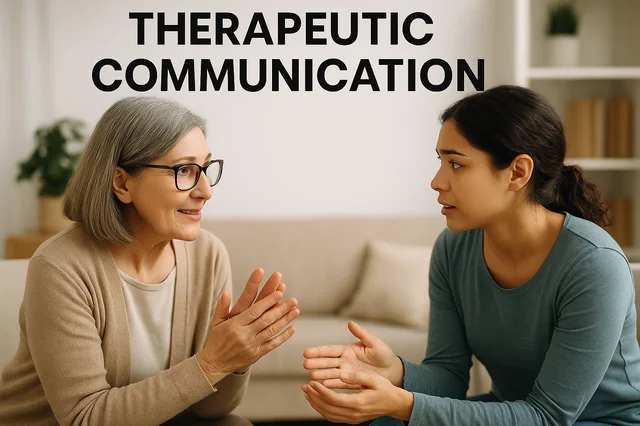
Therapeutic Communication
£199.00
Description
Therapeutic Communication Diploma Course
The Therapeutic Communication course offers a direct and highly practical route into the language of healing. You explore how words, tone and timing shape understanding, and how small moments can shift a relationship. Moreover, you discover how communication builds trust, clarity and movement. The format works entirely online, and you study at your own pace. Therefore you can begin from anywhere with an internet connection, and you continue when it suits your routine. People who want professional development, or a new direction, or deeper skills for work with clients, find that this approach fits well with busy life. Although the subject reaches deep, the structure remains simple, steady and clear.
From the first lesson, the Therapeutic Communication course helps you speak with intention. Each idea links to the next. You learn how language forms patterns, yet you also learn how to notice what lies behind the pattern. And you practise. Short tasks guide you step by step, so you build confidence and fluency. The lessons come through an online platform that is easy to use. You can read, listen, and engage from any device. You do not wait for a schedule or a tutor. You move forward in your own time.
Many students take the Therapeutic Communication Diploma course to improve professional practice. They want stronger relationships with clients, patients or colleagues. They also want clarity, confidence and steadiness in moments that usually feel uncomfortable. Others join the Therapeutic Communication online course for personal reasons. They want healthier conversations at home, or they want to understand the emotional patterns that appear again and again. Regardless of motivation, everyone gains insight and skill, because the focus stays grounded in real communication.
Throughout the course, you meet ideas from the foundations of therapeutic language. You learn why safety matters and how words create safety. You notice how people respond to tone, pace and intention. You start to use questions in a way that opens space for the other person. Yet you also discover when to stay silent. The Therapeutic Communication course explains the evolving landscape of psychotherapy, and you see how language shifts across time, culture and context. Therapy has changed, however core values remain: respect, listening and collaboration.
Attachment plays a central role. Many relationships follow patterns formed early in life. These patterns can help, yet they can also block connection. When you recognise attachment needs and fears, you speak with more care. You understand why reactions grow quickly, and why certain subjects feel unsafe. In addition, you learn how to build steadiness and how to communicate with warmth. Although theory guides you, practical language forms the heart of the course.
Cyclical patterns appear in many conversations. For example, people repeat old stories, defend old wounds or withdraw at the slightest threat. Instead of pushing against these cycles, you learn how to interrupt them gently. You listen, reflect and invite new responses. You do not force change. Instead you offer sturdiness, curiosity and respect, so the other person feels able to step forward. Anxiety often sits inside these patterns, so the course shows how to speak in a way that eases tension. Calm communication encourages healing.
Insight alone does not create change. Therefore the course shows how to bridge insight and action. You learn how to help someone turn understanding into movement. You practise language that brings goals into focus and makes them achievable. Even small actions matter. A well-timed question or a simple reflection can open a path that once seemed blocked. You see how therapeutic change grows from moments like these.
The course spends time exploring the art of facilitative comments. These comments sound natural, yet they guide conversation. They help people notice feelings, thoughts and reactions. They help them stay engaged. You learn how to use comments without controlling the discussion. In fact, you want the other person to lead. However, your presence holds the space with steadiness, so clarity increases.
Another major area is therapeutic inquiry. The Therapeutic Communication online course teaches how to ask questions that open windows rather than close doors. Curious questions invite new meaning. They reveal emotions, memories and unmet needs. They must feel safe and respectful. The course breaks this process into simple steps, so you never feel uncertain. You see how questions build connection, and how they support problem solving.
A strengths-based approach supports all communication. You notice what works and you amplify it. People often feel overwhelmed by problems. Yet they also have abilities, values and stories of success. You help them remember these strengths, and you use them to build change. This approach creates energy. It also reduces shame. People feel able to participate in their own healing.
Affirmation matters, although it must stay balanced. Too much praise can feel false. Too little support leaves a person isolated. Therefore you learn how to confirm effort and resilience while still inviting change. Language plays a key role. You recognise progress, and at the same time you hold space for growth. It is a delicate balance, and this course prepares you well.
Advanced techniques help you foster change. You practise ways of reflecting emotion, summarising themes and naming what seems unspoken. You also practise how to handle silence, conflict and avoidance. These skills support both individual and couples work. When relationships struggle, communication breaks down. Yet communication also offers a route back to resolution. With patience and skill, people can meet one another again.
As you progress through the Therapeutic Communication Diploma course, you see how change grows in small increments. One phrase encourages a new story. One question shifts a belief. Over time, these moments collect. Individuals begin to understand themselves. Couples begin to listen. And families start to repair old fractures. Communication sits at the centre of all this.
Every unit concludes with a multiple-choice examination. This exercise will help you recall the major aspects covered in the unit and help you ensure that you have not missed anything important in the unit. The results are readily available, which will help you see your mistakes and look at the topic once again. If the result is satisfactory, it is a green light for you to proceed to the next chapter.
Since the Therapeutic Communication online course takes place on a digital platform, you do not commute or attend a classroom. You log in, continue your studies, and follow your own rhythm. You can return to previous lessons at any time. You can take notes, download materials and plan your study sessions. Over time this creates steady progress. In addition, your confidence grows.
After completing the course, you will receive a diploma certificate and an academic transcript. You will be able to download the certificate and the transcript of the course from the student account free of charge. Many students use this document for career development, while others keep it as evidence of personal achievement. Either way, it marks the successful completion of a journey.
The Therapeutic Communication course, and also the Therapeutic Communication online course, encourages clarity, honesty and compassion in everyday language. It prepares you for real conversations, and it helps you support others through change and challenge. The skills move beyond theory and into life. You learn, you practise, and you improve. Step by step, new habits form. In the end, you communicate with purpose.
What you will learn
1:The Foundations of Therapeutic Language
2:The Evolving Landscape of Psychotherapy
3:The Centrality of Attachment in Human Experience
4:The Dynamics of Cyclical Patterns
5:Anxiety and the Path to Healing
6:Bridging Insight and Action in Therapy
7:The Art of Facilitative Comments
8:The Art of Therapeutic Inquiry
9:Strengths Based Approach to Communication
10:The Delicate Balance of Affirmation and Change
11:Advanced Techniques for Fostering Change
12:Achieving Resolution in Individual and Couples Therapy

Tutor Support
Course Outcomes
After completing the course, you will receive a diploma certificate and an academic transcript from Elearn college.
Assessment
Each unit concludes with a multiple-choice examination. This exercise will help you recall the major aspects covered in the unit and help you ensure that you have not missed anything important in the unit. The results are readily available, which will help you see your mistakes and look at the topic once again. If the result is satisfactory, it is a green light for you to proceed to the next chapter.
Accreditation
Elearn College is a registered Ed-tech company under the UK Register of Learning( Ref No:10062668). After completing a course, you will be able to download the certificate and the transcript of the course from the website. For the learners who require a hard copy of the certificate and transcript, we will post it for them for an additional charge.