Subtotal:
£199.00


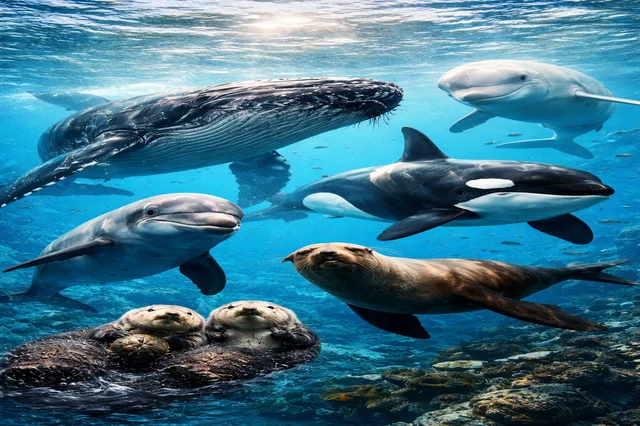
The Marine Mammals course offers an engaging and accessible route into one of the most fascinating areas of animal science. You study entirely online, which means you can learn from any location and progress at your own pace. The structure supports beginners as well as those who want to strengthen existing knowledge. Moreover, you build confidence as you move through each topic, since every section adds clarity to the next. Because of this, the Marine Mammals course works well for anyone with an interest in the natural world, wildlife careers or conservation roles.
You start with a broad introduction to marine mammals, and this helps you understand the scope of the subject from the outset. You explore major groups, key adaptations and the ways these animals have shaped life in the world’s oceans. As you progress, you move through principles of modern classification. This gives you the tools to recognise lineages and understand how scientists group species. Furthermore, you learn why systematics supports research, conservation and field observation. Since this is an online programme, you can return to each section as often as you wish, which helps you keep concepts fresh.
Soon after, you examine the evolution of pinnipeds, including seals, sea lions and walruses. You look at how these animals adapted to life in coastal and open-water habitats. You also review the transitions that shaped their limbs, skulls and feeding patterns. Because the material remains accessible, you build knowledge step by step without feeling overwhelmed. In addition, the Marine Mammals online course provides steady guidance so you always stay aware of how each theme links to the next.
You then turn to the evolution of cetaceans. This part of the Marine Mammals online course traces their rise from land-based ancestors to the whales, dolphins and porpoises we know today. You explore how their bodies changed, how echolocation developed and how baleen systems transformed feeding strategies. Each explanation stays grounded in practical terminology, which makes the subject feel easier to grasp. Since you follow a clear timeline, you gain a strong sense of how quickly major changes took place. As you move forward, you begin to appreciate the variety within this group and the reasons these animals thrive across many habitats.
Later, you examine sirenians and other marine lineages. This includes manatees, dugongs and lesser-known aquatic groups with complex histories. You learn how these animals adapted to shallow waters, slow movement and specialised diets. Because the Marine Mammals course presents each topic in short, focused sections, you absorb information without losing momentum. Likewise, the steady online flow encourages revision whenever needed.
The content then guides you through biogeography. This part explains how ocean basins, temperature, currents and seasonal patterns influence the distribution of marine mammals. As you progress, you learn why certain species remain in limited ranges while others travel thousands of kilometres. You also consider the effects of climate change, habitat loss and shifting food webs. Since you study online, you can take time to examine maps, diagrams and supplementary notes to improve your understanding.
You then explore the integument and sensory systems. These lessons explain how skin, hair, blubber and specialised structures protect each species. In addition, you explore sensory adaptations, including vision, hearing and tactile responses. You learn how marine mammals sense the world underwater in ways humans cannot. Because each concept builds on the previous one, you develop a connected understanding of anatomy and behaviour.
Next, the Marine Mammals online course takes you into musculoskeletal anatomy and locomotion. Here you see how bone structure, muscles and limb modifications shape movement. You study how seals push through water, how whales produce powerful strokes and how dolphins generate speed with minimal energy waste. The clear online delivery helps you picture each mechanism in motion, which improves retention.
Physiological energetics follows. This section gives you insight into metabolism, thermoregulation and energy budgeting. You learn how marine mammals survive extreme cold, long migration routes and unpredictable food supplies. Because the Marine Mammals Diploma course explains each point plainly, you understand how physiology supports survival under harsh conditions.
You then explore respiration and diving physiology. This material feels especially engaging because it shows how these animals endure pressures, limited oxygen and rapid depth changes. You discover how blood chemistry shifts during deep dives and how oxygen stores distribute through vital tissues. Since you can pause or revisit lessons online, you can reinforce the ideas as often as you need.
Acoustics and foraging come next. This part introduces communication, echolocation, prey detection and strategies used during hunting. You explore how whales produce complex vocal patterns and how dolphins interpret echoes with remarkable accuracy. Consequently, you understand how sound shapes daily life in the marine environment. You also examine feeding strategies, from cooperative hunting to solitary foraging. The online format supports optional replays so you can review detailed concepts with ease.
As you move on, you study reproduction and conservation. These lessons explain breeding cycles, parental care, migration to calving areas and threats that affect population stability. You consider pollution, entanglement, habitat disturbance and climate-related shifts. Because the Marine Mammals Diploma course commits to clarity, you gain a strong grasp of modern conservation pressures and the reasons global action remains essential.
Throughout the Marine Mammals course, each unit concludes with a multiple-choice examination. This exercise helps you recall the major aspects covered in the unit and ensures that you have not missed anything important. The results are readily available, which helps you see your mistakes and return to the topic once again. If the result is satisfactory, it gives you a clear signal to move to the next chapter.
1:An Overview of Marine Mammals
2:Principles of Systematics and Classification
3:The Evolution of Pinnipeds
4:The Evolution of Cetaceans
5:Sirenians and Other Marine Lineages
6:Patterns of Biogeography
7:The Integument and Sensory Systems
8:Musculoskeletal Anatomy and Locomotion
9:Physiological Energetics
10:Respiration and Diving Physiology
11:Acoustics and Foraging
12:Reproduction and Conservation

After completing the course, you will receive a diploma certificate and an academic transcript from Elearn college.
Each unit concludes with a multiple-choice examination. This exercise will help you recall the major aspects covered in the unit and help you ensure that you have not missed anything important in the unit. The results are readily available, which will help you see your mistakes and look at the topic once again. If the result is satisfactory, it is a green light for you to proceed to the next chapter.
Elearn College is a registered Ed-tech company under the UK Register of Learning( Ref No:10062668). After completing a course, you will be able to download the certificate and the transcript of the course from the website. For the learners who require a hard copy of the certificate and transcript, we will post it for them for an additional charge.