


Subtotal:
£398.00


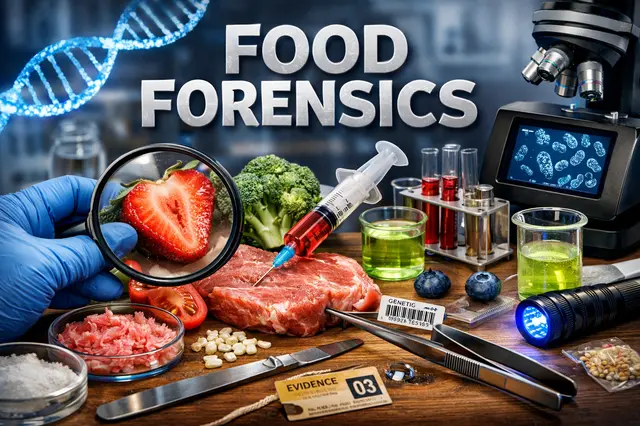
The Food Forensics course offers a rigorous and contemporary learning experience for anyone who wants to understand what truly sits behind modern food production and consumption. This programme suits learners who value evidence, scientific reasoning, and practical insight. It also suits professionals who already work with food, health, safety, or regulation and want to strengthen their analytical confidence through flexible digital study. As an online learning experience, the Food Forensics course fits around work, study, and personal commitments, while still maintaining academic depth and clarity.
At the outset, the Food Forensics course introduces the biological and environmental origins of heavy metals and explains how these substances enter soil, water, crops, and food chains. From there, the learning steadily builds. You explore how industrial elements accumulate over time and why long-term exposure creates chronic health risks. As a result, you gain a clear understanding of contamination pathways rather than isolated facts. Moreover, this approach helps you connect environmental processes to real-world dietary exposure.
The course then moves forward to examine synthetic resins and industrial solvents commonly used in packaging and processing. Consequently, you learn how these compounds migrate into food under certain conditions. In addition, the Food Forensics online course explains why temperature, storage duration, and material choice all influence chemical transfer. This knowledge proves vital for anyone involved in food handling, retail, or quality control. Even so, the content remains accessible, because each concept builds logically on the last.
Modern agriculture plays a central role in this learning journey. Therefore, the Food Forensics course explores pesticide proliferation and its implications for crops, ecosystems, and consumers. You analyse how repeated application leads to residue persistence. Furthermore, you examine how regulatory thresholds work and where gaps still exist. Through this progression, you learn to interpret safety claims with confidence rather than assumption. At the same time, you develop the ability to assess food labels and sourcing practices more critically.
In parallel, the course addresses flavour modifiers and neurotoxic sweeteners that shape modern taste profiles. As a learner, you study how these compounds interact with neurological pathways. Consequently, you understand why certain ingredients influence appetite, preference, and consumption patterns. The Food Forensics online course presents this material clearly and directly, which allows you to apply the learning immediately to everyday food choices and professional discussions.
Synthetic additives and agricultural feed contaminants receive detailed attention as well. Therefore, you explore how additives serve functional roles while also carrying biological consequences. In addition, you assess how contaminants enter animal feed and move through meat, dairy, and processed products. This layered analysis strengthens your ability to evaluate supply chains as a whole rather than in fragments. As a result, you gain a broader forensic perspective on food integrity.
The Food Forensics course also focuses strongly on practical solutions. It introduces strategies for toxin avoidance and ingredient replacement that apply across households, institutions, and industry. Instead of promoting fear, the course promotes informed decision-making. Moreover, it explains nutritional support mechanisms that assist physiological elimination of harmful substances. Through this lens, nutrition becomes an active tool rather than a passive concept.
Physical and environmental detoxification methods follow naturally within the curriculum. Consequently, you explore how lifestyle, environment, and exposure reduction work together. The Food Forensics online course places these methods within a scientific framework, which helps you separate evidence-based practice from unsupported claims. As you progress, you develop a balanced and credible approach to detoxification that respects both biology and environment.
Standards for elemental safety and laboratory analysis form another essential part of the learning experience. Therefore, the course explains how laboratories test food, supplements, and personal care products. You learn to read analytical findings and understand margins of safety. Furthermore, the course connects these standards to international monitoring systems and consumer protection frameworks. This knowledge empowers you to interpret reports with confidence rather than confusion.
Analytical findings for grocery and prepared foods appear throughout the course content. As a learner, you examine real-world testing outcomes and learn how contamination varies across categories. Similarly, you explore the elemental composition of supplements and personal care products, which often escape routine scrutiny. This section reinforces the forensic mindset by encouraging careful evaluation across all consumables, not just meals.
Because this programme runs fully online, the Food Forensics course offers interactive resources, structured reading, and guided assessments that you can complete at your own pace. You access the learning materials through a digital platform that supports revision, review, and progression. Therefore, you remain in control of your learning schedule without compromising academic depth. The Food Forensics online course suits both independent learners and professionals seeking structured development.
Each learning segment concludes with a multiple-choice examination that actively supports recall and understanding. This assessment helps you revisit the major aspects covered and confirm that you have not missed anything important. The system provides results immediately, which allows you to identify errors and return to the topic with clarity. When the result meets the required standard, you receive a clear signal to move forward with confidence to the next section. This approach keeps learning focused, supportive, and transparent throughout the Food Forensics course.
1:The Biology and Environmental Origins of Heavy Metals
2:Industrial Elements and Chronic Health Risks
3:Synthetic Resins and Industrial Solvents
4:Modern Agriculture and Pesticide Proliferation
5:Flavor Modifiers and Neurotoxic Sweeteners
6:Synthetic Additives and Agricultural Feed Contaminants
7:Strategies for Toxin Avoidance and Replacement
8:Nutritional Support for Physiological Elimination
9:Physical and Environmental Detoxification Methods
10:Standards for Elemental Safety and Laboratory Analysis
11:Analytical Findings for Grocery and Prepared Foods
12:Elemental Composition of Supplements and Personal Care

After completing the course, you will receive a diploma certificate and an academic transcript from Elearn college.
Each unit concludes with a multiple-choice examination. This exercise will help you recall the major aspects covered in the unit and help you ensure that you have not missed anything important in the unit. The results are readily available, which will help you see your mistakes and look at the topic once again. If the result is satisfactory, it is a green light for you to proceed to the next chapter.
Elearn College is a registered Ed-tech company under the UK Register of Learning( Ref No:10062668). After completing a course, you will be able to download the certificate and the transcript of the course from the website. For the learners who require a hard copy of the certificate and transcript, we will post it for them for an additional charge.


£199.00

£199.00


