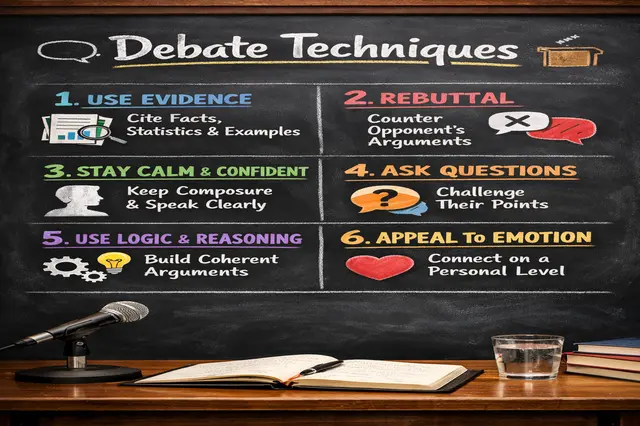
Debate Techniques
£199.00
Description
Debate Techniques Diploma Course
The Debate Techniques course offers a clear and practical path for anyone who wants to speak with confidence and respond with clarity in any discussion. Students join this online learning experience from many backgrounds, yet each person shares the same aim: to sharpen their thinking and express ideas that hold up under pressure. This course sets out to support that aim from the start. You learn in your own time, and you control your own pace. The entire structure suits online learning, and every stage encourages active progress. As you move forward, you gain a strong sense of how persuasive discussions work, both in formal settings and in everyday conversations.
Right from the beginning, the Debate Techniques course builds the skills that matter. You explore how formal debate works and why structure strengthens your arguments. You also gain a sense of how different formats shape the way you speak and respond. Because this course sits fully online, you can revisit each lesson whenever you need to, which supports deeper understanding and better retention. Furthermore, you use real examples and guided practice to secure your progress. Each topic broadens your skills, yet it also helps you refine the habits that allow you to speak with authority.
As the course progresses, you examine the essentials of structuring propositions and organising arguments. You learn how clear logic strengthens your case. You also look at how poor structure weakens it. Moreover, you focus on the importance of clarity, precision and order. These lessons sit at the heart of the Debate Techniques online course, because they anchor every technique you apply later. With online learning, you can test your own ideas in a safe space and adjust them as you grow. Therefore, you gain both confidence and discipline as you improve your style.
Soon after, the course introduces research-based approaches to supporting arguments. You learn how to use credible evidence, how to identify weak claims and how to avoid common fallacies. This section of the Debate Techniques Diploma course strengthens your ability to assess information in a fast-moving world. You begin to see how sources shape arguments and how strong evidence can shift the direction of a debate. In addition, you develop sharper judgment, which helps you choose the right material for your case. This approach gives you a strong foundation for later sections.
As you move on, the course guides you through building strong cases and identifying weak ones. You explore the signs of a solid argument and the warning signals of a flawed one. While you study these ideas, the Debate Techniques online course offers tools that fit neatly into everyday communication. You start to recognise when a point needs support, when it needs clarity and when it needs restructuring. This insight transforms your confidence in live debate and written discussion. It also helps you avoid the mistakes that weaken your message.
You then progress to the section on the affirmative role. Here, you learn how to construct a clear and assertive case. You see why the first speaker sets the tone and how framing influences the entire exchange. Furthermore, you develop methods for shaping a claim that withstands questioning. Similarly, you examine the negative role. You learn how a response can challenge, expose gaps and shift the direction of the debate. Both roles strengthen your strategic awareness, and both deepen your understanding of how debates gain momentum.
Next, you study the art of cross-examination. You learn how to ask questions that reveal inconsistencies and how to answer questions in a composed, strategic manner. The online format supports repeated practice, which helps you refine your tone and timing. After that, you move to advanced cross-examination and rebuttal. This part of the Debate Techniques Diploma course teaches you how to handle stronger opponents, faster exchanges and more complex ideas. You also learn how to respond without hesitation, which often decides the outcome of a debate.
As you continue, you explore how to respond when the unexpected occurs. You learn to handle surprising claims, emotional appeals and sudden shifts in topic. Moreover, you practise building even if arguments that offer layered reasoning. These techniques prove vital when you need to remain calm under pressure. You also learn how to flip warrants and make concessions without weakening your main point. These skills allow you to move with flexibility while still protecting the core of your argument.
The Debate Techniques course then moves into conditional logic and line-by-line refutation. You learn how to break an argument into its key parts and respond to each one with precision. You also learn how to protect your own case from the same kind of scrutiny. Because this course runs online, you have time to practise without the pressure of a live environment. Consequently, you build the stamina and sharp thinking required for competitive and professional discussions.
Later, you study the art of decision-making in debate. You learn how judges evaluate arguments, how they weigh evidence and how they assess clarity. This insight helps you refine your own delivery and anticipate the needs of your audience. You also explore the role of informal debate. Here, you look at how the techniques you learn apply to meetings, interviews, casual discussions and everyday persuasion. Therefore, you finish the course with skills that support you across your personal and professional life.
Assessment strengthens your progress. Each unit concludes with a multiple-choice examination. This exercise will help you recall the major aspects covered in the unit and help you ensure that you have not missed anything important in the unit. The results are readily available, which will help you see your mistakes and look at the topic once again. If the result is satisfactory, it is a green light for you to proceed to the next chapter. This clear structure suits online learning, as you receive instant feedback and can continue without delay.
What you will learn
1:The Foundation of Formal Debate
2:Structuring the Argument and the Proposition
3:Evidence and Research-Based Fallacies
4:Building a Good Case and Spotting a Bad One
5:The Affirmative Role
6:The Negative Role
7:The Art of Cross-Examination
8:Advanced Cross-Examination and Rebuttal
9:Handling the Unexpected and “Even If” Arguments
10:Flipping Warrants and Making Concessions
11:Conditional Logic and Line-by-Line Refutation
12:The Art of the Decision and Informal Debate

Tutor Support
Course Outcomes
After completing the course, you will receive a diploma certificate and an academic transcript from Elearn college.
Assessment
Each unit concludes with a multiple-choice examination. This exercise will help you recall the major aspects covered in the unit and help you ensure that you have not missed anything important in the unit. The results are readily available, which will help you see your mistakes and look at the topic once again. If the result is satisfactory, it is a green light for you to proceed to the next chapter.
Accreditation
Elearn College is a registered Ed-tech company under the UK Register of Learning( Ref No:10062668). After completing a course, you will be able to download the certificate and the transcript of the course from the website. For the learners who require a hard copy of the certificate and transcript, we will post it for them for an additional charge.