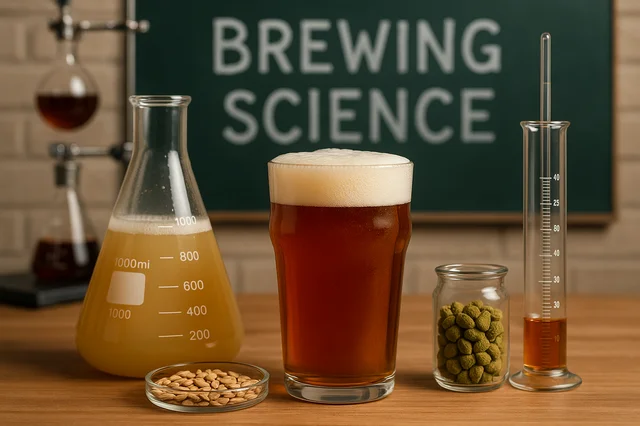
Brewing Science
£199.00
Description
Brewing Science Diploma Course
The Brewing Science course offers a rich, practical and enjoyable way to learn how beer comes to life. The course suits beginners who want clear guidance, yet experienced home brewers and those who work with beer also find the content rewarding. Because the course runs fully online, you can study wherever you are, and you can revisit the lessons whenever you wish. You progress at your own pace, and you follow a structured route through every stage of the brewing process. Rather than feeling lost, you gain confidence, because each lesson builds on what came before.
This Brewing Science online course explores both the art and the science, yet it keeps everything readable and friendly. You meet the basics in straightforward steps and, before long, you see how skilled brewers create balance, flavour, aroma and clarity. Moreover, you start to understand why beer styles taste so different. Pale ales, lagers, stouts, wheat beers and many other favourites owe their qualities to real scientific principles, and the course reveals those principles in a way that makes sense.
The Foundations of Brewing Science form the starting point. You learn what makes beer a distinct drink, how ingredients and technique shape the result, and why different cultures produce different styles. Soon you move to understanding and evaluating beer styles. You explore flavour families, colour, aroma, bitterness and texture. You discover how brewers judge balance, and you also discover how drinkers interpret taste, so you gain practical knowledge that helps you in tasting sessions or in your own brewing experiments.
Clear explanations support you as you explore the chemical building blocks of beer. Water, malt, hops and yeast play crucial roles. When you change one ingredient, everything changes. Therefore, you study how minerals in water influence taste, how hops contribute bitterness and aroma, and how yeast strains change the character of the finished beer. Additionally, you learn why the quality of ingredients matters so much and how brewers choose the right combination for each style.
The Brewing Science course then presents a step-by-step overview of the brewing process. You follow a smooth path from grains to glass. You learn how grains and malts influence colour, flavour and body. You see why the right choice of malt supports the right style. Further, you examine the science of mashing and starch conversion. You discover how heat, time and acidity work together. When you understand conversion, you understand why sugars form and how brewers achieve a wort with the right potential for fermentation.
As you progress, you study wort separation and fluid dynamics. This part gives insight into how brewers remove solids from the mash and prepare a smooth liquid. This keeps later stages efficient. You learn how the chemistry and physics of wort boiling help shape bitterness, sterilise the liquid and set the foundation for aroma. You also see how hops added at different moments can transform a beer, and you learn why boiling time matters.
Cooling and fermentation follow naturally. This Brewing Science online course explains how yeast works and why temperature control is so important. If you cool too fast or too slowly, the beer changes. If yeast becomes stressed, unwanted flavours appear. On the other hand, when conditions feel right, yeast produces clean, pleasant flavours. You gain insight into ale fermentation and lager fermentation, and you begin to recognise how subtle adjustments in timing and temperature can create huge changes in character.
After fermentation, the course explores conditioning and maturation. Beer continues to change in tanks or kegs. Time softens harsh edges. Aroma settles. Carbon dioxide levels adjust. You see why patience matters and how different beers need different periods of rest. You also study packaging and carbonation. The course explains why some beer goes into bottles, some into cans and some into kegs. Furthermore, you see how carbonation influences mouthfeel and head retention, creating lively beers that feel fresh, crisp and satisfying.
Before any beer reaches a drinker, it must taste right. Principles of quality and sensory analysis help you understand how breweries check their work. You learn tasting techniques, you learn how to record impressions, and you begin to appreciate small differences in aroma and flavour. You also learn how off flavours arise and how to avoid them. When you understand faults, you gain better control over your brewing, whether as a hobby or part of professional learning.
Assessment supports your progress throughout the Brewing Science course. Each unit concludes with a multiple-choice examination. This exercise will help you recall the major aspects covered in the unit and help you ensure that you have not missed anything important in the unit. The results are readily available, which will help you see your mistakes and look at the topic once again. If the result is satisfactory, it is a green light for you to proceed to the next chapter. This method keeps your learning clear and allows you to see steady improvement.
Because everything takes place online, you can return to any part of the material at any time. You might watch lessons early in the morning, or late in the evening. You may repeat difficult topics, and you may pause to take notes. In addition, you never need to travel, and you never worry about missing a class. Every lesson remains available in your student account. This format makes the Brewing Science online course flexible and friendly for people who learn in different ways.
Better still, after you complete the course, you receive a diploma certificate and an academic transcript. You will be able to download the certificate and the transcript of the course from the student account free of charge. Moments like this provide real satisfaction. You gain something concrete, and you also gain knowledge you can use in tasting, brewing, or work within hospitality. Many students enjoy the achievement as much as they enjoy the journey.
The Brewing Science Diploma course combines theory with practice. You keep learning how the science behind brewing shapes taste, aroma and clarity. You keep discovering how technique and timing influence every drop. Many students start the Brewing Science Diploma course with curiosity, yet they finish with confidence. They understand ingredients. They understand the process. They understand why the best beers feel balanced, lively, crisp or smooth.
In the end, this Brewing Science online course gives you more than facts. It gives you a way to think about beer. You move from general interest to informed appreciation. You notice how grains give colour, how hops give aroma, how yeast gives character. You learn why the right process produces dependable results, and you learn how tasting skills improve with practice. You also learn how every stage matters, from the mash to maturation.
As you work through the content, you see how brewing connects chemistry, physics, microbiology and sensory experience. Yet nothing feels heavy. Concepts appear in clear language, examples stay relevant, and ideas link together. Because the course runs in a friendly platform, you can focus on learning rather than searching for material. You complete lessons, sit simple assessments, and move on with confidence.
Therefore, the Brewing Science course stands as a thorough route into a world that many people enjoy from the outside. Once you complete it, you enjoy the taste of beer more, because you understand what sits behind every glass. You feel respect for the process, you feel pleasure in learning, and you gain a real qualification that shows your effort. Once you start, the process becomes enjoyable, and once you finish, you carry the knowledge with you.
What you will learn
1:The Foundations of Brewing Science
2:Understanding and Evaluating Beer Styles
3:The Chemical Building Blocks of Beer
4:A Step-by-Step Overview of the Brewing Process
5:Grains and Malts
6:The Science of Mashing and Starch Conversion
7:Wort Separation and Fluid Dynamics
8:The Chemistry and Physics of Wort Boiling
9:Cooling and Fermentation
10:Conditioning and Maturation
11:Packaging and Carbonation
12:Principles of Quality and Sensory Analysis

Tutor Support
Course Outcomes
After completing the course, you will receive a diploma certificate and an academic transcript from Elearn college.
Assessment
Each unit concludes with a multiple-choice examination. This exercise will help you recall the major aspects covered in the unit and help you ensure that you have not missed anything important in the unit. The results are readily available, which will help you see your mistakes and look at the topic once again. If the result is satisfactory, it is a green light for you to proceed to the next chapter.
Accreditation
Elearn College is a registered Ed-tech company under the UK Register of Learning( Ref No:10062668). After completing a course, you will be able to download the certificate and the transcript of the course from the website. For the learners who require a hard copy of the certificate and transcript, we will post it for them for an additional charge.
Related Products



Neuroscience
£199.00
Biochemistry
£199.00