
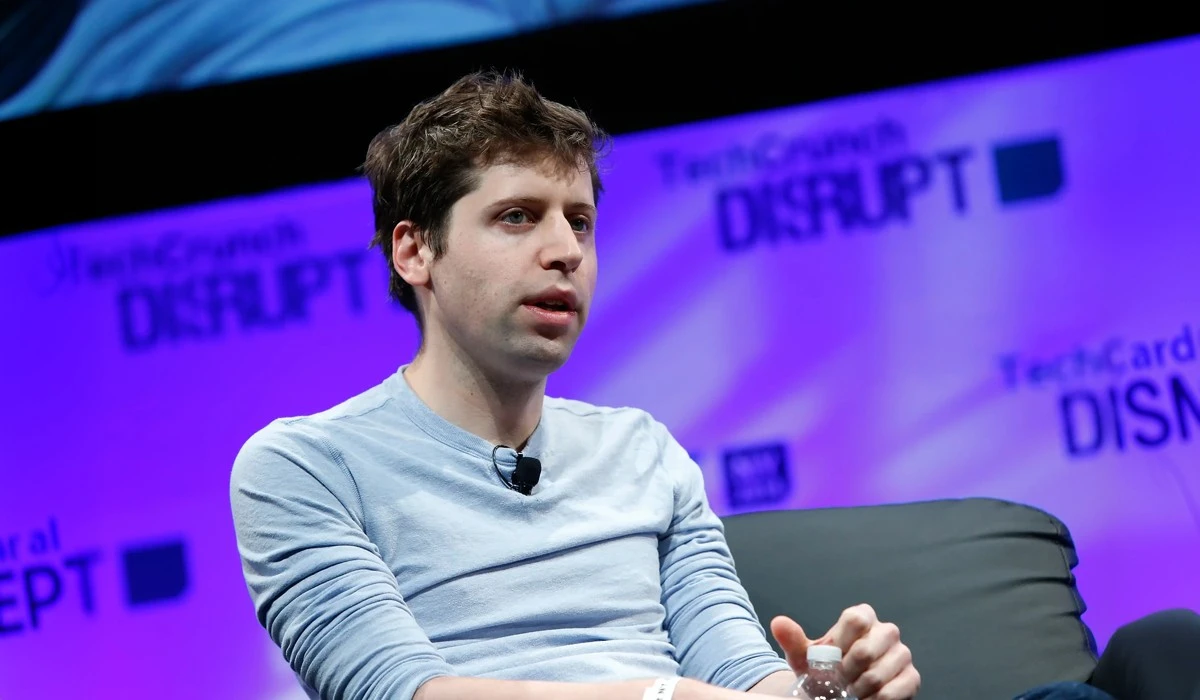
Image Credit - by TechCrunch, CC BY 2.0, via Wikimedia Commons
Inside the Attack on the Sam Altman Residence
At 4:12 a.m. on a Friday in San Francisco, a 20-year-old man threw a Molotov cocktail at the perimeter gate of a private estate. That's how the Sam Altman residence attack started. The gate caught fire. Less than an hour later, the same man showed up at OpenAI's corporate headquarters and threatened to burn it down too. Police arrested him on the spot.
The rapid law enforcement response kept the physical damage small. But what came after, the internal memos, the security overhaul, the personal statement posted online, and the policy document OpenAI had just released days earlier, told a much bigger story. This wasn't just a crime. It was a signal that the friction between the AI tech pursuit and public anger has moved off the internet and into the real world.
The Timeline of the Sam Altman Residence Attack
The suspect arrived at the home at exactly 4:12 a.m. Police dispatch audio, later obtained by NBC News, referred to the device he used as a "sticky bomb." He lit the perimeter gate on fire and left. According to an Associated Press report, officers reached the scene and contained the blaze quickly. The Sam Altman residence attack then moved to a second location.
At 5:07 a.m., the same man appeared at OpenAI's corporate headquarters and issued direct arson threats against the building. San Francisco Police Department officers were already responding when he arrived. They arrested him at the scene. Wired magazine first reported the arrest publicly.
The SFPD investigation remains active. Authorities have not publicly confirmed the suspect's custody status, and charges remain pending. Police have maintained anonymity around the property owner in all official statements, though the dispatch audio leaked his name and title directly.
The Money Driving the AI Tech Pursuit
When ChatGPT launched in late 2022, global investment patterns changed fast. Financial backing poured into artificial intelligence almost overnight. That single product release turned the AI tech pursuit into a full-scale capital race, and the numbers have only grown since.
How much money flows into the AI industry annually? Investors currently pour hundreds of billions of dollars into the sector every year to maintain dominance in the artificial intelligence market. Every major technology company is now racing to keep pace, which means pushing increasingly powerful tools to the public on a compressed timeline.
That financial pressure doesn't just affect products. It shapes corporate culture, hiring, and the speed at which AI systems reach everyday people. The higher the stakes, the louder the public reaction to the perceived risks.
OpenAI Policy Proposals and Economic Control
Earlier the same week as the Sam Altman residence attack, OpenAI released a comprehensive policy proposal about the future of the economy. The timing was coincidental, but the content made it harder to ignore.
The company acknowledged that highly capable AI systems create real worker displacement risk across many industries. To address that, OpenAI called on the government to step in with direct policy action. Rather than waiting for lawmakers to draft regulations, the company laid out its preferred framework first.
Demanding Higher Corporate Taxation
The policy document went into specific detail. OpenAI argued for large-scale job training programs and national upskilling initiatives to help workers move into new roles. They also proposed higher corporate taxation on AI companies to fund those programs.
The logic is straightforward: if AI companies benefit most from automation, they should help pay for the transition. Whether that proposal reflects genuine concern or strategic maneuvering to get ahead of hostile legislation is a question the document doesn't answer.
Contradictions Surrounding the Sam Altman Residence Attack
Early coverage of the Sam Altman residence attack produced conflicting details across major outlets, and some of those conflicts remain unresolved.
The main reporting placed the targeted home in San Francisco's North Beach neighborhood. The Guardian and Forbes both identified the location as Russian Hill, a separate and distinctly wealthier area. The corporate headquarters location also drew conflicting accounts. Some outlets placed it in North Beach. The Guardian stated clearly that OpenAI's offices sit at 1455 Third Street in the Mission Bay neighborhood.
Identifying the Victim
On the question of who owned the targeted property, official SFPD statements maintained complete anonymity. The department did not name the homeowner in any public communication. NBC News then obtained the raw police dispatch audio, which included an explicit mention of the CEO's name and title during the initial emergency call.
Why do police withhold victim names in high-profile attacks? Law enforcement agencies routinely withhold victim names to protect personal privacy and ensure operational security during active investigations. That standard protocol, combined with the leaked audio, created a persistent gap between what officials said publicly and what the dispatch records showed.

Inside the $27 Million Real Estate Portfolio
The property targeted in the attack was no ordinary residence. According to The San Francisco Standard, the 40-year-old CEO purchased a $27 million mansion in March 2020. The estate includes dual residences and a large infinity pool.
Last year, he bought three adjacent homes to expand the property further. Each cost $12.8 million. Combined, those purchases created a significant geographic buffer between the estate and the public street.
Despite that investment, he is currently in litigation against the original property developer. He filed a lawsuit alleging the expensive property had serious construction defects.
Legal Pressure and the Escalating Culture War
The Sam Altman residence attack didn't happen in a vacuum. It followed months of intensifying public and legal pressure on OpenAI and its leadership.
A recent New Yorker profile offered a sharply critical look at the company's leadership culture. On the legal front, Elon Musk's ongoing lawsuit against OpenAI includes fraud allegations and a direct call for the CEO's removal. That case has drawn significant media coverage and kept the company in a defensive posture for months.
A History of Office Security Incidents
The headquarters had already faced threats before this incident. A lockdown occurred last year after an affiliate of the "Stop AI" protest group issued credible threats against staff. That history shows this week's events were not an isolated outburst.
Together, the media scrutiny, active litigation, and organized protests form a specific kind of pressure that moves faster than most companies anticipate. Online hostility has a way of becoming physical quickly.
Security Changes After the Sam Altman Residence Attack
OpenAI's response to the Sam Altman residence attack was immediate. As reported by The Guardian, leadership sent an urgent internal memo to all staff confirming there was no ongoing threat to employees. The memo noted that structural damage to the properties was minimal.
Leadership explicitly stated that no staff members were in danger. Security teams moved quickly to increase their physical presence and coordinated directly with the SFPD on expanded patrols around the Mission Bay offices.
What happens after an attack on a corporate headquarters? The targeted company immediately increases physical security protocols, issues internal staff memos to prevent panic, and coordinates closely with local law enforcement. An OpenAI spokeswoman publicly thanked the SFPD for their response and praised the speed of their intervention. She also made clear that protecting employees remains the company's top priority.
Public Defiance and the Final Word
Sam Altman's response came online, not through a press release. As noted by TechSpot, he posted a photo of his husband and son shortly after the incident. His personal blog carried a statement expressing that he loves his family more than anything.
He acknowledged that he normally keeps his personal life private. But he chose to post the image deliberately. He wanted anyone considering a future attack to see the actual people living in that house.
The move was calculated and personal at the same time. He pushed forward with it regardless of the scrutiny it invited. The goal was to put human faces on a target that had been reduced to a symbol.
The Cost of the Future and the Sam Altman Residence Attack
The Sam Altman residence attack didn't resolve anything. A 20-year-old throwing a Molotov cocktail at a gate doesn't slow down the AI tech pursuit, and it doesn't answer the genuine questions about worker displacement, corporate power, or who benefits from automation.
What it does is make the tension concrete. The hundreds of billions of dollars pouring into AI create extraordinary wealth, visible in properties like the $27 million estate in San Francisco. That same capital drives public fear about job losses and unchecked corporate growth. OpenAI's policy proposals and corporate taxation suggestions are part of an attempt to manage that fear before it escalates further.
The SFPD investigation will work through the legal process. The suspect will face charges. But the cultural conflict that produced this moment won't be resolved in a courtroom. Building systems that change how the world works means the world will respond, and not always through proper channels.
Recently Added
Categories
- Arts And Humanities
- Blog
- Business And Management
- Criminology
- Education
- Environment And Conservation
- Farming And Animal Care
- Geopolitics
- Lifestyle And Beauty
- Medicine And Science
- Mental Health
- Nutrition And Diet
- Religion And Spirituality
- Social Care And Health
- Sport And Fitness
- Technology
- Uncategorized
- Videos

