
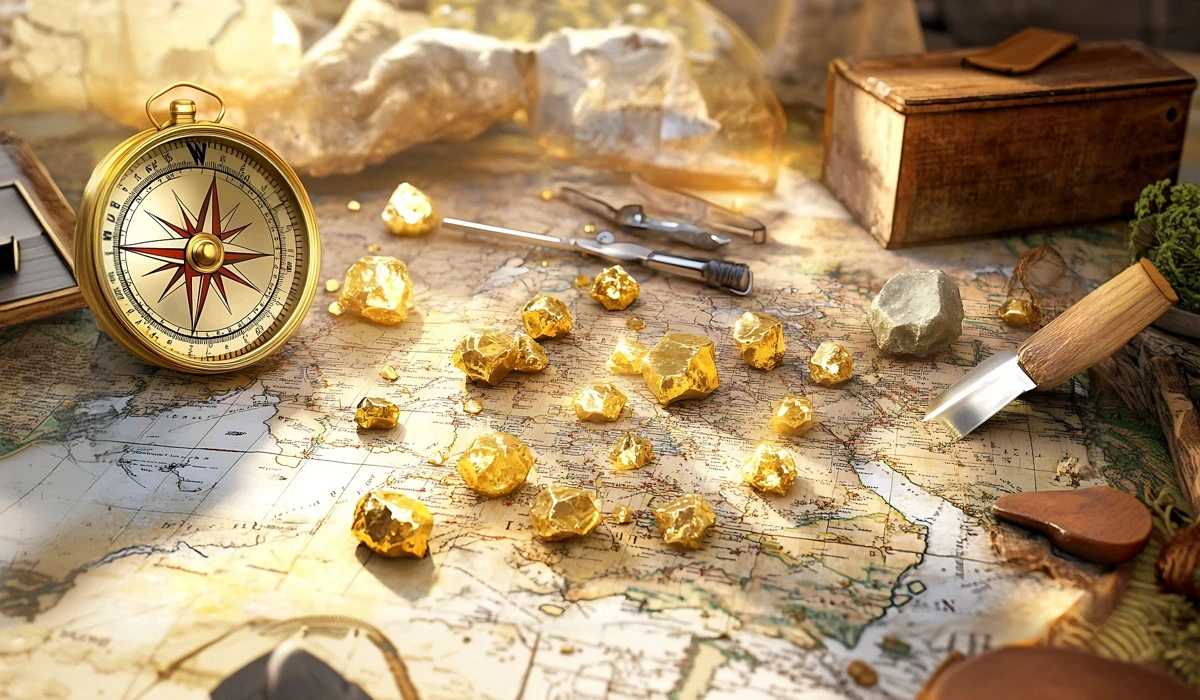
Geophysics: Hunting Gold With Magnetic Clues
Old prospectors spent years staring at riverbeds for a lucky glint of yellow. Today, successful mining companies ignore the surface and listen to the pulse of the planet instead. They rely on the physical signals trapped deep within the Earth's crust. This change in strategy turns a guessing game into a precision science. Modern Geophysics allows these teams to locate massive gold deposits without digging a single hole. Reading the ground like a digital map helps them find wealth. Most explorers fail because they look for gold with their eyes. Winners find it through measuring the forces that humans cannot feel.
The Science of Hunting Gold with Geophysic
Finding gold requires a deep understanding of planetary physics. Modern Geophysics serves as the primary tool for this search. Experts use sensors to measure how gravity, magnetism, and electricity change from one acre to the next. These variations tell a story about what sits beneath the topsoil.
Beyond the naked eye: The subsurface advantage
Geoscientists measure the physical properties of rocks to identify mineral zones. They look for "signatures" that suggest the presence of ore bodies. This often involves measuring how easily a rock conducts electricity or how much it weighs compared to the surrounding stone.
Does gold show up on a metal detector at great depths? Standard metal detectors only reach a few inches into the dirt, but according to research published on ResearchGate, advanced geophysical sensors find the metallic signatures of massive deposits hundreds of meters down, addressing the technical challenges of assessing concealed mineral resources deep within and around metallic mines. This capability allows companies to map entire regions in days rather than decades.
Deciphering the Language of Magnetic Field Anomalies
According to a guide by Geometrics, gold rarely travels alone, as it usually rests near minerals that have strong magnetic properties; however, the guide notes that while surveys attempt to measure concentrations of magnetite, a magnetic anomaly does not necessarily guarantee an ore body. Tracking magnetic field anomalies helps geologists identify the specific locations where gold likely settled millions of years ago. These anomalies occur when the local magnetic pull differs from the Earth's standard background levels.
Why certain rocks scream "gold" to magnetometers
Gold often exists alongside magnetite or pyrrhotite. These minerals act like giant magnets buried in the earth. When a magnetometer passes over them, the readings spike or dip sharply. These magnetic field anomalies act as a glowing neon sign for explorers.
Geophysicists measure these changes in units called nanoteslas. They also calculate the "Curie Point." This is the temperature at which minerals lose their magnetic power. Knowing this limit lets teams determine exactly how deep the magnetic rocks go before the Earth's heat wipes out the signal.
Mapping the structural traps of the Earth’s crust
As noted in an MDPI study observing the structurally complicated, highly faulted, and folded Rodruin prospect area, gold fluids move through the earth through cracks and faults. Geophysics helps experts see these cracks even when buried under miles of sand or volcanic rock. Geologists look for "dilational jogs" or "folds" in the rock layers. These shapes act as physical containers. When the earth shifts, it creates a pocket that traps gold-bearing fluids. Finding these traps is the fastest way to find a high-grade mine.
Using Seismic Wave Mapping to Reveal Subterranean Treasures
While magnets find the minerals, sound finds the structure. Seismic wave mapping works like a sonogram for the planet. According to ScienceDirect, technicians send vibrations into the ground and record how they bounce back, analyzing reflected signals caused by lithological differences. Different types of rock reflect these waves at different speeds.
Visualizing the 3D structure of a gold mine
The same source indicates that exploration teams use "vibroseis" trucks or small, controlled charges, such as explosives or hammers, to start these waves. The vibrations move through the crust as P-waves and S-waves. As these waves hit a hard quartz vein or a soft clay fault, they change direction.
What is the difference between seismic mapping and sonar? Sonar sends sound through water to find objects, while seismic mapping uses low-frequency waves to penetrate solid rock and create pictures of deep geological layers. As highlighted in a study from the Wiley Online Library detailing how 2D and 3D reflection seismic studies are used for mineral exploration and mine planning, this data allows miners to build a complete 3D model of a gold deposit before they ever start an engine.
Why Modern Geophysics is the Ultimate ROI Tool for Mining
Mining is a business of high costs and high risks. Drilling a single deep hole can cost hundreds of thousands of dollars. Geophysics protects these investments because it ensures that every drill hits its mark. It removes the "guesswork" that once bankrupted mining companies.
Slashing exploration budgets through precision targeting
A single survey covers thousands of hectares for a fraction of the cost of a drilling campaign. Narrowing the search area saves companies millions. Is geophysical surveying expensive? The initial cost of the technology is high, but the return on investment is massive because it stops companies from wasting money on "dry holes" in empty ground.
Meanwhile, according to a report by 911Metallurgist, borehole surveys allow a single drill hole to see even further, as these measurements help search for off-hole conductors or define the extent of in-hole conductors. Technicians lower sensors into a hole to detect minerals up to 100 meters away in every direction. This "off-hole" detection ensures that miners do not miss a gold vein by just a few inches.
Analyzing the Data: Advanced Geophysics Processing Techniques
The sensors provide raw data, but the real magic happens in the processing lab. Modern computers take millions of data points and turn them into a clear picture. This process requires extreme precision and heavy math.
Filtering the noise from the geological signal
The Earth is a noisy place. Power lines, fences, and even passing trucks create magnetic and vibration "noise." Experts use 3D Inversion Modeling to filter out this trash. They focus only on the legitimate signal from the ore body. This high-level processing separates a professional Geophysics team from a group of hobbyists. They turn messy waves of information into a solid map of wealth.
Real-World Victories: When Magnetic Field Anomalies Led to a Payday
History proves that sensors find what eyes miss. In the Australian Outback and the Canadian Shield, miles of thick dirt cover the world's richest gold veins. Traditional prospecting failed in these areas for over a century.
From "Blind" targets to world-class finds
Explorers eventually used airborne magnetics to fly over these "blind" regions. They identified massive magnetic field anomalies that didn't match the surface rocks. When they finally drilled, they hit multi-billion dollar deposits. These finds changed the economies of entire nations. Ironically, the gold was always there, just waiting for a magnetometer to find its resting spot.
Scaling Your Search Strategy with Future Geophysics Tech
Technology continues to evolve. We no longer rely solely on heavy trucks and large planes. Drones now carry ultra-light sensors into places humans cannot easily reach. This allows for even tighter data collection.
The rise of AI-driven mineral searches
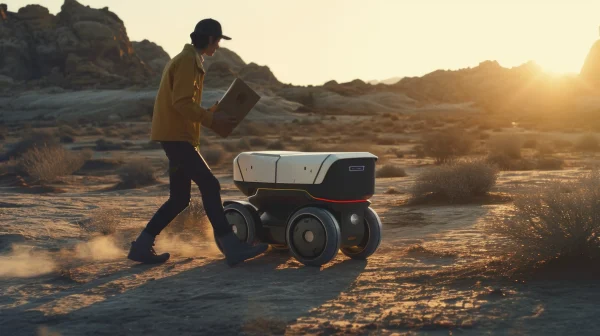
According to ScienceDirect, machine learning now processes Geophysics data faster than any human, though effective implementation requires collaboration between data scientists and geoscientists using ML to test hypotheses and analyze diverse datasets. AI looks for patterns in seismic wave mapping that suggest gold presence with 90% accuracy. These systems compare new data against thousands of known gold mines. This predictive power allows companies to rank their targets by probability. The next generation of miners will spend more time in front of a computer than in a mine shaft.
Striking Gold Through Geophysics
Success in modern mining depends on seeing through the earth. The easy gold at the surface disappeared a long time ago. Today, the winners use Geophysics to look deeper and more clearly than ever before. Combining seismic wave mapping with the study of magnetic field anomalies helps exploration teams turn the crust into a transparent window.
This technology bridges the gap between high-risk gambling and a calculated business plan. It allows us to find the minerals that power our world without destroying the surface in the process. The unseen gold rush is happening right now, and it belongs to those who know how to read the Earth's physical signals. Modern Geophysics remains the only reliable path to striking it rich in the 21st century.
Recently Added
Categories
- Arts And Humanities
- Blog
- Business And Management
- Criminology
- Education
- Environment And Conservation
- Farming And Animal Care
- Geopolitics
- Lifestyle And Beauty
- Medicine And Science
- Mental Health
- Nutrition And Diet
- Religion And Spirituality
- Social Care And Health
- Sport And Fitness
- Technology
- Uncategorized
- Videos

