
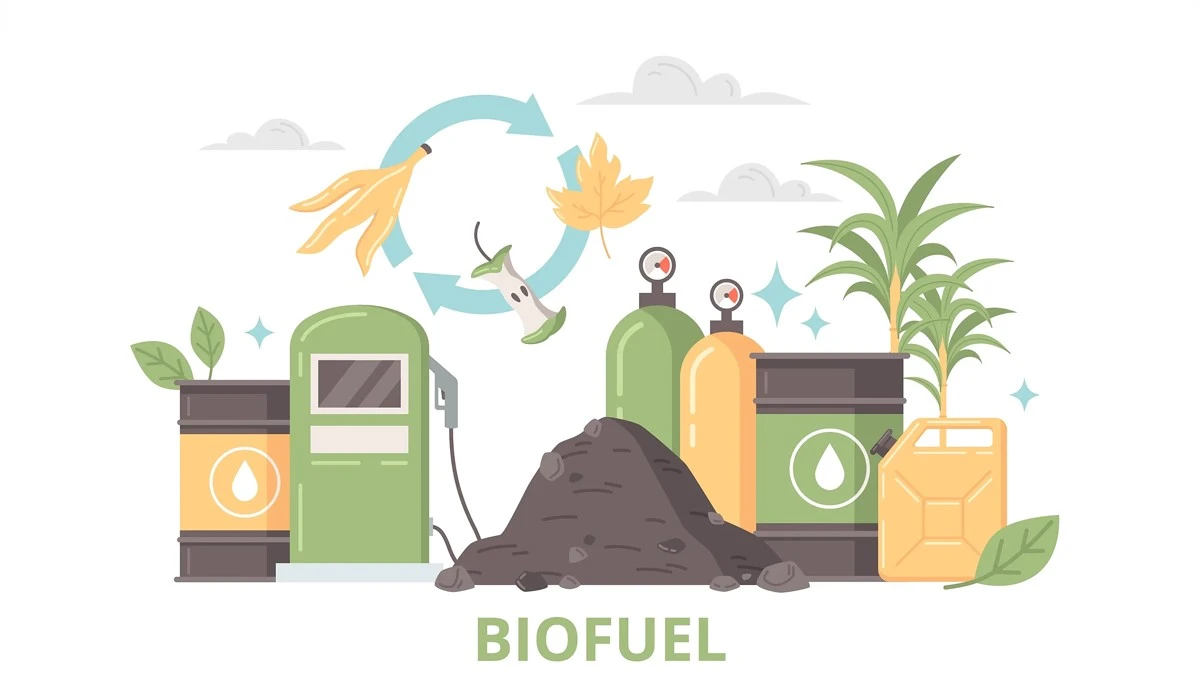
Brewing Cellulosic Ethanol From Farm Trash
When a combine harvester rolls through a cornfield, it leaves behind a thick blanket of stalks, leaves, and husks. Most people see this brown debris as simple waste that must rot before the next planting season. In reality, these leftovers store the same solar energy that grew the crop in the first place. For decades, a heated debate over "food versus fuel" slowed down the energy industry. Critics argued that using corn for gas would drive up grocery prices. Today, a different reality exists. We now have the technology to extract high-powered Biofuels from the "trash" farmers once walked over. This shift turns every acre of farmland into a dual-purpose energy plant without taking a single kernel of corn off the dinner table.
The Engineering Behind Cellulosic Ethanol Production
Modern energy production targets the structural "bones" of the plant rather than the soft starches inside. This process, known as cellulosic ethanol production, transforms rigid plant fibers into liquid fuel. Engineers focus on three main parts of the plant: cellulose, hemicellulose, and lignin. Cellulose makes up nearly half of the dry weight of farm waste. It contains long chains of sugar molecules that provide massive energy potential once we access them.
Overcoming the Lignin Barrier
Plants protect their sugars with a tough, glue-like substance called lignin. Lignin acts like a plastic shield that prevents bacteria and weather from breaking the plant down. To reach the energy inside, scientists use specialized enzymes. They often source these from a fungus called Trichoderma reesei. This fungus produces cellulase, an enzyme that eats through the lignin shield and chops the long cellulose chains into simple glucose. How is cellulosic ethanol different from regular ethanol? Unlike traditional ethanol made from corn starch or sugar cane, this version uses the non-edible fibrous parts of plants, making it more sustainable and less disruptive to food supplies. This distinction allows us to use 100% of the harvest for both food and fuel.
Streamlining the Pretreatment Phase
Before enzymes can work, the plant waste needs a "wake-up call" through pretreatment. One popular method involves a process called steam explosion. Technicians heat the corn stalks to over 200 degrees Celsius under high pressure. They then suddenly drop the pressure, which causes the water inside the plant cells to expand and burst the fibers apart. Another method, called Ammonia Fiber Expansion (AFEX), uses liquid ammonia to swell the fibers. This makes the cellulose much easier for enzymes to attack. These steps ensure that every bit of "farm trash" becomes a reactive material ready for fermentation.
Maximizing Farm Efficiency via Biofuels
Farmers now look at their fields as two separate revenue streams. In the past, the grain provided the only paycheck. Today, the leftovers provide a second. Integrating Biofuels into the agricultural cycle gives rural communities a new level of financial security. This system keeps more money in the local economy while reducing the need for outside energy.
Turning Crop Residue into Revenue
According to a fact sheet by Ohio State University, corn stover, which includes the stalks and cobs, typically yields about 70 to 80 gallons of ethanol for every dry ton, assuming an average yield of 73 gallons. A single large farm produces thousands of tons of this material every year. Instead of letting it sit, farmers bale the residue and sell it to nearby biorefineries. This provides immediate cash flow that helps cover the costs of seeds and fertilizer. Meanwhile, the refinery gets a steady supply of low-cost raw material that doesn't fluctuate in price as much as oil does.
On-Farm Energy Independence
Some forward-thinking farmers use small-scale conversion systems to power their own operations. They turn their wheat straw or corn husks into fuel for their tractors and grain dryers. This reduces their dependence on expensive diesel deliveries. Because pure ethanol has a high octane rating of 113, as stated in a driver training document from the Alternative Fuels Data Center, it provides excellent power for heavy-duty engines. This localized energy cycle protects the farm from global oil price spikes and keeps the tractors running even when supply chains fail.
Advancing Algae Biomass Conversion for High Yields
While farm waste provides one solution, water-based plants offer another. According to research published in ScienceDirect, microalgae grow at incredible speeds, commonly doubling their biomass weight within 24 hours. This rapid growth makes algae biomass conversion one of the most productive ways to create high-density energy on a small footprint. Unlike corn or wheat, algae do not need soil, which means we can grow fuel in the middle of a desert.
The Speed of Microalgae Growth
Algae species like Chlorella store up to 70% of their body weight as natural oils. We call these oils lipids. Because they grow so fast, an acre of algae can produce 10 to 100 times more oil than an acre of soy or sunflowers. Growers use large "raceway ponds" or closed tubes called photobioreactors to maximize this growth. These systems control the light and nutrients to keep the algae in a constant state of reproduction. Can algae really be turned into fuel? Yes, through specialized processes, the lipids and carbohydrates in algae are extracted and refined into high-quality biodiesel or jet fuel. This results in a liquid that looks and acts just like the fuel we pump at the station today.
Closing the Carbon Loop
Algae need carbon dioxide to grow. As highlighted in a study published by the National Center for Biotechnology Information (NCBI), for every ton of algae biomass we create, the plants "inhale" and fix approximately 1.8 tons of CO2. Many companies now build algae farms next to industrial factories. The factory pumps its smoke and emissions directly into the algae ponds. The algae eat the pollution and turn it into oxygen and fuel. This turns a waste product from a factory into a raw material for the energy industry. It creates a circle where the carbon we emit gets captured and recycled immediately.
Environmental Advantages of Waste-Derived Biofuels
Using waste products for fuel offers a massive environmental upgrade over drilling for oil. Rather than digging up carbon that has been buried for millions of years, we use carbon that is already part of the current atmosphere. This keeps the planet’s carbon levels in a much better balance.
Drastic Reductions in Carbon Intensity
The "carbon intensity" score measures how much pollution a fuel creates over its entire life. According to the Alternative Fuels Data Center, cellulosic ethanol often has a score 60% to 100% lower than gasoline, with average emissions reductions ranging from 88% to 108%. When we use farm waste, we don't count the carbon used to grow the crop, because the crop was grown for food anyway. The fuel essentially comes for "free" in terms of environmental cost. This makes Biofuels one of the fastest ways to lower the footprint of the transportation sector.
Preserving Biodiversity and Soil Health
Critics sometimes worry that taking stalks off the field will hurt the soil. However, researchers found that we can safely remove about 50% of the residue without causing any harm. The remaining half stays on the ground to prevent erosion and feed the dirt. This balance allows the farmer to harvest energy while still protecting the land. Because these fuels come from existing fields, we don't have to cut down forests to create new farmland. We simply get more value out of the land we already use.
Infrastructure and Integration of Biofuels
One of the biggest hurdles for new energy is the "pipes and pumps" problem. Most new fuels require special engines or expensive new pipelines. Modern Biofuels solve this by being "drop-in" ready. This means they fit into the world we have already built without requiring us to start from scratch.
The Concept of Drop-in Fuels
According to the Department of Energy's Alternative Fuels Data Center, refineries can turn algal oils into 'green diesel' through a process called hydrotreating. The agency also specifies that this renewable diesel is processed to be chemically identical to the diesel made from petroleum. You can pour it into a standard semi-truck or a cargo ship, and the engine will not know the difference. Do biofuels work in standard car engines? The same source notes that most modern conventional vehicles from 2001 onward can run on low-level blends without any changes, while 'flex-fuel' vehicles are specifically designed to handle much higher concentrations of ethanol, up to 85%. This allows the switch to cleaner energy to happen overnight, rather than waiting decades for everyone to buy new cars.
Building the Biorefinery of the Future
The modern refinery functions as both a fuel producer and a giant recycling center. When a plant processes corn stover for cellulosic ethanol production, it also creates byproducts. One of these is leftover lignin. Instead of throwing the lignin away, the refinery burns it to create the steam and electricity needed to run the plant. This makes the entire facility self-sufficient. Some refineries even capture the excess heat to warm nearby greenhouses, creating a local hub of energy and food production.
Overcoming Scalability Challenges in the Industry
Moving from a lab to a global industry takes time and money. The biggest challenge has always been the cost of the chemicals needed to break down the plants. However, we are now seeing the "tipping point" where these technologies become cheaper than fossil fuels.
Reducing the Cost of Specialized Enzymes
According to a report by the National Renewable Energy Laboratory, the enzymes needed to make a gallon of ethanol cost near or over five dollars in the early 2000s, with initial baseline costs recorded between four and five dollars. That made the fuel way too expensive for the average driver. Today, thanks to advances in biotechnology, that cost has dropped to less than fifty cents. Scientists continue to engineer more efficient "super-enzymes" that work faster and survive in tougher conditions. As these costs fall, the price at the pump follows, making sustainable energy the most logical choice for the wallet.
Optimizing the Supply Chain
Farm waste is bulky and light, which makes it expensive to move. To solve this, companies are using "densification." They use mobile machines that follow the harvester and compress the stalks into dense pellets or cubes. These pellets take up much less space and are easy to ship by truck or train. This optimization allows a single refinery to collect waste from hundreds of miles away, ensuring they always have enough material to keep the machines running.
The Global Influence of Biofuels Innovation
These technologies clean the air and alter the power balance between nations. Countries that used to rely on importing expensive oil can now grow their own energy in their own backyards.
Empowering Developing Economies
Many developing nations have massive agricultural sectors but lack their own oil reserves. Using cellulosic ethanol production allows them to turn their rice husks or sugar cane waste into fuel. This keeps their money inside their borders and creates thousands of local jobs. It provides energy security to rural areas that may not have reliable access to global markets. These small-scale projects can provide the electricity and fuel needed to lift entire communities out of poverty.
Meeting International Aviation Standards
Airplanes are hard to power with batteries because batteries are too heavy. This makes algae biomass conversion essential for the future of flight. As documented by the Alternative Fuels Data Center, the aviation industry uses a standard called ASTM D7566, which dictates fuel quality specifications for non-petroleum-based synthesized hydrocarbons, to ensure that bio-based jet fuels are safe for high-altitude flight. Algal fuels meet these strict requirements easily. Major airlines now use these "Sustainable Aviation Fuels" on regular commercial flights. This proves that we can fly across the ocean without relying on ancient fossil deposits.
The Future is Grown, Not Mined
We are moving toward a world where energy comes from the surface of the earth rather than from deep underground. The shift to Biofuels represents a total change in how we view the natural world. We now see a field of corn as both a source of food and a solar-powered factory that produces nutrition, electricity, and transportation fuel all at once. Perfecting cellulosic ethanol production and algae biomass conversion provides a way to satisfy our need for movement without damaging the planet.
This switch protects our soil and our air while providing a stable income for the people who feed us. The technology is no longer a fantasy for the distant future; it is happening in refineries and on farms right now. As we continue to refine these processes, the link between farm waste and high-performance fuel will only grow stronger. Domestic energy security and environmental health are finally moving in the same direction. We are learning that the solution to our greatest energy challenges has been sitting in our fields all along.
Recently Added
Categories
- Arts And Humanities
- Blog
- Business And Management
- Criminology
- Education
- Environment And Conservation
- Farming And Animal Care
- Geopolitics
- Lifestyle And Beauty
- Medicine And Science
- Mental Health
- Nutrition And Diet
- Religion And Spirituality
- Social Care And Health
- Sport And Fitness
- Technology
- Uncategorized
- Videos

