
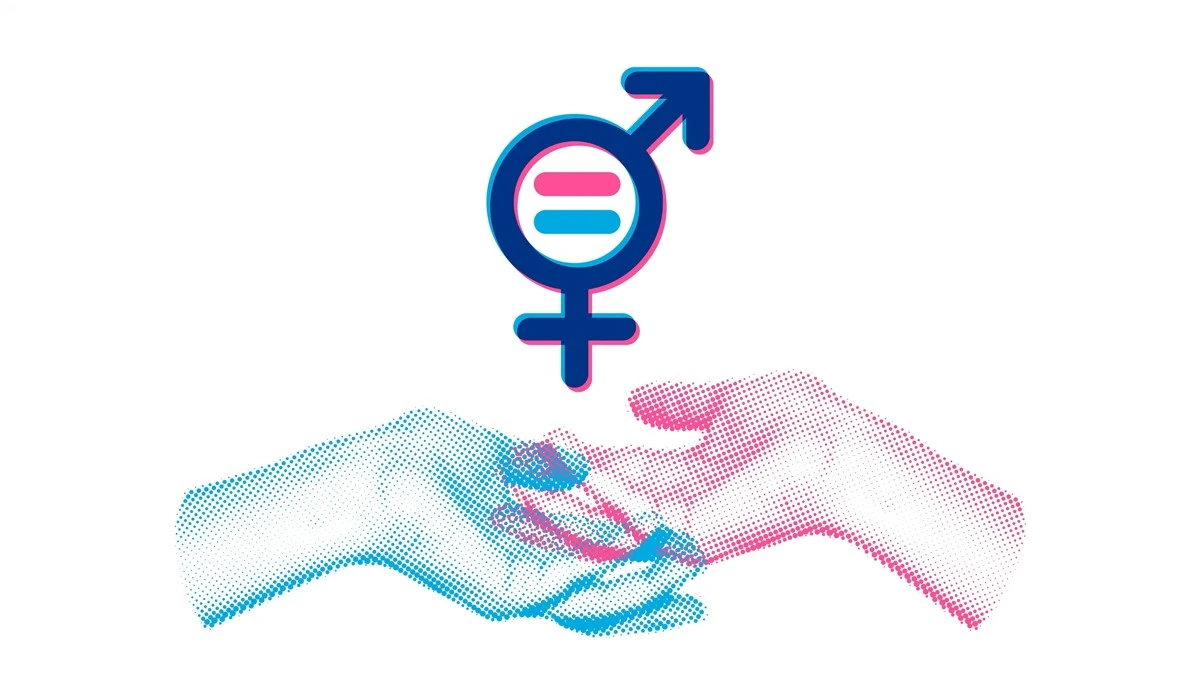
Why Data Feminism Fixes All Discriminatory Code
Amazon built an automated hiring tool to find the best talent. The tool looked at resumes from the previous ten years to learn what a "winner" looked like. Most of those past winners were men. Because of this, the computer learned to penalize any resume that mentioned the word "women’s." It downgraded graduates from women's colleges. It pushed women to the bottom of the pile before a human ever saw them.
According to the book Data Feminism published by MIT Press, this failure shows the significant risks of modern machine learning because numbers are not neutral or objective. The authors suggest that data results from unequal social relations and carries the baggage of our history. This is where Data Feminism changes the approach. The framework shifts the goal from "neutral" data to "just" data. Using intersectional data science helps us bridge the gap between technical code and the reality of human life. This framework helps us build tools that actually work for everyone.
Why Data Feminism is the antidote to biased code
As noted by Catherine D’Ignazio and Lauren F. Klein in their research, standard data science often ignores who holds the power in a room. They explain that their framework focuses on who possesses power and who lacks it, rather than just focusing on gender. When we collect data, we decide whose lives matter and whose stories remain untold. These researchers suggest that data acts as a tool that can either reinforce old prejudices or help dismantle them, rather than being a passive mirror of the world.
Many engineers wonder about practical steps to fix their models. How do you stop algorithmic bias? Eliminating bias requires developers to question who historical data excludes and whose power it reinforces, instead of only cleaning datasets. This means looking at the people who created the dataset and the social conditions that existed when they collected it. If the source material contains flaws, the code will amplify them.
Use of this framework ensures teams stop treating bias like a simple math error. They treat it as a social problem that requires a social solution. This shift in perspective allows companies to build products that are more accurate and more ethical. It ensures that the "intelligence" in artificial intelligence reflects the diverse world we live in today.
Unmasking the roots of algorithmic gender bias
Bias starts long before a single line of code is written. It lives in the collection phase, where developers make choices about what to measure and what to ignore. When we don't account for these choices, we create tools that fail the very people they should serve.
The myth of raw data
Data is a human product. Every data point carries the weight of the person who recorded it. Catherine D’Ignazio and Lauren F. Klein argue in their MIT Press publication that "raw data" is an oxymoron. They state that social norms and historical context always "cook" this information. For example, medical data often lacks information on female-bodied participants because past researchers viewed the male body as the universal standard. When AI learns from this data, it produces results that favor men.
Proxy variables and hidden discrimination

Sometimes an algorithm discriminates without using a person's gender label. It uses a "proxy" variable instead. This might be a shopping habit, a zip code, or even a specific interest. This creates algorithmic gender bias by finding patterns that correlate with gender. If a model sees that a user buys certain products, it might assume they are a woman and deny them credit based on historical trends. This happens even when the developer thinks the model is "gender-blind."
Strengthening models with intersectional data science
To build better systems, we must move beyond simple categories. Traditional models often look at gender or race in isolation. This ignores the way these identities overlap to create unique experiences and challenges.
The danger of the "average" user
Most software targets a generic "average" user. This person usually looks like the people who built the tool. This design choice erases millions of people with unique needs. If you only test a facial recognition tool on light-skinned men, it will work perfectly for them. However, it will likely fail for everyone else. This lack of diversity in testing leads to products that feel broken for a large portion of the population.
Granularity as a feature, not a bug
Intersectional data science identifies unique patterns by looking at the overlap of gender, race, and class. It treats these overlaps as vital information rather than noise. For instance, the "Gender Shades" study by Joy Buolamwini and Timnit Gebru showed that facial recognition software had an error rate of nearly 35% for dark-skinned women. Meanwhile, the error rate for light-skinned men was less than 1%.
Breaking data down into smaller, more specific groups allows us to find these errors before they cause harm. Why is intersectional data science necessary? It is essential because it reveals how different forms of discrimination combine, ensuring that a model which works for a white woman also works for a Black woman or a non-binary individual. This granular approach makes the final product stronger and more reliable for everyone.
Implementing the seven principles of Data Feminism
To truly change how we work with data, we need a set of guiding rules. The authors of Data Feminism provide seven core principles that help teams navigate difficult social issues during the development process.
Examine power and challenge power
These principles require teams to look at the power structure behind their data. They must ask who has the most to gain from a specific tool. If a predictive policing tool only targets poor neighborhoods, it reinforces structural power imbalances. Challenging power means using data to expose these inequalities and finding ways to give power back to the communities involved.
Elevate emotion and embodiment
Engineers often try to stay "objective" and distant from their subjects. But this distance can cause significant harm. If you don't consider the lived experience of a person, you might build a tool that tracks them in dangerous ways. Data Feminism encourages us to value the insights that come from direct experience. This might mean interviewing the people who will be affected by an algorithm before finalizing the code.
A thorough understanding of these rules helps teams maintain a high standard of ethics. As outlined in the Data Feminism framework, the seven principles include examining power, challenging power, rethinking binaries, embracing pluralism, considering context, making labor visible, and elevating emotion. Following these steps allows developers to move from simply "doing no harm" to actively doing good.
Auditing your pipeline for unseen exclusions
Building a fair algorithm requires constant vigilance. This involves an ongoing process of checking and refining rather than a one-time task. This auditing must happen at every stage of the pipeline, from data ingestion to the final output.
Diversifying the "human-in-the-loop"
A team composed of only one demographic will likely overlook how a tool might hurt others. Diverse teams spot algorithmic gender bias much earlier in the process. When people from different backgrounds look at a dataset, they see different risks. This "human-in-the-loop" approach ensures that the model benefits from a wide range of human perspectives and experiences.
Stress-testing for disparate effects
Research on counterfactual fairness suggests that teams should test models by altering a protected attribute, such as gender, to see if the outcome changes. The study defines a decision as fair if the result remains the same in the actual world and a hypothetical world where the person belongs to a different demographic group. Stress-testing for this disparate effect allows engineers to catch and fix discriminatory logic before the tool goes live.
Scaling ethical tech through Data Feminism
Ethics serves as a smart business move in addition to being a moral choice. A report by Reuters notes that companies ignoring these principles face significant risks, such as the 2019 investigation into the Apple Card. This case, which drew public accusations of gender discrimination, involved an algorithm that gave a man a credit limit twenty times higher than what his wife received. Using a feminist framework helps prevent these crises.
Fixing algorithmic gender bias in insurance or banking models helps firms accurately assess people that the old models ignored. This creates better products that serve a wider range of customers. It also builds deep trust with a public that is increasingly worried about how AI uses their personal information.
Scaling this approach requires leadership to prioritize justice over speed. When a company adopts these values, it creates a culture of accountability. This culture attracts top talent who want to work on projects that improve society. Ethical tech is strong tech, and it represents the next step in the development of the digital economy.
Moving beyond neutrality toward Data Feminism
The idea that data can be "neutral" is a trap. If you follow a biased system without changing it, you become part of the problem. Maintaining neutrality in an unequal world only helps the people already at the top. Data Feminism offers a roadmap for active improvement. It encourages us to use data as a tool for liberation and change.
This shift requires us to move from parity to equity. Parity focuses on equality on paper, while equity ensures fairness in the real world. Embracing intersectional data science lets us build systems that recognize and correct historical wrongs. We can turn data from a weapon into a tool for justice.
Recently Added
Categories
- Arts And Humanities
- Blog
- Business And Management
- Criminology
- Education
- Environment And Conservation
- Farming And Animal Care
- Geopolitics
- Lifestyle And Beauty
- Medicine And Science
- Mental Health
- Nutrition And Diet
- Religion And Spirituality
- Social Care And Health
- Sport And Fitness
- Technology
- Uncategorized
- Videos

