
Wildlife Forensics Turns Animal DNA Into Evidence
In the middle of a dense jungle, a tiger falls. There are no witnesses. No one hears the shot over the sound of the monsoon rain. By the time rangers find the site, the trail is cold, and the suspects are gone. But the tiger’s blood holds a secret that the hunter cannot erase. Even when the physical body is moved, the ground remembers the crime.
This is where Wildlife Forensics steps in. It takes the chaotic mess of the woods and turns it into a clear story for a judge. For years, criminals escaped because the woods were too big and the evidence was too messy. Today, science bridges that gap.
Through animal DNA tracking, experts can now follow a single horn from a dusty field in Africa to a high-end apartment in Asia. They treat the forest floor like a city alleyway, searching for the tiny pieces of data that criminals leave behind. A dead animal provides a massive source of information rather than serving as a dead end. This field turns the biology of the victim into the strongest witness in the courtroom.
Why Wildlife Forensics is the New Influence of Conservation
For a long time, protecting animals meant just walking the perimeter of a park. Rangers looked for snares and listened for gunshots. While that work is still vital, it often stops at the park boundary. When a poacher leaves the woods, they usually disappear into the crowd. Wildlife Forensics changes this by giving investigators a way to follow the crime into the city.
According to a background paper from INTERPOL, wildlife trafficking is the fourth most lucrative global crime. The organization also estimates that this trade is worth between $7 billion and $23 billion every single year. Managing these figures requires a laboratory in addition to a badge and a truck.
Moving Beyond Basic Observation
Modern conservation focuses on building a legal case rather than simply observing animals. In the past, if a ranger found someone with a bag of meat, the suspect could claim it was just common deer. Without proof, the case would fall apart. Now, Wildlife Forensics provides the empirical proof needed to move from suspicion to conviction.
This field uses the same high standards found in human murder trials. Research published in PMC notes that practitioners established the Society for Wildlife Forensic Science (SWFS) in 2009, and this group subsequently produced the first international standards and guidelines for the field in 2012. These rules ensure that when a scientist says a piece of hair belongs to a poached leopard, the evidence can stand up in an international court. This shift makes it much harder for traffickers to lie their way out of a jail cell.
Securing Poaching Crime Scenes for Scientific Integrity
A forest is a difficult place to collect evidence. Unlike a clean room in a city, a forest has wind, rain, and scavengers. When investigators arrive at poaching crime scenes, they have to act fast. Every minute that passes is a minute where the evidence can rot or blow away.
As noted by the National Institute of Justice, investigators apply Locard’s Exchange Principle. This theory suggests that every contact leaves a trace, meaning a criminal both adds to and removes something from a scene. At a kill site, a poacher might leave a human hair or a fiber from a jacket. At the same time, they take animal blood or fur with them on their boots. Wildlife Forensics looks for these microscopic handshakes to tie the person to the act.
Challenges of Field Evidence Collection
One of the biggest hurdles is keeping the samples pure. If a ranger touches a sample with their bare hands, they might contaminate the animal’s genetic code with their own. This is why teams now use specialized kits, like the African Rhino DNA toolkit. According to CITES, these kits utilize specialized FTA cards that fix DNA onto paper, which allows it to remain stable at room temperature without refrigeration in the middle of the bush.
How long does DNA last at a crime scene? Environmental factors like heat and moisture can degrade biological material quickly, but samples can often be recovered weeks later if they are protected from direct sunlight or heavy rain.
The study of blowfly life cycles on a carcass allows scientists to determine the exact time the animal died. Research in PMC indicates this method can provide "on-the-day" data for the minimum post-mortem interval, which helps investigators check a suspect’s alibi. If the flies show the animal died on Tuesday, but the suspect claims they were in another city that day, the bugs provide the proof that the suspect is lying.
The Science Behind Animal DNA Tracking Techniques
To catch a global trafficking ring, you have to know where the goods are coming from. You can’t just say a tusk came from an elephant; you have to say which elephant and which forest. This is the core of animal DNA tracking. It allows scientists to create a map of the crime.
Every living thing has a unique genetic code. Scientists build a profile through the examination of specific parts of that code. This is similar to a Social Security number for an animal. When a shipment of scales is caught at a port, animal DNA tracking reveals if those scales came from one single poaching event or a series of smaller ones over time.
Mapping Genetic Profiles to Catch Traffickers
Research published in Animal Genetics highlights that the two primary markers used by scientists are STRs and SNPs. As described in ScienceDirect, researchers use Short Tandem Repeats (STRs) for the identification of individual animals. If a suspect has a knife with blood on it, scientists can prove that the blood matches a specific carcass found at one of the poaching crime scenes.
The Global Timber Tracking Network further notes that Single Nucleotide Polymorphisms (SNPs) are utilized for geographic origin assignment, acting like a GPS built into the DNA. For example, tigers in India have slightly different SNP patterns than tigers in Russia. Investigators read these markers to determine exactly which national park a tiger was stolen from. This tells police exactly where the poaching gangs are most active, so they can send more patrols to those specific spots.
How Wildlife Forensics Labs Turn Scales and Ivory into Evidence
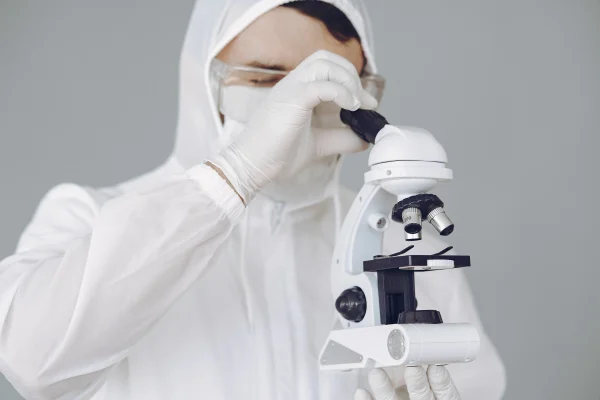
When evidence arrives at a Wildlife Forensics lab, it rarely looks like an animal. It might be a bag of ground-up bones, a carved ivory statue, or a bottle of traditional medicine. The lab's job is to pull the truth out of these processed items.
The process often starts with mitochondrial DNA (mtDNA). Unlike the DNA in the center of a cell, mtDNA has hundreds of copies in every cell. This makes it much easier to find in samples that have been burned or dried out. Even if a tusk has been sitting in a hot warehouse for a year, the mtDNA is often still there, waiting to be read.
Cutting-Edge Sequencing Tools
Labs now use Next-Generation Sequencing (NGS). This tool allows scientists to do "metabarcoding." A study indexed in PubMed explains that scientists can now identify multiple species simultaneously within a mixture rather than testing for each one individually. If a shipment contains meat from five different protected species, NGS will find all of them at once. It is a massive leap forward in speed and accuracy.
Can you use human DNA kits on animals? While the basic technology is similar, wildlife investigators must use species-specific primers and specialized databases that are not found in standard human kits. Each animal requires its own "key" to access the genetic code.
Writing in the International Journal of Molecular Sciences, researchers state that the highest concentration of DNA in ivory is found in the outer cementum layer of the tusk. Other useful areas include the "pulp cavity" at the base. These areas were once connected to living tissue and hold the most information. Scientists grind these small sections into a fine powder to release the genetic material for testing.
Linking Suspects to Poaching Crime Scenes via Trace Evidence
A criminal might be very careful not to leave their own DNA behind, but they almost always take the victim's DNA with them. This is the "trace" that solves cases. Wildlife Forensics focuses on these tiny links that a suspect might not even see with the naked eye.
A single hair on a suspect’s jacket or a bloodstain on a machete can be matched to a carcass found at poaching crime scenes. This link is powerful in court. It moves the conversation from "I was just walking in the woods" to "Why is the blood of this specific protected rhino on your clothes?"
The Legal Strength of Biological Links
As highlighted by ScienceDaily, this process requires a perfect chain of custody to remain legally valid. This means the evidence must be tracked from the moment it is picked up until it reaches the courtroom. If there is any gap in the records, a lawyer can argue that the evidence was planted or swapped. This is why forensic training for park rangers is so important.
A study in Science & Justice reports that new techniques allow for the recovery of usable human fingerprints from ivory and feathers. Even though these surfaces are porous and irregular, new powders and lights can reveal the ridges of a human finger. When you combine a fingerprint with animal DNA tracking, the case against a trafficker becomes almost impossible to beat. It creates a complete picture of who was there and what they did.
Global Success Stories in Animal DNA Tracking
The real power of this science is seen when it takes down entire criminal cartels. Individual poachers are often just the bottom level of a much larger organization. The use of animal DNA tracking allows investigators to link small crimes to the big bosses who are making millions of dollars far away from the forest.
According to the Smithsonian’s National Zoo, one of the most prominent forensic tools is the Rhino DNA Index System (RhODIS). The Zoo notes that this database contains more than 20,000 unique rhino profiles collected from various biological samples, including horns and carcasses. When a horn is seized in an Asian port, it is checked against RhODIS. Often, the horn matches a specific rhino that was killed months earlier in South Africa. This allows police to follow the money and the shipping routes back to the source.
Dismantling International Cartels
Dr. Samuel Wasser at the University of Washington used elephant dung to create a genetic map of Africa. He matched the DNA in seized ivory to this map and discovered that most ivory doesn't come from all over the continent. Instead, 70% of it comes from just two major poaching hotspots.
What is the most common animal tested in forensics? Rhinoceroses and elephants currently see the highest volume of testing due to the high value of their parts and the sophisticated poaching networks targeting them.
This data changed everything. Instead of trying to police the entire continent, law enforcement could focus all its resources on these two spots. Ironically, the criminals’ own greed led to their downfall. The poaching of many animals from the same location created a massive genetic trail that scientists could easily follow.
The Expanding Influence of Wildlife Forensics on Policy
Science does more than just put people in jail; it changes the law. When a government can see the hard data of how many animals are being lost, it is forced to act. Wildlife Forensics provides the numbers that drive international treaties and national protections.
The CITES treaty, which regulates the trade of 38,000 species, relies on forensic data to decide which animals need the most protection. If forensic testing shows that a species is being heavily targeted by traffickers, it can be moved to a higher protection category. This triggers more funding and tougher penalties for anyone caught with that animal.
From Local Patrols to International Treaties
This effect is seen clearly in places like Assam, India. The introduction of field protocols and forensic training for rangers resulted in the region seeing a 600% increase in successful convictions for rhino poaching. When criminals realized they could no longer lie their way out of a case, the poaching rates began to drop.
This creates a powerful deterrent. In reality, the goal is to make the illegal wildlife trade a "high-risk, low-reward" activity. If a trafficker knows that every item they touch contains a permanent record of their crime, they are less likely to take the risk. Wildlife Forensics turns the natural world into a giant alarm system that never stops ringing.
The Future of Justice Lies in Wildlife Forensics
The woods are no longer a location where crimes stay buried indefinitely. Even though poaching crime scenes are often found in the world's most remote corners, the reach of modern science is much longer. A criminal might think they are alone in the forest, but they are actually surrounded by billions of pieces of genetic evidence.
Through animal DNA tracking, we can now see the entire path of a crime, from the first shot to the final sale. This technology has turned the tide against international cartels by taking away their ability to hide in the crowd. It provides a voice for the animals that cannot speak for themselves in a court of law.
As we look to the future, the integration of Wildlife Forensics into every level of law enforcement is essential. It moves conservation out of the realm of guesswork and into the world of hard facts. Turning biological material into undeniable evidence allows us to bring justice to the environment and ensure the wild stays wild for generations to come.
Recently Added
Categories
- Arts And Humanities
- Blog
- Business And Management
- Criminology
- Education
- Environment And Conservation
- Farming And Animal Care
- Geopolitics
- Lifestyle And Beauty
- Medicine And Science
- Mental Health
- Nutrition And Diet
- Religion And Spirituality
- Social Care And Health
- Sport And Fitness
- Technology
- Uncategorized
- Videos

