
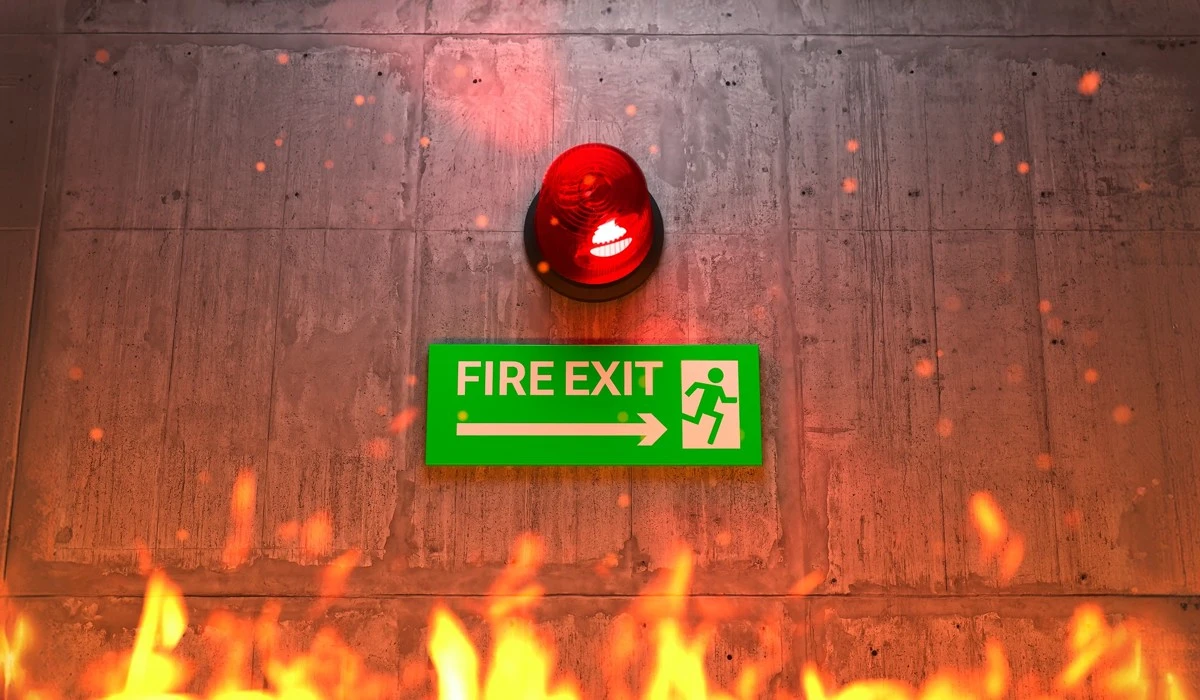
Smoke Control System Design: Keep Exits Smoke-Free
While flames are dangerous, toxic air often reaches occupants long before the temperature rises. According to a report in the Journal of Fire Sciences, the movement and buildup of smoke remains the primary threat to life during a building fire. Research published in ScienceDirect indicates that vertical openings, such as elevator shafts, seismic joints, and stairwells, provide paths for this smoke to rise through a building. This suffocating cloud can turn a familiar hallway into a disorienting trap within seconds.
Building owners often focus on sprinklers and alarms. While these tools help, they do not clear the air. Emergency Management, Science and Technology states that a smoke control system is an essential part of a building's life safety infrastructure. Proper Fire Safety Management serves as a central control for a building, coordinating every fan and vent to push fresh air in and pull toxins out. A smart smoke control system design ensures that people find their way to the street instead of getting trapped in a stairwell. Without this oversight, the very paths meant for escape become the most dangerous places in the building.
The Role of Fire Safety Management in Life Safety
Safety is a result of careful planning. It starts with an active Fire Safety Management plan that treats a building as a functional system. Buying the right gear is only one part of the solution; hardware alone cannot save lives if the people inside do not know how to use it. A strategy must account for how people move during a crisis.
Effective Fire Safety Management creates a culture where every staff member knows their role. Understanding how air moves through specific halls is a requirement for safety. When an alarm rings, every second counts. If a team hesitates, the smoke wins. National Fire Protection Association (NFPA) data confirms that over 80% of fire fatalities result from smoke inhalation. This makes air quality a top priority.
Bridging the Gap Between Policy and Action
A manual on a shelf offers no protection unless its contents are used daily. Managers should shift from theory to practice by training their teams on the specific smoke control system design features of the site.
Regular drills help people react automatically. When workers see smoke, they should already know which doors to close and which fans to activate. Moving from written rules to fast action saves lives. Organizations should follow the "Plan-Do-Check-Act" model found in standards like BS 9997 to keep their policies current.
Integrating Smoke Control System Design into Fire Safety Management
Engineers create the plan, but managers ensure it functions. Research published on ResearchGate explains that effective smoke control must account for the specific geometry and design features of a building. An expert smoke control system design relies on Fire Safety Management to stay operational. The design and the management must work together to be effective.
Managers oversee the installation and upkeep of every vent. They ensure the building’s layout matches the initial safety goals. Changing a wall or a room’s use can break the ventilation flow. Fire Safety Management identifies these risks before a fire occurs. A building must maintain tenable conditions, which means keeping visibility above 10 meters.
Passive vs. Active Smoke Control Strategies
Safety involves two main layers. Passive strategies include smoke curtains and fire-rated walls. These barriers stop the spread of gas by physically blocking it. They require no power to work and hold the smoke in one place to buy time for evacuation.
Active strategies use mechanical power, such as high-powered fans and automated vents. A study shared via ResearchGate indicates that these mechanical smoke management systems, including HVAC operations, directly influence the conditions of evacuation paths. Management must check that curtains drop and fans spin exactly when the sensors detect heat. Both layers must work together to create a clear exit path.
The Physics of Egress: Why Smoke-Free Exit Paths Matter
Smoke behaves in predictable ways. ScienceDirect reports that smoke spreads to upper floors very quickly because of the stack effect, which creates a chimney-like pull. It moves smoke upward through stairwells at speeds over 10 meters per second. This rapid movement can fill a high-rise with toxins in minutes. As noted in the journal Fire, the presence of smoke in stairway chutes can prevent residents from leaving safely and potentially trap them.
What is the main purpose of a smoke control system? Fire Buyer emphasizes that a functioning smoke control system keeps exit routes clear and makes it easier for firefighters to enter the building, protecting both lives and property. This allows for a safer evacuation by maintaining visibility and air quality.
Occupants need at least 10 meters of visibility to stay calm. If they cannot see their feet, panic sets in. A solid smoke control system design fights the physics of fire to keep those exits open. Emergency Management, Science and Technology notes that as a smoke plume travels under a ceiling, its temperature drops, which can cause it to lose buoyancy and sink toward the floor. Furthermore, when air heats to 500°C, its volume expands by 2.5 times. This creates pressure that can lock doors shut if the system does not vent the air properly.
Critical Components of Modern Smoke Control System Design
Modern buildings use various tools to fight smoke. High-speed fans serve as the primary movers of air, pulling thousands of cubic feet every minute. These fans must survive high heat, often rated to run at 300°C for a full hour. The journal Emergency Management, Science and Technology points out that engineers use smoke plume models to calculate the rate at which a fire will produce smoke. The same source explains that the extraction system must be designed to remove smoke at a rate equal to or higher than the rate of smoke production.
Dampers act as gates within the ductwork, opening or closing to direct air. Fire Safety Management ensures these gates do not rust or jam. For every cubic meter of smoke the fans pull out, the system must bring in a cubic meter of fresh "makeup air." This prevents a vacuum from forming in the lobby. Additionally, Emergency Management, Science and Technology notes that smoke stratification can hinder the activation of detection sensors and reduce the effectiveness of extraction.
Pressurization and Airflow Dynamics
Stairwells need a "Class A" pressurization system. The journal Fire identifies stair pressurization as an essential feature ensuring people can exit high-rise buildings safely. J.F. Ahern states that these pressurization systems are intended to keep stairwells smoke-free for occupants and fire crews. This creates a high-pressure zone where smoke cannot push its way into the stairs when people open the doors.
A good smoke control system design balances this pressure. If the pressure is too high, a person might not have the strength to push the door open. Standards like BS EN 12101-6 help engineers find the right balance. However, ResearchGate suggests that these systems may still allow smoke into the shaft if more than four doors are opened at the same time.
Regulatory Compliance and Legal Standards for Fire Safety Management
Laws put the burden of safety on the owner. In many regions, the owner is the "Responsible Person" in the eyes of the law. This means the owner must prove that Fire Safety Management meets current standards daily. Documentation is a necessary defense during an audit.
Are smoke control systems required by law? Most modern building codes mandate these systems as a primary life-safety requirement. Failing to install or maintain them can lead to heavy fines or legal consequences for building owners.
Consulting-Specifying Engineer explains that NFPA 92 sets the requirements for how smoke control systems should be designed, operated, and tested. Keeping up with these changes is a primary duty of the safety team. Fire Safety Management tracks these updates to keep the building compliant. This prevents the fire marshal from closing a facility due to safety gaps.
Routine Maintenance: The Heart of Fire Safety Management
A system that sits idle for years might fail during an emergency. Dust, rust, and old wiring can disable a smoke control system design. Regular maintenance prevents these failures. Safety equipment should be treated as a vital business asset.
How often should fire safety systems be inspected? Most professional standards recommend a full annual inspection with smaller checks on mechanical parts every quarter. This routine ensures that every fan and sensor works before an emergency happens.
Managers should follow SFG20 standards for maintenance tasks. This includes checking smoke damper linkages for corrosion. It also involves testing the backup power supply to ensure the fans run even if the main electricity fails.
The Importance of Full-Scale System Testing
Checking a single sensor is insufficient. Full-scale tests are needed to verify that the whole building reacts correctly. This involves using artificial smoke to trigger the sensors and watch the dampers move. It reveals if a renovation blocked a vent or if a fan motor is weak.
Fire Safety Management coordinates these tests after hours. These tests prove the logic of the building works. Only a full test proves the building is safe for tenants. Without this evidence, there is no certainty that systems will perform.
Future-Proofing Buildings with Intelligent Fire Safety Management
Technology changes how fire is handled. Smart buildings now use sensors to track air quality. These devices send data directly to a Fire Safety Management platform, allowing for building monitoring via a smartphone or tablet. ResearchGate also mentions that fire safety researchers are constantly improving the models used to predict and manage smoke movement.
This tech allows managers to spot problems before they cause a failure. If a damper starts to drag, the system sends an alert. It turns safety into a proactive strategy. Digital twins even allow for fire simulations to see how a smoke control system design handles different scenarios.
Using IoT for Real-Time Smoke Monitoring
Internet of Things (IoT) devices track smoke density and temperature. If a fire starts, the smoke control system design can adjust itself immediately using real data rather than just pre-set timers.
The system can increase fan speed in one area while closing vents in another to keep smoke contained. This response protects occupants better than older, manual systems. It gives Fire Safety Management more power to protect lives and reduce property damage.
Achieving Total Safety Through Fire Safety Management
A building's safety depends on the way the air is managed during a crisis. A well-maintained smoke control system design acts as a lifeline when halls fill with heat and gas. It ensures that the path to the exit stays clear, giving everyone a chance to reach fresh air.
Ultimately, active Fire Safety Management turns a dangerous situation into a controlled one. Auditing practices and testing gear today are necessary. Do not wait for an alarm to find out if systems work. Taking charge of building safety keeps exit paths smoke-free. Professional oversight and regular testing ensure that tenants stay safe and businesses stay compliant.
Recently Added
Categories
- Arts And Humanities
- Blog
- Business And Management
- Criminology
- Education
- Environment And Conservation
- Farming And Animal Care
- Geopolitics
- Lifestyle And Beauty
- Medicine And Science
- Mental Health
- Nutrition And Diet
- Religion And Spirituality
- Social Care And Health
- Sport And Fitness
- Technology
- Uncategorized
- Videos

