
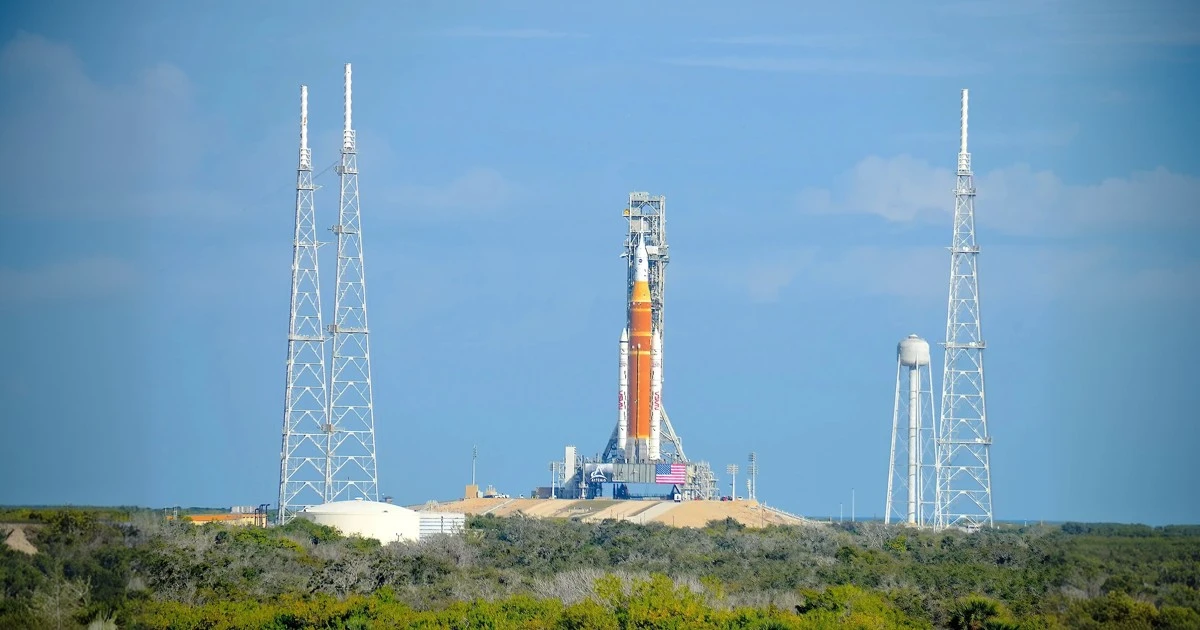
Image Credit - By Olga Ernst, Wikimedia Commons
Artemis II Launch: Revealing April 1 Risks
Rocket engineers usually run final fueling tests to catch late-stage hardware errors. NASA cancelled their final rehearsal entirely to keep the rocket hardware intact. The upcoming Artemis II launch carries a heavy burden of expectation and intense international scrutiny. Over fifty years have passed since humanity last executed a crewed lunar flyby. Planners juggle complicated variables behind closed doors while managing public anticipation. You might assume an extra month of preparation guarantees a flawless liftoff sequence. Reality tells a much harsher story.
Engineers face microscopic fluid leaks, degrading thermal materials, and stubborn valve anomalies. Small hardware quirks force flight directors to rip up established timelines and reinvent re-entry paths. High confidence rarely equals zero vulnerability in experimental aviation. The agency balances intense political pressure against severe, unyielding technical realities. As the countdown ticks closer, the actual flight profile looks radically different from early assumptions. The true story involves exact hazard management and rapid, high-stakes adaptations.
Shifting Timelines for the Artemis II Launch
Orbiting bodies dictate the calendar, yet microscopic hardware faults hold the true veto power over a space mission. Mission managers originally targeted a February liftoff. Technical hurdles forced a strategic retreat to a completely new primary window. Planners now aim for April 1, 2026, targeting an exact liftoff time of 6:24 PM Eastern Time. According to the Associated Press, the space agency retains roughly four backup opportunities spanning the first six days of the month before standing down until an additional reserve slot on April 30. People often ask, when is the Artemis II launch date? As outlined in a recent NASA flight readiness update, the primary target remains April 1, 2026, with a planned March 19 rollout to the launch pad, though engineers hold multiple backup dates throughout the month to accommodate bad weather or technical snags.
Space agency leaders express high confidence in this newly established schedule. Lori Glaze notes active preparations align perfectly with the early April target date. She confirms the ground teams work relentlessly to clear pending tasks on the docket. However, this outward confidence masks a brutal truth about the launch hardware. A massive rocket demands absolute perfection from thousands of interlocking hardware systems.
The Ten-Hour Rollout Vulnerability
Ground crews face an extreme schedule vulnerability before the countdown clock even begins ticking. According to NASA's rollout coverage, the massive SLS mega rocket requires a grueling, multi-hour rollout process to transport the 11-million-pound stack from the Vehicle Assembly Building to the launch pad. The giant crawler-transporter moves at less than one mile per hour while carrying millions of pounds of equipment. Managers scheduled this precise rollout for March 19.
This tight timeframe leaves zero reserve buffer time for unexpected delays. One broken crawler tread or sudden lightning storm throws the entire April sequence into immediate jeopardy. Planners must execute every single pre-launch step flawlessly. The celestial position variance dictates strict orbital windows, and the moon waits for no one. Missing the April opportunities forces an agonizing delay to the next favourable orbital alignment.
Surviving a 25,000 MPH Re-entry Velocity
Preventing spacecraft disintegration sometimes requires slamming into the atmosphere at a steeper, more violent angle. The Orion spacecraft hits Earth’s atmosphere at approximately 25,000 miles per hour during the final phase of the mission. This extreme velocity generates enough friction and heat to melt most known materials. A NASA investigation summary notes that during the previous uncrewed flight, gases generated inside the ablative AVCOAT material failed to vent properly, causing a pressure buildup that cracked and eroded the heat shield. Engineers investigated this severe heat shield issue and completely altered the return strategy.
Planners initially designed a complicated skip maneuver to bleed off speed safely, functioning much like a flat stone skipping across a pond. The team scrapped that original skip trajectory entirely. They replaced it with a direct, steep entry profile. This revised trajectory mitigates thermal damage as it plunges the capsule directly through the thickest part of the atmosphere. The spacecraft takes a harder, hotter dive to protect the base structure and the crew inside.
Shifting the Safety Philosophy
Rethinking the re-entry path requires massive mathematical calculations and a complete shift in risk philosophy. The AVCOAT material protects the ship through ablation, physically burning away to carry intense heat off the vehicle. John Honeycutt emphasizes that qualitative hazard management far outweighs the practical value of quantitative catastrophic failure probabilities. The engineering team prefers practical, actionable danger mitigation protocols over raw statistical math.
They focus on real-world testing and physical hardware limits rather than theoretical safety percentages. Honeycutt notes historical data shows a fifty-percent success rate for novel rockets. Current probability metrics show much higher reliability, but the team takes zero chances. Eliminating the skip maneuver removes a major layer of flight difficulty from the critical final minutes of the mission. A direct plunge drastically reduces the time the capsule spends in the most punishing thermal environment.
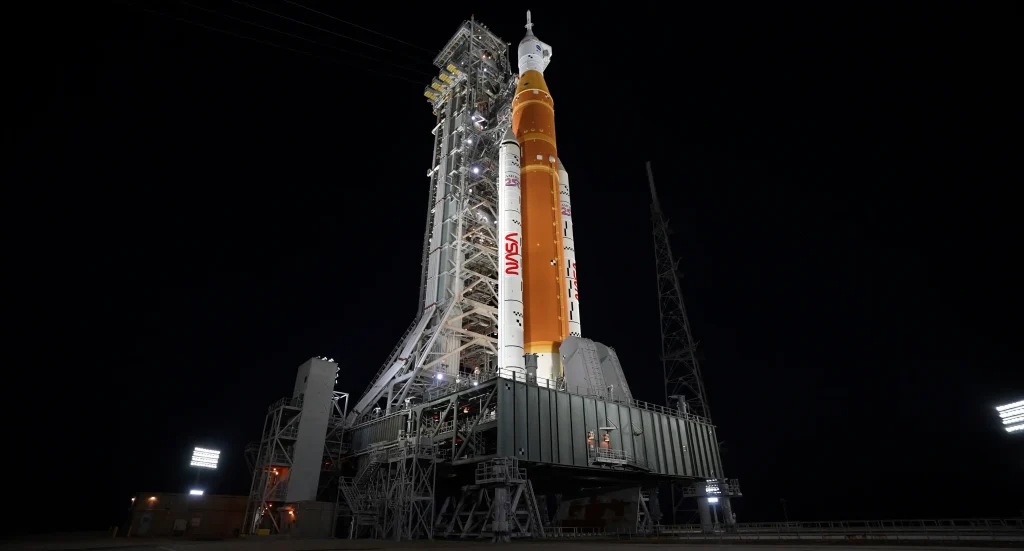
Image Credit - By Wikimedia Commons
The Artemis II Launch Crew Breaking Barriers
Assigning seats on a test flight transforms a standard duty roster into a permanent geopolitical milestone. The Artemis II launch crew boards the SLS mega rocket to shatter fifty-year-old records. The public frequently wonders, who are the Artemis 2 astronauts? The crew consists of Commander Reid Wiseman, Pilot Victor Glover, and Mission Specialists Christina Koch and Jeremy Hansen. This specific group completely redefines deep space exploration demographics. Humanity has waited over half a century to send explorers back toward the lunar surface.
A NASA press release explicitly highlights these historic firsts, noting that Victor Glover flies as the first person of color to enter deep space. The agency also confirms Christina Koch brings her extensive orbital experience as the first woman to make the lunar trip, while Jeremy Hansen represents Canada, taking the title of the first non-American to leave low Earth orbit. These individuals accept immense personal risk to advance human knowledge. Lori Glaze openly acknowledges the inherent peril in experimental flight.
Surviving the Readiness Review
Before the crew even approaches the launch pad, administrators must clear exhaustive safety checks. The recent Flight Readiness Review ended with unanimous approval from top agency officials. Review boards document a complete absence of internal safety dissent among the engineering teams. Everyone agrees the personnel and equipment meet all required readiness thresholds.
The astronauts spend their remaining time running intense, highly realistic ground simulations. They practice emergency egress, advanced communication protocols, and manual flight overrides. The mission places extraordinary physical and mental demands on the four individuals. They represent the culmination of decades of international collaboration and intense, unforgiving training regimens.
Canceling the Final Fuel Rehearsal
Simulating a dangerous procedure sometimes poses a greater threat to the equipment than the actual mission. NASA traditionally executes a "wet dress rehearsal" to practice loading highly volatile propellants into the rocket. Managers cancelled this essential step for the upcoming Artemis II launch. They determined the liquid hydrogen and liquid oxygen propellant tanks face unnecessary physical stress during extra fueling cycles.
Glaze explains that a simulation offers minimal benefit while putting the multi-billion-dollar flight hardware at immense risk. The ground crew preserves the tanks; they ensure the next fuel load happens exclusively for the actual liftoff. This propellant tank preservation strategy creates an uneasy tension within the launch control center. Planners skip established practice routines to maintain critical vehicle structural integrity.
The Dangers of Cryogenic Testing
Skipping the wet dress rehearsal forces the launch team to rely strictly on previous flight data. They cannot test the specific plumbing on this exact rocket under fully fueled, cryogenic conditions. The liquid hydrogen sits at negative 423 degrees Fahrenheit, while the liquid oxygen drops to negative 297 degrees Fahrenheit. The decision highlights the fragile nature of new spaceflight systems.
Cryogenic fuels violently shrink metal lines, freeze mechanical valves, and expose microscopic manufacturing flaws. Exposing the entire system to these extreme temperature swings weakens the structural integrity over time. Mission directors choose the lesser of two extreme dangers. They prefer an untested fuel sequence on launch day over a physically fatigued rocket structure. This calculated gamble highlights the high stakes of deep space operations.
Fluid Seepage and Valve Anomalies
Vague public statements often obscure highly specific, interlocking technical failures deep inside a vehicle. Public relations teams frequently cite generic "technical difficulties" to explain long mission delays. Internal documentation reveals a much sharper, more concerning reality. Engineers battled severe helium flow blockages deep inside the vehicle plumbing. Liquid hydrogen seeped through critical connections, threatening explosive consequences. Hatch valves suffered from strange torque anomalies during routine pressure testing.
These highly specific problems forced the initial shift away from the February target. Microscopic pressure faults possess the power to ground macroscopic spacecraft indefinitely. Ground crews must resolve every single anomaly before the rocket leaves the assembly building. The team strictly documents each fluid leak and torque issue to ensure complete, verifiable resolution.
Prioritizing Basic Reliability
Fixing these deep-seated issues requires precision engineering and incredible patience. A torque anomaly means a valve requires abnormal force to open or close. In the vacuum of space, a stuck hatch valve easily causes fatal cabin depressurization. Amit Kshatriya stresses the importance of basic system reliability over complicated alterations.
He argues that altering the rocket configuration for future missions introduces too many complications too quickly. Engineers focus strictly on fixing the immediate hardware faults. They ensure the machinery works exactly as designed without adding new, untested variables. A leaky hydrogen valve presents a catastrophic threat during the violent, shaking ascent phase. The team replaces seals, tests torques, and monitors pressure drops around the clock. Their methodical approach guarantees the four crew members fly on the safest possible vehicle.
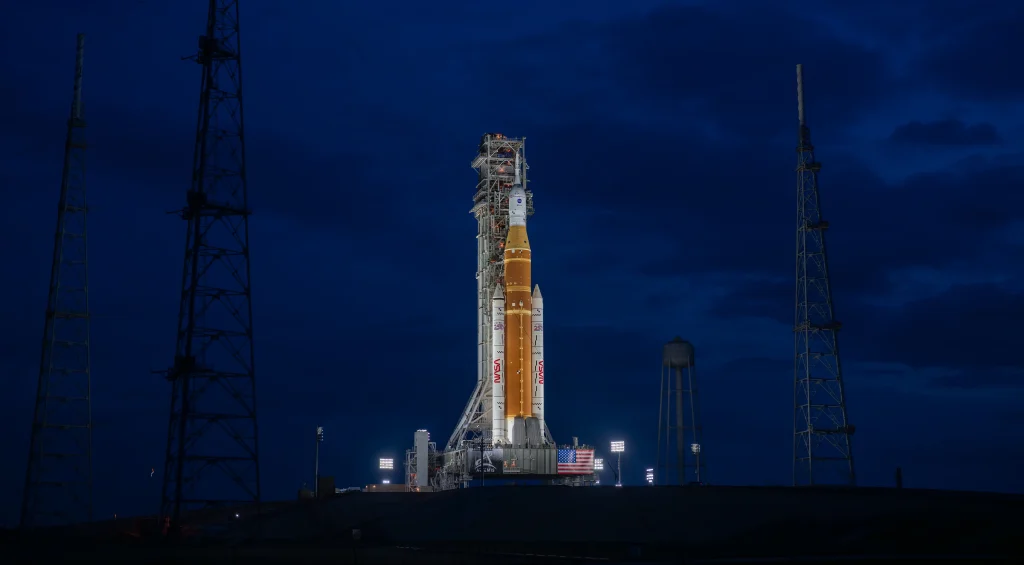
Image Credit - By Wikimedia Commons
Reimagining the Lunar Flyby Trajectory
Pushing a spacecraft farther away from a target drastically alters the scientific return and the visual perspective. The ten-day mission profile skips standard orbital insertion entirely. The Orion spacecraft launches into Earth orbit, transits to the moon, and whips around the far side. Curious observers ask, will Artemis 2 land on the moon? The spacecraft will strictly perform a flyby and return directly to Earth without making a surface landing. This path keeps the crew safe while testing vital deep space navigation systems.
The prior uncrewed test skimmed a mere 80 miles above the lunar surface. The current crewed flight stays much farther away, targeting a massive altitude of 4,000 to 6,000 miles. Space agency officials explain this vast distance relies heavily on the exact time of liftoff. Celestial position variance changes the orbital mechanics every single calendar day.
Redefining the Lunar Perspective
From that extreme altitude, the astronauts experience a radically different view than the Apollo crews. Space Agency experts state the apparent lunar scale looks akin to a handheld sports ball held at full arm extension. The crew trades close-up surface details for a comprehensive, wide-angle view of the entire lunar sphere.
This specific altitude prevents the spacecraft from entering the moon's gravity well too deeply. The trajectory relies on a highly effective free-return profile. The physics of this path use the moon's gravity as a natural slingshot. Earth's gravity naturally pulls the capsule back home without requiring a massive, mission-critical engine burn behind the moon. This significantly reduces the reliance on untested propulsion systems.
The Ripple Effect on Future Artemis Flights
Forcing a rapid timeline inevitably fractures the original sequence of future program milestones. Planners initially designed Artemis III as the grand return to the lunar surface. Technical reality crushed that straightforward operational sequence. Agency directors recently redesignated Artemis III as a 2027 low-Earth orbit docking test. They moved the actual surface landing goal to the Artemis IV mission in early 2028. This strategic shift acknowledges the immense difficulty of deep space operations.
Jared Isaacman emphasizes the imperative for rapid advancement against international geopolitical rivals. He advocates for uniform spacecraft design to replicate historical moonshot success methodologies. Kshatriya warns against overly complex rocket configurations that slow down programmatic progress. He pushes for a step-by-step capability buildup. The program must demonstrate basic space survival before attempting a highly dangerous landing.
Testing the Secondary Payloads
The Artemis II launch serves multiple essential purposes beyond human transport. The giant rocket carries five international CubeSats. Germany, Argentina, South Korea, Saudi Arabia, and a specialized Avionics Unit provide these tiny, highly advanced satellites. They measure radiation spikes and map deep space environments.
The mission also deploys an advanced O2O optical communications system. This laser-based tech beams high-definition, 4K video data back to Earth much faster than traditional radio waves. These secondary payloads maximize the scientific yield of the transit phase. The program must test these smaller technologies before attempting the monumental task of a lunar landing. The upcoming April flight acts as the critical technological foundation for all subsequent deep space ambitions.
The True Stakes of the April Liftoff
Discarding practice runs to protect hardware reveals the extreme fragility of modern space exploration. Planners walk a tightrope between rapid advancement and catastrophic hardware failure. The Artemis II launch serves as a harsh reality check for the entire lunar program. Every valve anomaly, heat shield erosion, and orbital adjustment forces engineers to adapt under immense pressure.
The shift from uncrewed testing to human flight strips away any remaining safety margins. As the April window approaches, the agency bets everything on its revised reentry strategies and strict fault management. Ground crews work furiously to seal leaks and verify flight paths. The crew climbs aboard a vehicle bound by the unyielding laws of physics and the harsh realities of experimental engineering. This exact flight dictates the entire future of human presence in deep space.
Recently Added
Categories
- Arts And Humanities
- Blog
- Business And Management
- Criminology
- Education
- Environment And Conservation
- Farming And Animal Care
- Geopolitics
- Lifestyle And Beauty
- Medicine And Science
- Mental Health
- Nutrition And Diet
- Religion And Spirituality
- Social Care And Health
- Sport And Fitness
- Technology
- Uncategorized
- Videos

