
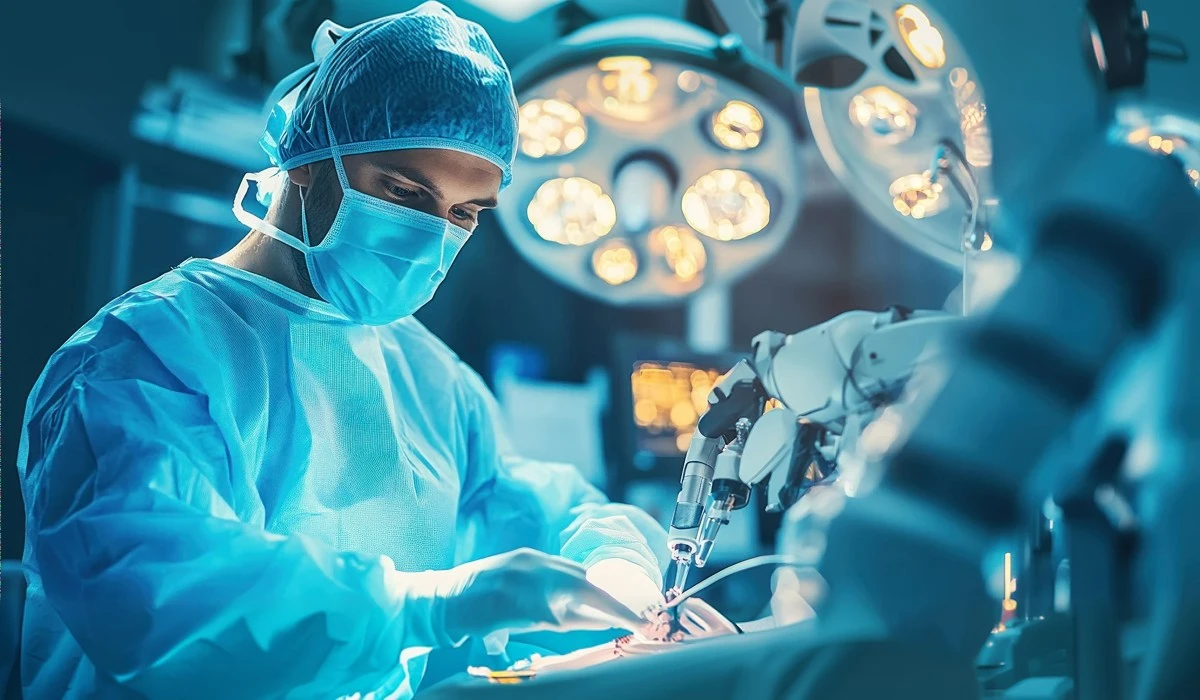
1,500-Mile Remote Robotic Surgery Breakthrough
Geography determines medical survival rates long before a doctor ever views a scan. Proximity dictates your options. Living far from major medical hubs creates severe logistical burdens for patients needing highly specialized care. People routinely pack bags, abandon their daily routines, and spend vast amounts of money in foreign cities for major procedures. Network speed now overpowers geographic borders. Data cables successfully replace commercial flights. According to The Guardian, Professor Prokar Dasgupta of The London Clinic recently proved that a specialist sitting in London's Harley Street district can manipulate physical tissue inside a patient located on the southern tip of the Iberian Peninsula. This shift completely reshapes modern medicine. Physical distance no longer prevents a patient from receiving world-class intervention. A fast internet connection provides the exact same access as living next door to a top-tier hospital. Welcome to the reality of remote robotic surgery.
The Geography Problem in Remote Robotic Surgery
Fixing a body frequently requires uprooting a life. Post-Christmas cancer diagnoses usually initiate standard NHS waiting lists. For 52-year-old Paul Buxton, the diagnosis created a massive logistical problem. He lived in Gibraltar. The elite medical hubs prepared to handle his condition stood far away in London or Madrid. A traditional path demanded booking flights and paying for a three-week overseas hospital relocation. The financial and personal disruption rivaled the physical toll of the disease itself. On March 4, Buxton became the second patient in a trial connecting a London operating console to a Gibraltar surgical room.
How far can robotic surgery go? The Guardian notes that remote operations can span thousands of miles, easily covering the 1,500-mile gap between the UK and the Iberian Peninsula. Buxton chose this route with zero hesitation. He viewed the trial as an upgrade from the minor leagues to the elite tier of surgical options. He willingly played the guinea pig to bypass a lengthy London relocation. His participation directly contributed to medical history while delivering top-tier surgical expertise right to his local community. A month earlier, on February 11, a 62-year-old Gibraltar patient went through the exact same remote prostatectomy trial. Both cases proved that top-tier surgical expertise could reach patients at the local level. According to an interview with The Independent, Buxton required zero travel, finding massive financial relief in the elimination of flight costs and the evasion of a three-week overseas hospital relocation.
Pushing Data Faster Than Flesh
Medical professionals now measure distance in screen delays instead of physical miles. Real-time surgery requires instantaneous reaction. When a doctor moves their hand in London, the blade must cut in Gibraltar at that exact moment. The technology partners Presidio and Microport engineered the Toumai Robotic System to solve the communication delay. They pushed the console-to-robot response time down to 60 milliseconds. This 0.06-second latency falls below the threshold of human perception.
Professor Prokar Dasgupta, a key speaker and surgeon, reported a true sensation of physical presence during the operation. He noted that this connection enables the delivery of elite surgical skill to distant populations. He expects these advancements to produce significant humanitarian advantages globally. This speed relies entirely on a dedicated primary fibre-optic connection spanning 2,400 kilometers. The 1,500-mile distance marks a major milestone for live human trials, but earlier tests pushed the boundaries even further. Anadolu Agency reports that a previous milestone involved Florida neurosurgeon Ricardo Hanel conducting a 4,000-mile transatlantic robotic stroke procedure on a human body in Dundee, Scotland. Moving from cadavers to living patients highlights the extreme confidence engineers now place in global data networks.
The Automation Myth Behind Remote Robotic Surgery
A surgeon's physical hand size severely restricts their ability to heal. Human fingers can only fit into so many spaces, and human hands naturally shake. "Robotic surgery" implies machine autonomy. People hear the phrase and picture an artificial intelligence making autonomous medical decisions. This assumption completely fails to reflect reality. Does the surgical robot operate by itself? The equipment possesses absolutely zero autonomy and only moves when a human surgeon actively commands it via a console. The hardware operates strictly as a surgeon-controlled extension of the human body.
The Toumai Robotic System uses a 3D HD camera and four mechanical arms. These components perfectly replicate human hand dexterity while scaling down the movements to a microscopic level. Dr. Anastasia Chalkidou highlights this advantage, noting the mechanical evasion of conventional manual limitations. The 3D HD camera provides superior visual depth, opening novel pathways for high-risk minimally invasive candidates. A robot lacks independent thought. The machine purely translates human skill into flawless micro-movements, ensuring highly delicate procedures proceed without the risk of human error or fatigue.
The Financial Reality of the Operating Room
Medical debt frequently originates from airplane tickets and foreign hotel bills. Delivering elite surgical skill to distant populations carries massive humanitarian advantages, but it also alters the hospital budget. Patients evade personal travel costs, but medical facilities absorb immense initial setup expenses. Earning NICE approvals for 11 new robotic systems requires heavy capital investment. Each unit carries a £500,000 to £1.5 million cost. The financial return on investment relies on procedure volume and accelerated recovery speeds.
In a statement shared by NICE, NHS National Medical Director Professor Sir Stephen Powis identifies this technological innovation as a central element for finding new ways to improve patient care. He points to quicker patient rehabilitation and system-wide efficiency boosts as the primary financial justifications. The initial price tag for the hardware stings hospital administrators. Yet, moving data ultimately costs less than housing recovering patients in expensive hospital beds for weeks on end. Robot-assisted operations allow patients to leave the hospital sooner, freeing up critical space for incoming emergency cases.
Shifting the NHS Benchmark
Operating room volumes force hospitals to alter standard medical protocols. Remote robotic surgery is rapidly shifting from a localized novelty to a standardized necessity. The national trajectory shows explosive growth. Surgeons completed 70,000 robot-assisted operations in the 2023-2024 period. The goal pushes much further. According to NHS England, officials want surgeons to perform nine in ten keyhole cancer surgeries with robotic assistance within ten years, setting a benchmark of 500,000 annual supported operations by 2035. Historically, urology dominated this specific field.
Prostate removal functions as an established, routine practice across modern NHS facilities. Yet, surgical evolution demands broader applications. Data published by NICE reveals that non-urological procedures accounted for just 20 percent of robotic cases in 2011-2012, before jumping to 49 percent last year. The same agency highlights that orthopaedic growth demonstrates the most aggressive expansion, with hospitals recording a mere 300 orthopaedic procedures in 2018-2019 before leaping to over 4,000 last year. The mechanical arms now adapt to joints, bones, and diverse soft tissues across the entire human body.
The Healthcare Equity Contradiction
Expanding top-tier medical access immediately establishes a rigid hierarchy of patients. Proponents promise universal top-tier access through remote connections. The current reality reveals a sharp contradiction regarding healthcare equity. Statistics show significantly lower system uptake in deprived regions. Announcements from the Royal Surrey NHS Foundation Trust confirm that the pioneering centers driving this charge include the Royal Surrey, Royal Marsden, and East Kent. These highly funded hubs boast 10,000 completed procedures. They utilize dual-console training setups and heavy Medtronic Hugo integration. Wealthy hubs treat standard robotic prostatectomies as routine NHS practice.
Meanwhile, lower-income communities still heavily rely on traditional open surgeries and scalpels. The 1,500-mile trial frames remote prostate removal as a pioneering feat. The true test lies in distributing this pioneering capability evenly. Closing the gap between elite hubs and deprived regions remains the primary hurdle. Access to a £1.5 million machine requires local infrastructure capable of housing, maintaining, and connecting that machine to the broader global network.
Engineering Safety Nets for Remote Robotic Surgery
Trusting a live network mandates planning for the exact second of total failure. High-stakes medical trials naturally attract massive professional scrutiny. As covered by The Guardian, Dasgupta performed a third remote procedure on March 14 as a live demonstration, broadcasting a livestream for 20,000 medical professionals attending the European Association of Urology congress. These observing surgeons watched closely to verify the system's reliability under pressure. What happens if the internet cuts out during surgery? An on-site backup medical team stands immediately ready to take over the procedure manually. The protocol never leaves the patient vulnerable to a network crash. The heavy data load runs through the fibre-optic primary connection.
If that line fails, a 5G backup link engages instantly to maintain the console-to-robot connection. Medical teams report success metrics for these advanced procedures ranging between 94% and 100% overall efficacy. This outcome depends heavily on the specific procedure type and the base patient health. Patient experiences heavily validate the engineering. Kirstine Goldsack reported starting with initial apprehension but ultimately experiencing a totally positive outcome. The surgery provided a full resolution to a severe life-quality disruption. Alistair Hutchinson noted the complete eradication of disease without severe feared side-effects. The precision of the mechanical arms ensured the protection of his family life stability.
The Future of the Digital Scalpel
Geography no longer claims the final word on medical survival. The physical location of a top-tier surgeon ceases to matter when data moves fast enough to guide a blade across continents. Stripping away travel costs, long recovery times, and geographic isolation establishes a highly direct path for essential interventions. The shift to remote robotic surgery demands massive financial investments and flawless network stability. It requires actively balancing the capabilities of wealthy hospitals with the urgent needs of deprived regions to ensure genuine parity. Yet, the successful 1,500-mile link between London and Gibraltar proves the concept works flawlessly in practice. When surgeons can reach across oceans without leaving their chairs, the barriers of traditional medicine simply disappear.
Recently Added
Categories
- Arts And Humanities
- Blog
- Business And Management
- Criminology
- Education
- Environment And Conservation
- Farming And Animal Care
- Geopolitics
- Lifestyle And Beauty
- Medicine And Science
- Mental Health
- Nutrition And Diet
- Religion And Spirituality
- Social Care And Health
- Sport And Fitness
- Technology
- Uncategorized
- Videos

