
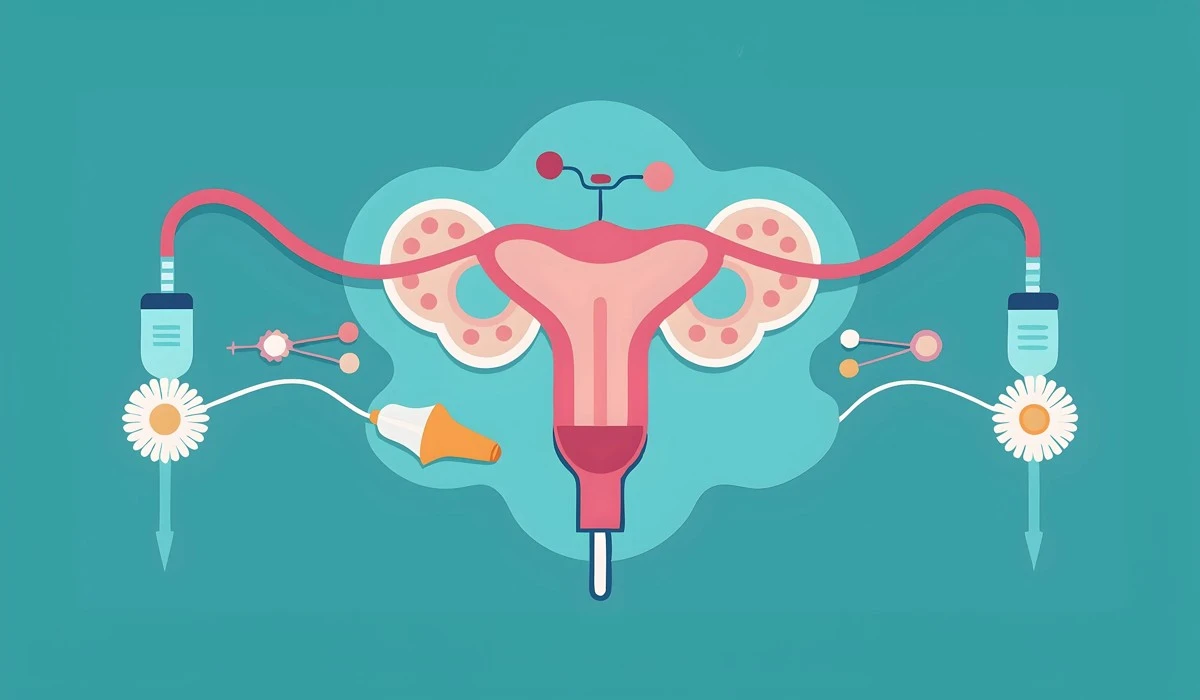
Deceased Womb Donor Gift Turns Grief Into Life
The World Health Organization (WHO) states that in cases of advanced illness, organ replacement surgery is often the only intervention that can prevent death. Occasionally, however, modern medicine uses surgery to manufacture a life that never existed before. Biology usually enforces strict rules about who can carry a child, leaving women with certain diagnoses out of the equation entirely. Grace Bell faced a reality where pregnancy was physically impossible. Instead of accepting that final answer, a team of surgeons decided to rewrite the biological code using a gift from someone who had already passed away. This procedure moved tissue from one person to another and transformed grief into a functional nursery. This brings us to the reality of the deceased donor's womb transplant.
A Diagnosis That Erases Options
Biology sometimes forgets a vital piece of the puzzle, forcing women to look for answers outside their own anatomy. Imperial NHS reports that in the UK, an estimated one in 5,000 women enters the world without a fully developed womb, a condition known as MRKH syndrome, which doctors diagnosed Grace with when she was 16. According to People, Bell received the news at that same age that she would never experience pregnancy with her own baby. The medical world offered few solutions beyond surrogacy or adoption. The physical inability to experience pregnancy often feels like a closed door with no key. Grace lived with this reality until science caught up with her ambition. She needed a solution that defied the standard limitations of her own body.
The Search for a Solution
Uterine Factor Infertility keeps thousands of women from experiencing pregnancy. The transplant offers a new path for these women. It turns a permanent condition into a temporary obstacle.
The Source of the Gift
Grief usually shuts down possibilities, but specific permission can turn a tragic ending into a biological beginning. NHS Organ Donation explains that standard organ donation in UK operates on an opt-out basis, where consent is assumed unless stated otherwise. However, the same NHS guidance clarifies that womb donation is not covered by deemed consent and requires specific family authorization. In this case, a grieving family chose to donate their daughter's womb along with 5 other organs. This decision saved or improved the lives of four other people. In a statement to Imperial NHS, the parents expressed pride in the legacy their daughter left behind, viewing the donation as a gift of hope, time and life. For Grace, it provided the specific organ needed to create life. This connection adds a layer of deep gratitude to the medical procedure. The transplant relies heavily on this unique form of altruism.
Rewriting Surgical History
Success requires skill and decades of rehearsing a procedure that nature never intended. Professor Smith and his team spent years preparing for this moment. The operation at the Churchill Hospital took over 10 hours. Surgeons had to connect tiny veins and arteries to ensure the transplanted organ had a blood supply. A Springer Link publication defines this as a vascularized composite allograft, which involves complicated tissue distinct from solid organs like kidneys. The team worked through the night to ensure the transplant took hold.
A New Chapter for UK Medicine
This surgery marked a significant shift. While the UK saw its inaugural womb transplant birth earlier in 2025 using a living organ donor, Grace’s case proved the viability of using a non-living organ donor. This expands the pool of potential organs significantly.
Creating Hugo From Scratch
Planting a seed in borrowed soil requires a precise chemical balance to stop the body from fighting the guest. Once Grace recovered from the surgery, the focus shifted to fertility treatment. Imperial NHS notes that after the seven-hour implant, she underwent embryo transfer and IVF treatment at the Lister Fertility Clinic. The stakes were high. The body naturally wants to reject foreign tissue. Grace had to take immunosuppressant drugs to keep the organ safe. Research published in JAMA Network indicates that participants receive immunosuppression only until doctors remove the implanted uterus following a couple live births. The pregnancy progressed well, but risks like pre-eclampsia and infection remained. The team monitored Grace closely to ensure both the baby and she remained healthy.

The Arrival of a Miracle
A routine delivery becomes a supernatural event when the anatomy involved wasn't there a year ago. Imperial NHS confirmed that in December 2025, Grace Bell brought a baby boy into the world at Queen Charlotte's and Chelsea Hospital in London. She named him Hugo Richard Norman Powell. The report further details that the middle name "Richard" pays tribute to Professor Smith, who founded the program. ITV News adds that "Norman" honors Grace's grandfather. Hugo weighed approximately 7lbs at birth. Grace described the arrival as a "supernatural occurrence." The joy she felt surpassed anything she had imagined. Steve Powell, the baby’s father, felt overwhelmed with emotion. He watched his partner endure a grueling ordeal from the initial diagnosis to the C-section. The successful transplant resulted in a healthy boy, validating years of research.
The Temporary Nature of the Cure
Some cures are designed to be evicted because keeping them eventually becomes more dangerous than letting them go. As previously cited by Springer Link, these transplants specifically aim to improve quality of life rather than save it. Doctors plan to perform a hysterectomy on Grace after she completes her family. This usually happens once a couple of pregnancies have been successfully completed. Removing the womb allows Grace to stop taking powerful drugs that suppress her immune system. These drugs carry long-term risks, so limiting exposure is a priority.
Balancing Risk and Reward
The medical fraternity debates the integrity of these surgeries. They weigh the donor's risk and recipient against the benefit of carrying a child. Since Grace received a transplant, there was no risk to a live donor during the retrieval surgery. This resolves one of the major ethical concerns surrounding the procedure.
Global Context and Future Hope
One success turns a theoretical possibility into a replicable standard for women waiting in line. According to Imperial NHS data, globally, over a 100 womb transplants have produced more than 70 successful live births. Sweden saw the first successful birth from a transplanted uterus in 2014, recorded by the University of Gothenburg. The Cile Center notes that Turkey performed a deceased donor surgery in 2011, though that recipient did not give birth until 2020. Grace’s case confirms that deceased donation is a reliable route. This opens the door for more women with MRKH syndrome or other forms of UFI. Professor Smith emphasizes that infertility is often deprioritized in medicine. He argues that funding for these procedures is urgent. The success of the transplant provides a strong argument for continued support. Grace Bell’s successful birth proves that organs from deceased donors work as well as those from living donors.
The Human Connection
Medical data often fails to capture the emotional weight of a stranger saving your future. Grace told Imperial NHS that no words can adequately thank the donor family enough for their selflessness. She views her son as an offering of life from a woman she never met. The spiritual connection feels eternal. The donor’s parents lost their daughter to a tragedy. Yet, that tragedy birthed hope for another family. They see Hugo as a gift of life. This cycle of loss and gain defines the human effect of the transplant.
A Team Effort
Professor Smith called the birth a "massive team effort." Consultant gynecologist Benjamin Jones described the event to Imperial NHS as a massive team effort involving surgeons and fertility specialists. The outcome was highly emotional for everyone involved.
Conclusion: A New Standard for Life
The birth of Hugo proves that biological barriers are not always permanent. People noted that the British mother hailed the birth of her "miracle" baby son, born from a deceased donor womb, the first in the UK, showing the power of medical innovation,. The deceased donor's womb transplant has moved from an experimental idea to a proven reality in the UK. This procedure offers a real solution for women who once had none. It honors the dead by creating new life. As funding and research continue, this medical breakthrough will likely rewrite the stories of many more families waiting for their own miracle.
Recently Added
Categories
- Arts And Humanities
- Blog
- Business And Management
- Criminology
- Education
- Environment And Conservation
- Farming And Animal Care
- Geopolitics
- Lifestyle And Beauty
- Medicine And Science
- Mental Health
- Nutrition And Diet
- Religion And Spirituality
- Social Care And Health
- Sport And Fitness
- Technology
- Uncategorized
- Videos

